
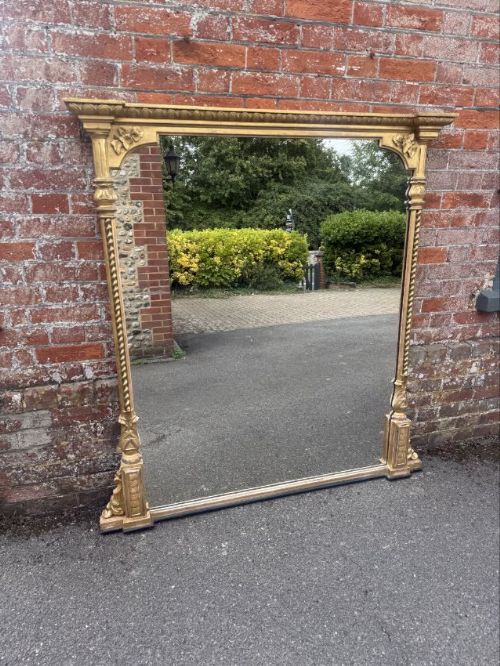
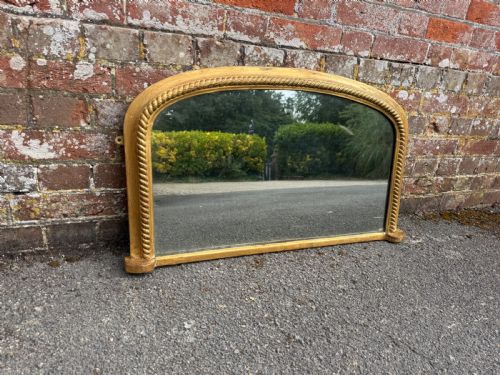
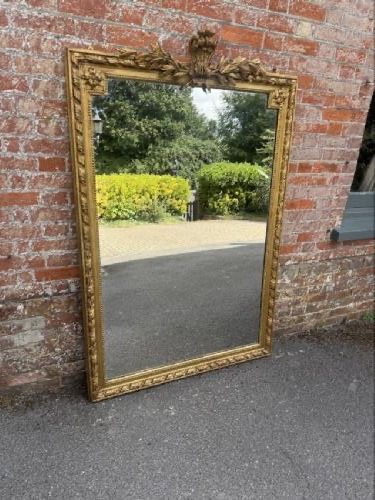
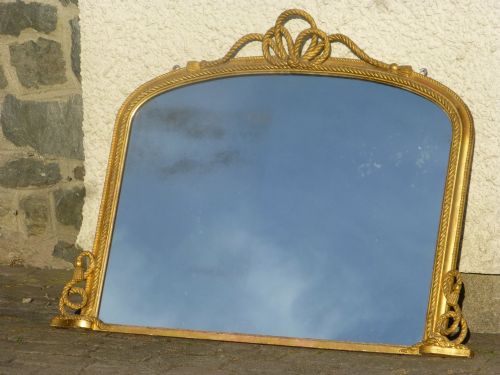
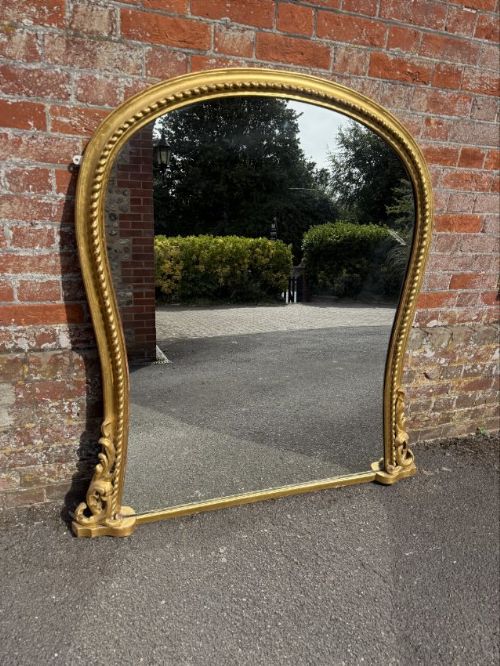
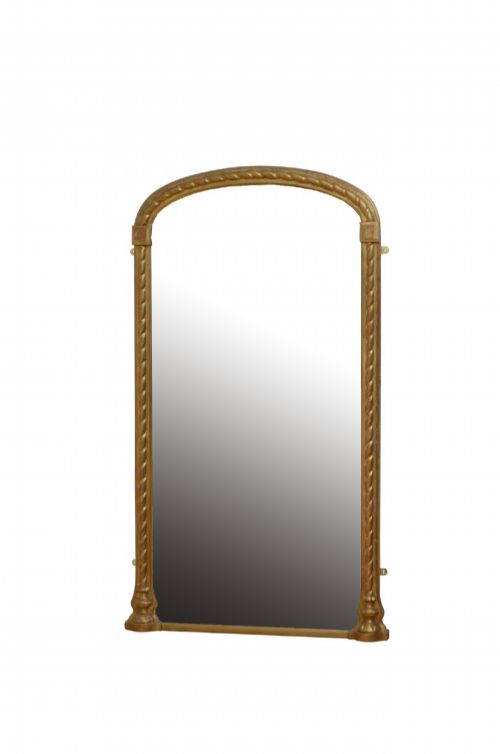

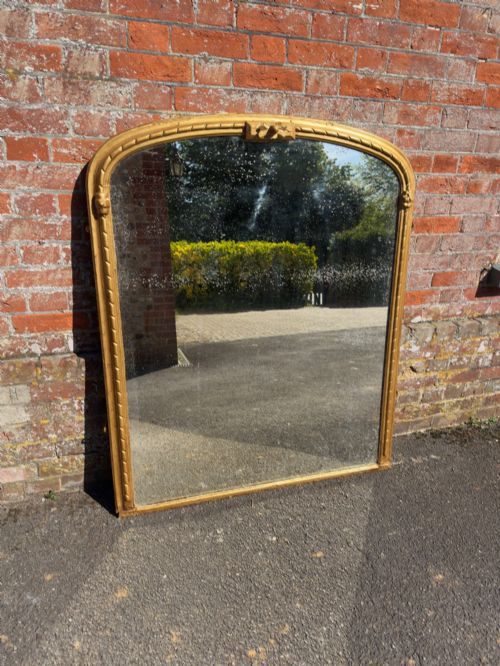


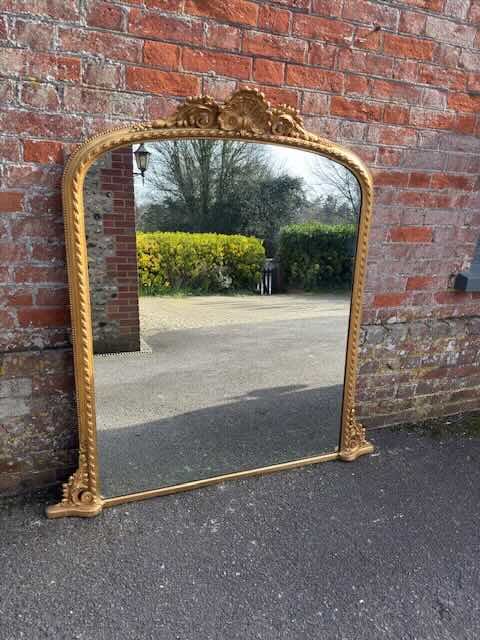


Rope Twist Framed Mirror
A rope twist framed mirror brings carved architectural texture and reflective scale into a room, originating mostly from nineteenth-century English and French workshops.
Rope Twist Framed Mirror
A rope twist framed mirror is typically found as a large overmantel or wall-hanging glass, built to anchor a chimney breast or principal wall. The selection spans the Victorian and Regency periods, stretching from the eighteen-sixties to the early twentieth century.
English and French examples dominate the record, often constructed with arched tops, shaped crests, or compartmental formats designed to reflect light across grand interiors. Alongside these large architectural pieces, smaller pier mirrors and oval formats appear from later nineteenth and Edwardian years.
How they were made
Makers shaped the underlying structure from pine and other timbers, applying layers of gesso to build up the intricate rope twist mouldings and decorative reliefs. Gilding or paint finished the surface, using gold leaf or pigments over the gesso base to achieve a reflective metallic or toned exterior.
The mirror glass itself was set within the carved wooden frame, frequently accompanied by heavy backing boards and structural supports necessary to hold substantial overmantel formats safely.
Listings feature pine and gesso structures finished in gold leaf or paint, spanning the Victorian, Regency and Edwardian eras.
What varies in quality
The depth and crispness of the hand-carved or moulded rope twist define the visual standard of the piece. Crisp detailing in the gesso and woodwork separates finely articulated examples from softer, flatter production.
Originality of surface finish also determines standing, with untouched period gilding or early paint layers holding greater integrity than later interventions.
The Rope Twist Framed Mirror Glossary
- Gesso
- A plaster-like mixture applied to wood frames to create a smooth surface for gilding or painting. It allows intricate decorative motifs like rope twists to be moulded into high relief.
- Giltwood
- Timber that has been coated with gold leaf. This finish was widely applied to nineteenth-century display mirrors to maximise candlelight and daylight reflection.
- Overmantel Mirror
- A large mirror specifically proportioned to hang above a fireplace mantelpiece. They often feature arched tops or horizontal formats to fit the architectural space.
- Pier Mirror
- A tall, narrow mirror designed to hang on the wall space between windows. They frequently match architectural console tables in period rooms.
- Composition
- A moulded material made from whiting, resin, glue and oil pressed into wooden frames to form ornamental details. It offered a quicker alternative to direct wood carving.
Rope Twist Framed Mirror: Frequently Asked Questions
Where should a rope twist framed mirror be hung?
These large mirrors traditionally sit above a fireplace mantelpiece, where their scale balances the hearth below. They also function effectively on principal living room walls to amplify natural light.
Securing them requires robust wall fixings due to the combined weight of the timber, gesso and thick glass.
How do I identify a nineteenth-century example?
Nineteenth-century pieces typically display heavy timber construction behind layered gesso, with hand-applied gold leaf or early painted finishes. Examining the backboards, fixings and the ageing of the mirror glass provides further clues to the period.
Many bear the characteristic arched tops and rope twist borders typical of Victorian and Regency workshops.
Are these mirrors suitable for modern interiors?
Their architectural scale and textured frames allow them to act as a primary focal point in contemporary or traditional spaces alike. They bring historical depth and brightness into hallways, bedrooms and reception rooms.
Careful consideration of wall strength is essential when hanging larger overmantel variants.
What is the difference between an overmantel and a pier mirror?
Overmantel mirrors are generally wide horizontal or arched pieces built to span the width of a fireplace breast. Pier mirrors are taller and narrower, designed for the wall space between architectural openings.
Both styles frequently utilise rope twist framing to add texture to the border.