


Rococo Writing Cabinet
A rococo writing cabinet brings flamboyant curves and intricate marquetry into a room, offering a secluded surface for correspondence.
Rococo Writing Cabinet
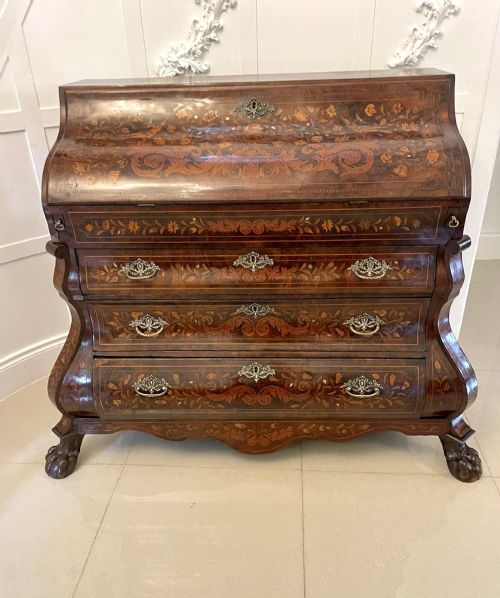
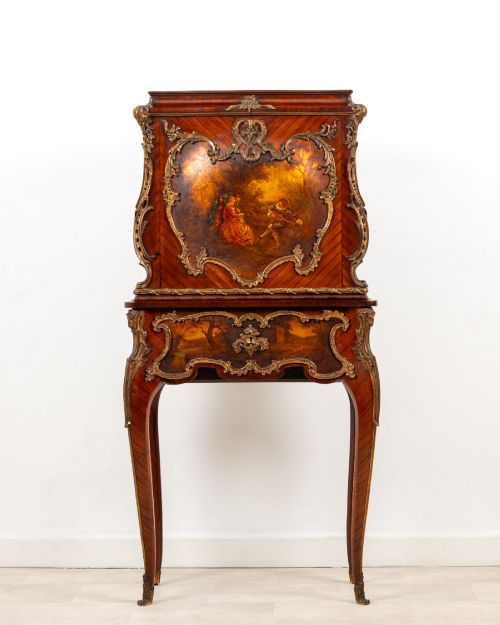
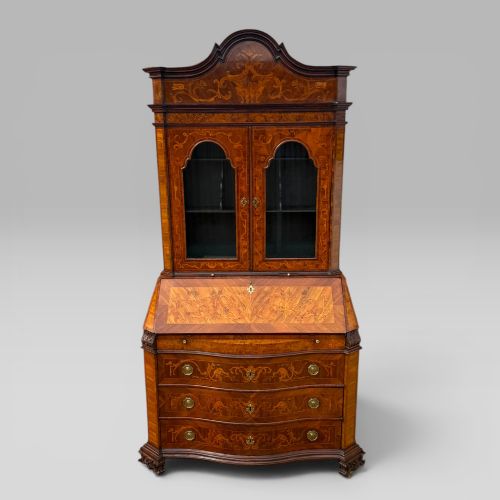
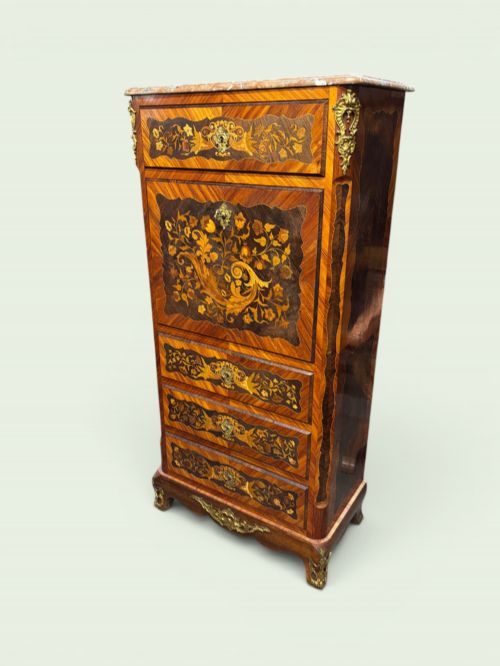
A rococo writing cabinet encompasses bureau bookcases, secrétaire cabinets, and bonheur du jour desks stemming from the eighteenth and nineteenth centuries. Buyers frequently encounter Dutch and Italian examples featuring bombe shapes alongside French revival pieces from the Victorian era.
The heavier bureau bookcase stands alongside lighter ladies desks and secretaire abattant forms. These pieces originate from distinct regional iterations including Venetian, Dutch, and French workshops.
Assessing craftsmanship
The precision of the floral marquetry inlay and the depth of the Burr walnut figure separate superior examples from simpler ones. Cabinetmakers achieved finer definition through careful wood selection and balanced composition across the bombe fronts.
The weight and chasing of the ormolu mounts indicate the standard of production. Superior pieces integrate cast bronze mounts seamlessly into the structural curves of the cabinetwork.
Regional styles span Dutch Rococo, Venetian, Italian, and French Louis XV revival periods.
The Rococo Writing Cabinet Glossary
- Bombe
- A swelling, outward-curving contour characteristic of eighteenth-century furniture design. This shaped silhouette requires advanced cabinetmaking skill to execute correctly.
- Secrétaire à abattant
- A tall cabinet featuring a vertical drop-front writing flap that conceals inner compartments and drawers. This form allows a compact footprint while offering substantial enclosed storage.
- Marquetry
- Decorative patterns created by fitting thin pieces of wood veneer onto a structural carcase. Floral designs dominate the surfaces of Dutch and Italian variations.
- Vernis Martin
- A simulated Japanese lacquer technique developed in eighteenth-century France. It produces glossy painted panels depicting pastoral scenes on cabinet doors.
- Bonheur du jour
- A light lady writing desk featuring a small cabinet or superstructure on the top surface. These feminine forms emerged during the mid-eighteenth century.
Rococo Writing Cabinet: Frequently Asked Questions
How do I distinguish an eighteenth-century cabinet from a later revival piece?
Examine the interior secondary woods and the construction methods used inside the drawer linings. Eighteenth-century examples display hand-cut joinery and period timber characteristics that differ from nineteenth-century revival interpretations.
Check the style of the marquetry and the casting quality of the ormolu mounts. Revival pieces often utilise machine-finished details and brighter brass patination.
Where should I place a bureau bookcase in my home?
Position the piece against a sturdy interior wall away from direct sunlight and heat sources. These cabinets require adequate clearance for drop-front writing flaps and opening doors.
Ensure the floor is level so the heavy carcase remains stable. A library, study, or large drawing room suits the substantial scale of double dome bureau bookcases.
How do I maintain the wood and ormolu on my cabinet?
Apply natural beeswax sparingly to nourish the walnut, kingwood, or rosewood surfaces. Buff gently with a soft cloth to maintain a subtle sheen without building up excess residue.
Keep ormolu mounts free from dust using a dry brush. Avoid harsh chemical cleaners that strip the original patination from the bronze and brass.