
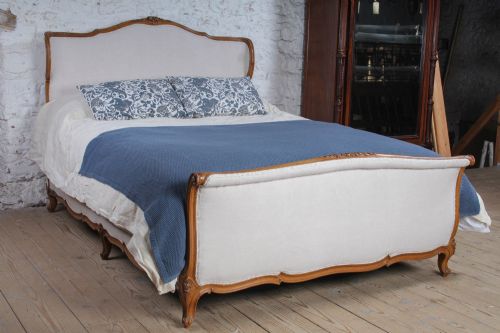
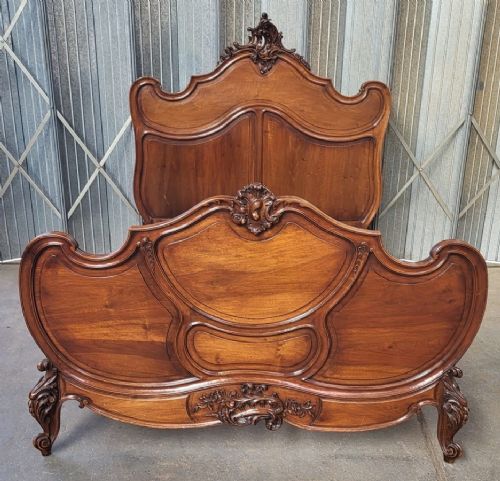
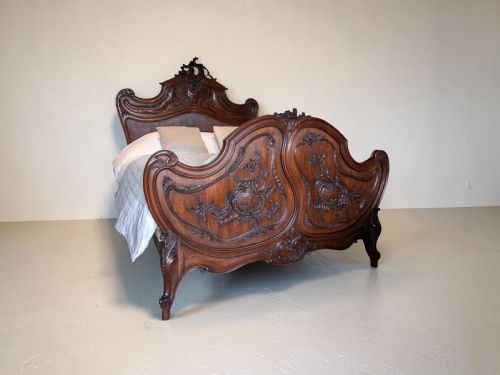


Rococo Walnut King Bed
A rococo walnut king bed brings nineteenth-century French and Italian elegance to the modern bedroom with sweeping carved wood and grand proportions.
Rococo Walnut King Bed
A rococo walnut king bed is a substantial sleeping piece designed in revival styles such as French Louis XV, French Rococo Revival, and Italian Rococo. These pieces emerge from periods spanning the late nineteenth and early twentieth centuries, specifically 1890, 1900, and 1910.
Originating from French and Italian workshops, these items capture the flowing asymmetrical lines and organic motifs characteristic of the Louis XV style. They offer functional king-size proportions while retaining historical decorative elements.
How they were made
Makers utilised walnut, burr walnut, and solid wood as the primary structural materials for these beds, shaping the timber to follow undulating rococo curves. Wood inlay added surface pattern and visual depth to the finished bed frames.
Carving formed the central technique, shaping deep relief motifs into the walnut frames without the use of modern machinery. Selected suites incorporated inset marble tops on associated cabinets alongside tailored upholstery fabric on headboards.
Materials recorded across these items include walnut, burr walnut, solid wood, glass, and marble.
What varies in quality
The depth and fluidity of the carved walnut ornamentation separate standard production from superior examples. Crisp hand-carving along the crest rails and footboards demonstrates greater artisan skill than softer, shallower moulding.
The selection of timber grain, particularly figured burr walnut against straight-grained walnut, dictates the visual richness of the surface. Complete bedroom suites that retain matching marble-topped bedside cabinets hold a higher level of historical integrity.
The Rococo Walnut King Bed Glossary
- Rococo Revival
- A nineteenth-century design movement that reinterpreted the curved, playful forms of the eighteenth-century French court. It favours asymmetrical scrolls, natural plant motifs, and flowing lines.
- Louis XV Style
- A classic French aesthetic characterised by cabriole legs, serpentine contours, and lack of straight lines. Furniture in this style prioritises organic grace and intricate wood-carving.
- Burr Walnut
- Timber taken from a tree growth or wart, producing intricate swirling patterns in the wood grain. Highly prized for decorative furniture panels and bed headboards.
- Bedstead
- A framework of a bed consisting of posts and supports for bedding. These historical versions accommodate modern king-size mattresses while maintaining antique wooden construction.
Rococo Walnut King Bed: Frequently Asked Questions
How do I fit a modern mattress?
These historical bed frames were constructed to accommodate large proportions, but internal dimensions can vary slightly from contemporary standard sizes. Buyers often use custom slats or modern low-profile box springs to support a standard king mattress securely within the antique wooden rails.
Checking the internal rail length and width before purchase ensures the mattress sits flush. Adjustments to internal support ledgers are sometimes made discreetly by specialists to accommodate modern bedding depths.
Are these beds solid walnut?
The listings show construction using walnut, solid wood, and burr walnut veneers over secondary timbers. Makers utilised solid walnut for high-stress structural elements like posts and carved crests, while applying figured burr walnut veneers to flat panel surfaces.
This combination prevented excessive weight and warping while displaying decorative wood grain. Examining the edges of panels reveals the underlying construction methods used by period cabinetmakers.
What comes in a bedroom suite?
Certain listings offer a complete bedroom suite that pairs the king size bed with matching bedside cabinets. These associated pieces often feature matching walnut carving and inset marble tops that echo the design of the main bedstead.
Such suites provide a unified aesthetic for the bedroom through coordinated timber selection and decorative motifs. The inclusion of matching cabinetry maintains the original decorative intent of the period maker.
How do I maintain the walnut finish?
Preserving the antique walnut surface involves keeping the wood away from direct sunlight and sudden humidity changes. Regular dusting with a soft, dry cloth prevents particulate accumulation without introducing moisture to the polished timber.
Applying a traditional beeswax polish periodically helps nourish the wood and maintain its natural lustre. Avoid silicone-based sprays that can penetrate the historic finish and attract dust over time.