
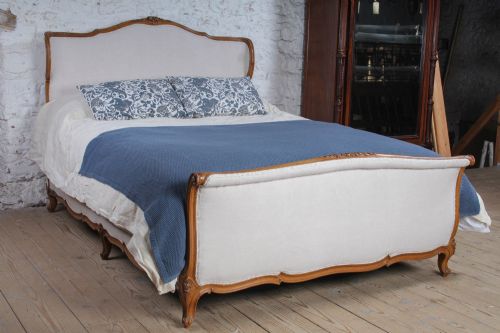
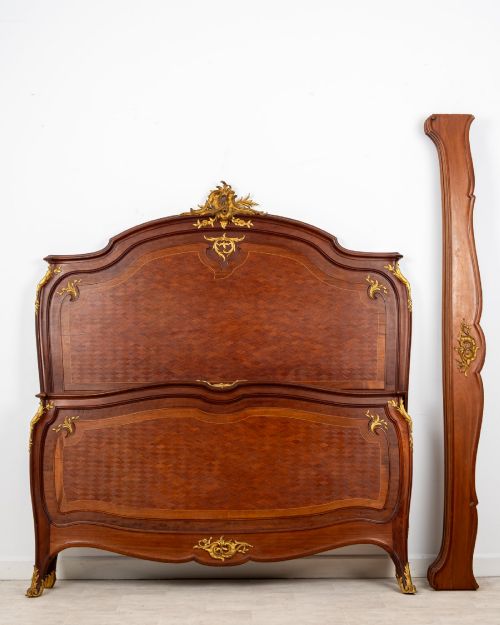
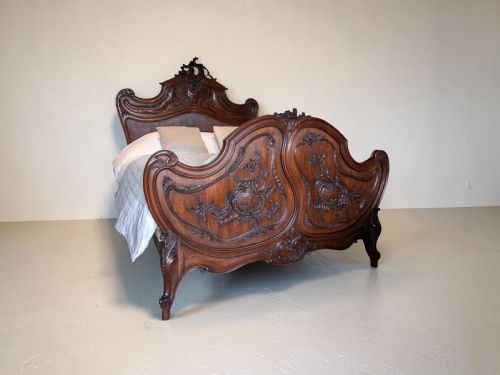


Rococo Style King Bed
These rococo style king bed frames combine elaborate scrolling framework with generous proportions, offering grand theatrical presence for a principal bedroom.
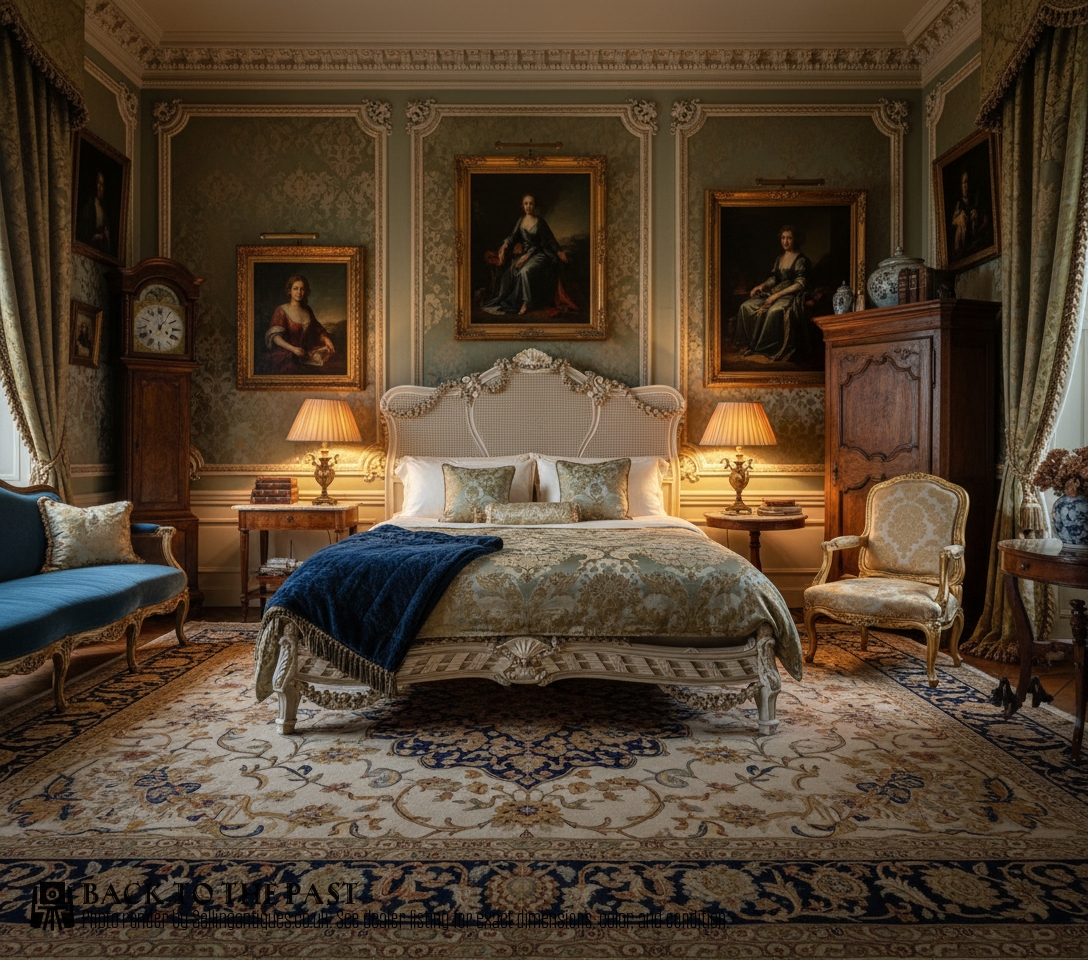
Rococo Style King Bed
A rococo style king bed brings dramatic asymmetrical curves and ornate floral carvings into the modern sleeping chamber, drawing on historical French design traditions. The pieces appearing here span from the late nineteenth century into the early twentieth century, reflecting revivals of Louis XV aesthetics.
Most examples take the form of substantial wooden bedsteads or complete bedroom suites that include matching bedside cabinets. Buyers encounter both polished timber surfaces and painted or gilt finishes, often paired with contemporary or period upholstery fabrics on the headboards.
Materials and construction
Cabinetmakers utilised dense hardwoods including walnut, kingwood, mahogany and rosewood, alongside softer timbers designated for painted or gilded decoration. Parquetry veneers and applied ormolu mounts frequently enrich the structural woodwork on finer examples.
Carving defines the aesthetic, shaping deep relief scrolls, acanthus leaves and shell motifs directly into the timber framework. Upholstered elements rely on traditional stuffing and textile panels fitted into shaped headboard frames.
One notable bedstead arrives directly with screen credits, having appeared in series two of the television production The Great.
Assessing craftsmanship and proportion
Depth and crispness of hand carving separate ambitious workshop production from simpler mechanical routing, particularly around the asymmetrical crests and footboards. The integration of bronze or ormolu mounts and the precision of kingwood parquetry indicate higher atelier standards.
Structural integrity and the retention of original timber patination govern the desirability of each bedstead. Alterations to accommodate modern mattress sizes can affect the balance of the original proportions.
The Rococo Style King Bed Glossary
- Ormolu
- Gilded bronze mounts applied as decorative ornaments to furniture surfaces. These cast metal elements accentuate key architectural joints and curves.
- Parquetry
- Geometric wood veneer patterns arranged in repetitive motifs like herringbones or cubes. This technique displays the varied tones of exotic timbers across flat panels.
- Louis XV Style
- Eighteenth-century French design movement characterised by asymmetry, C-scrolls and naturalistic plant forms. Revival versions reproduce these flowing lines for later domestic interiors.
- Bedstead
- The complete structural framework of a bed, including headboard, footboard and side rails. Unlike basic frames, bedsteads display decorative woodwork designed to be seen from all angles.
Rococo Style King Bed: Frequently Asked Questions
Will a modern king mattress fit?
Many antique frames require careful measurement because nineteenth and early twentieth-century sizing conventions differ slightly from current standards. Dealers often adapt side rails or build internal support platforms to accommodate standard mattresses securely.
Buyers should verify internal length and width dimensions before purchasing to ensure modern slats and mattresses sit properly within the antique framework.
How do I care for the polished wood?
Routine maintenance involves dusting with a soft, dry cloth and avoiding silicone-based polishes that build up over time. Natural wax applied sparingly helps nourish older timber surfaces.
Keep these beds away from direct heat sources and strong sunlight to prevent the timber and applied veneers from drying out or splitting.
Are bedside cabinets usually included?
Certain listings feature matching bedside cabinets that share the same carved walnut, painted finish or rococo detailing as the main bedstead. These suites provide a unified decorative scheme for the room.
When cabinets are absent, buyers often pair the bed with neutral or complementary vintage furniture rather than seeking exact period matches.
How do I distinguish painted finishes from original ones?
Original painted and parcel gilt surfaces show subtle wear patterns, craquelure and gentle oxidation consistent with age. Later repainting often appears uniform without the soft patina accumulated over decades.
Examining the edges and recesses reveals layers of previous preparation and the natural integration of paint into the wood grain.