

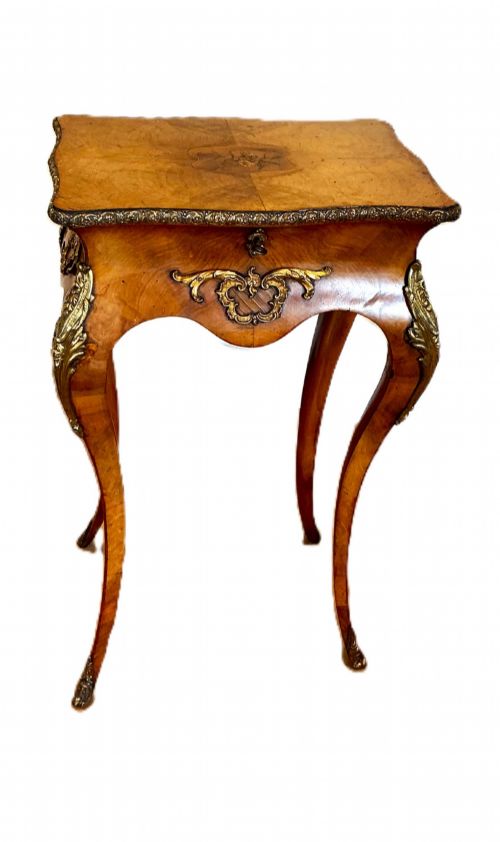


Rococo Revival Work Table
These rococo revival work table pieces bring fluent curves and ornate gilt mounts straight into a room, offering both decorative presence and practical surface space.
Rococo Revival Work Table
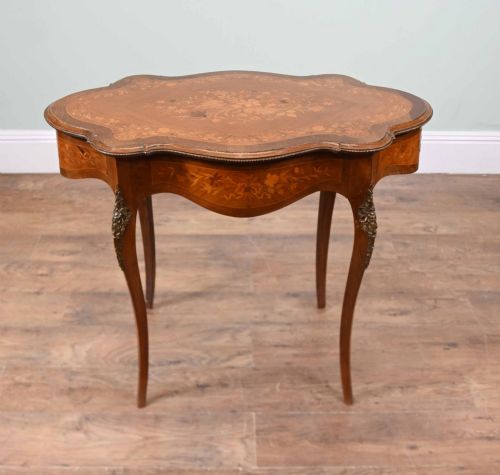
A rococo revival work table embodies the exuberant, scroll-heavy aesthetic of eighteenth-century French design resurrected during the nineteenth and early twentieth centuries. These pieces typically take the form of occasional tables, side tables, or writing desks built for domestic utility and formal display.
The versions most commonly met on this page date from the nineteenth century and lean heavily on French taste, adopting serpentine outlines and asymmetrical flourishes. Makers combined small proportions with functional drawers or compartmented tops intended for writing and needlework.
Makers working in the Victorian and Edwardian periods interpreted these French prototypes using domestic hardwoods like walnut, embellished with marquetry or parquetry patterns. The resulting forms balance functional surface areas with the dramatic silhouettes characteristic of the revival styles.
How They Were Made
Makers constructed these tables over softwood or hardwood carcasses, applying delicate veneers of walnut and kingwood in figured patterns across shaped tops and aprons. Mixed wood marquetry and geometric parquetry created contrasting panels, often framed by cast or chased brass and ormolu mounts.
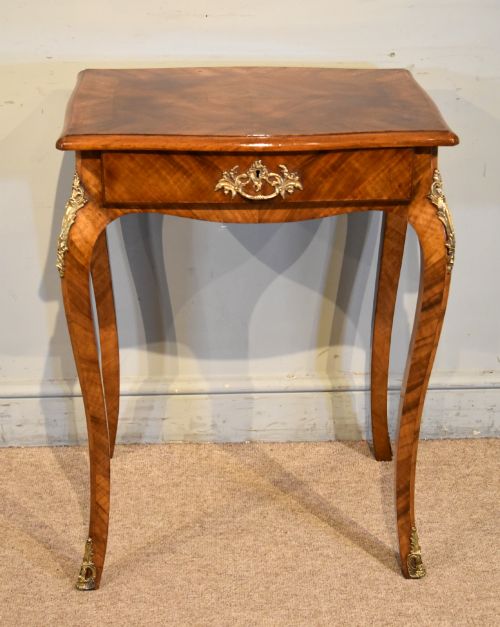
Cast metal mounts accentuated the sweeping cabriole legs and serpentine apron rails, fixed securely with pins or screws following traditional cabinet-making methods. Drawers utilised side-hung or centre-guided runners within frames tailored to curved outlines.
Rococo Revival Work Table Retail Price Guide 2026
Typical asking prices for rococo revival work table among the pieces listed under this phrase on Sellingantiques today, from the lower quarter to the upper quarter. They describe what is for sale here now, not the wider market.
Some work tables concealed sliding compartments and velvet-lined wells specifically designed for secret correspondence and sewing notions.
What Varies in Quality
Quality rests upon the crispness of the cast ormolu mounts and the precision with which veneers follow complex, curved profiles. Superior examples exhibit tightly fitted joints and hand-chased metalwork that sits flush against the timber without awkward gaps.
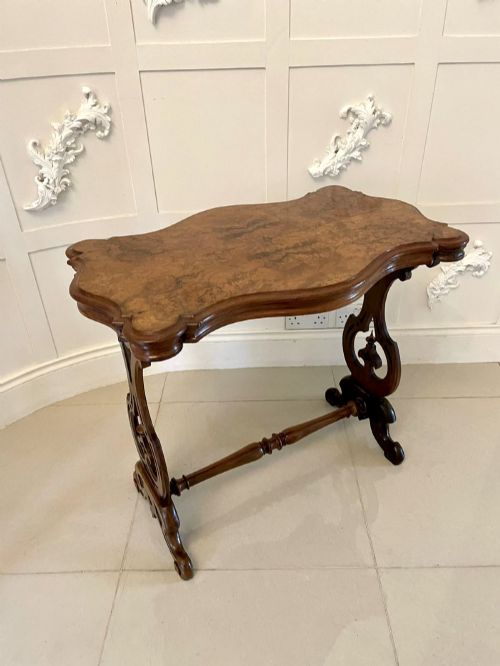
The choice of timbers dictates the visual depth of the surface, with carefully selected burr walnut and kingwood offering rich grain movement. Lesser pieces rely on simpler construction methods and mechanical veneer application that lacks the hand-finished nuance of finer workshops.
Payne London
The Rococo Revival Work Table Glossary
- Ormolu
- Gilded bronze mounts cast and chased with ornamental detail. These decorative elements frame corners, legs, and aprons on revival furniture.
- Marquetry
- Decorative veneer work forming pictorial or abstract designs. Craftsmen laid thin slices of contrasting wood into a fitted ground.
- Parquetry
- Geometric wood inlay forming repeating patterns such as cubes or chequers. This technique decorated tabletops and drawer fronts.
- Kingwood
- A dense, exotic timber with dark veining used extensively for high-end French veneer work. It provides striking contrast against lighter woods.
- Cabriole leg
- A furniture leg featuring a double curve mimicking an animal's leg, moving outward at the knee and inward at the ankle.
Rococo Revival Work Table: Frequently Asked Questions
What is a rococo revival work table?
A rococo revival work table is a nineteenth-century or early twentieth-century piece of furniture inspired by Louis XV designs, featuring curved lines and decorative mounts.
These tables were designed for light domestic tasks such as writing or sewing while serving as decorative accents in a drawing room.
How do I identify the period?
Period identification relies on examining timber preparation, the style of the brass or ormolu mounts, and underlying construction methods.
Nineteenth-century examples often employ French walnut or kingwood veneers over solid secondary woods with hand-cut dovetails.
Where were they used?
These tables sat in principal reception rooms, boudoirs, and drawing rooms where guests gathered and displays of taste mattered.
Their compact scale allowed them to function as movable side tables or dedicated writing surfaces beside seating arrangements.
How do I care for the surface?
Maintenance requires avoiding direct sunlight and excessive moisture to protect delicate wood veneers and shellac finishes.
Regular dusting with a dry, soft cloth preserves the sheen of both the timber and the applied metal mounts.