




Rococo Revival Porcelain Ornament
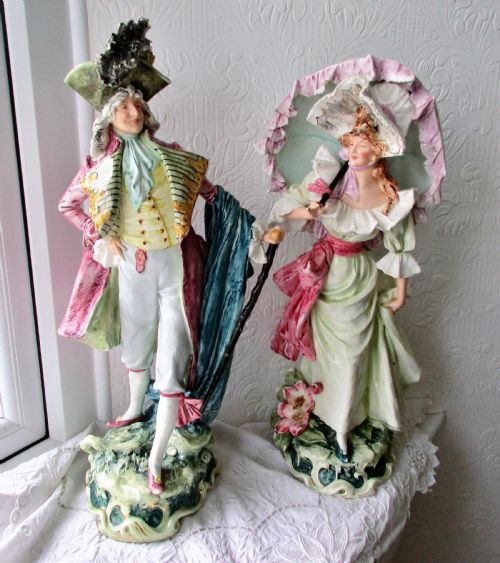
These rococo revival porcelain ornaments bring extravagant nineteenth-century flourish to a room, offering theatrical figures and grand centrepieces modelled on earlier French tastes.
Rococo Revival Porcelain Ornament
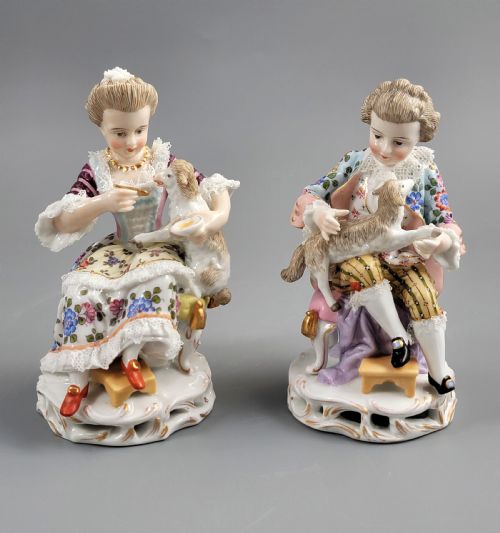
When you search for a rococo revival porcelain ornament, you encounter nineteenth-century figurines, ewers, and centrepieces shaped by nineteenth-century Victorian and continental makers. The pieces available here lean heavily into figural groups, pairs of gallants and ladies, and allegorical subjects that echo eighteenth-century excess.
Most examples date across the nineteenth century, including specific decades like the eighteen-eighties and eighteen-nineties, alongside later Edwardian echoes. You will frequently meet pairs of figures and large decorative table pieces rather than solitary items.
What separates the grades
Quality rests upon the crispness of the modelling in the clay and the delicacy applied to fine details like lace, fingers, and facial expressions. Superior pieces display fluid, convincing movement in drapery and secure, finely painted polychrome enamels.
The application of gilding and the precision of the firing process dictate whether a figure feels sharp and sculptural or heavy and blurred at the edges.
Nineteenth-century ceramic sheep frequently sport wool made from tiny grains of sand pressed into the wet clay before firing.
Volkstedt·Triebner Ens And Eckert·Richard Eckert·Samson·Vion Et Baury·Sitzendorf·Helena Wolfsohn
The Rococo Revival Porcelain Ornament Glossary
- Rococo Revival
- A nineteenth-century design movement that reinterpreted the curving lines, scrolls, and natural motifs of the mid-eighteenth century. It dominates the decorative arts of the Victorian era.
- Biscuit Porcelain
- Unglazed ceramic fired once to produce a matte, white surface resembling marble. It became popular for capturing fine sculptural detail.
- Faience
- Tin-glazed earthenware originating in Europe, offering an opaque white background for painted decoration. It provides a softer alternative to true porcelain.
- Hard-paste Porcelain
- A dense, durable ceramic composed of kaolin and petuntse, fired at very high temperatures. It forms the robust body of most continental decorative figures.
- Centrepiece
- A large, ornate ornamental object placed in the middle of a dining table or console. These often combine figurative sculpture with bowl or basket forms.
Rococo Revival Porcelain Ornament: Frequently Asked Questions
How do I clean my porcelain ornament safely?
Dust these delicate pieces gently with a soft, dry brush to prevent the accumulation of dirt within the intricate scrolls and folds of the garments. Avoid using water or chemical cleaners, especially where gilt or delicate enamel painting sits on the surface.
Keep the ornaments away from direct sunlight and areas subject to sudden temperature changes to protect the glaze and the underlying ceramic body from stress.
Where were these nineteenth-century ornaments displayed?
Victorian households placed these decorative figures, ewers, and centrepieces on mantelpieces, console tables, and within glass-fronted cabinets to demonstrate taste and refinement. Large centrepieces served as focal points for dining tables during formal gatherings.
The elaborate forms were designed to catch candlelight and gaslight, reflecting the theatrical domestic interiors of the period.
How can I tell a nineteenth-century piece from an eighteenth-century original?
Nineteenth-century revival pieces often display heavier potting, brighter and more chemically consistent enamel colours, and specific factory marks associated with Victorian revival production. The modelling tends to feel more theatrical and densely packed with ornamental detail than actual eighteenth-century work.
Examining the base and the condition of the glaze under magnification helps reveal the later nineteenth-century manufacturing techniques.