





Rococo Revival Bench
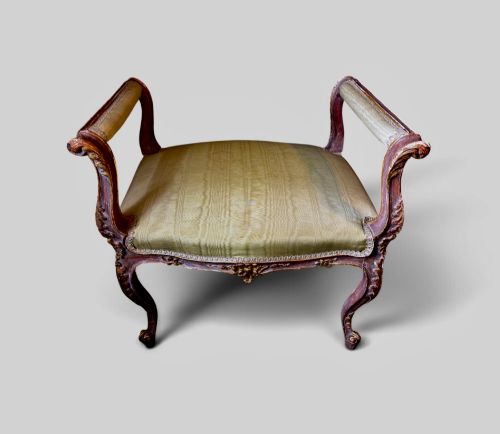
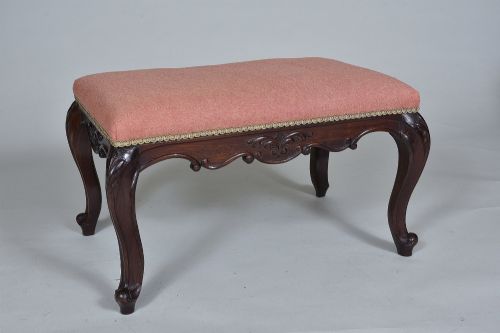
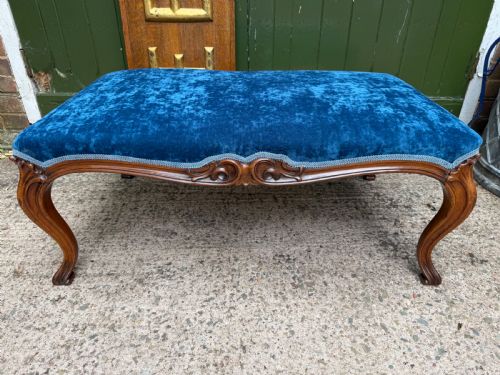
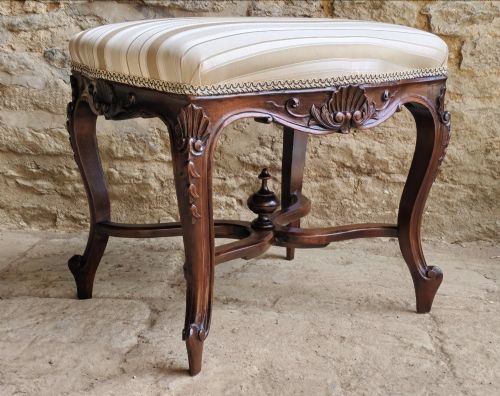
These rococo revival bench items bring dramatic curves and rich carving into a room, offering both seating and undeniable period presence.
Rococo Revival Bench
A rococo revival bench typically appears in forms such as stool, settee, sofa, or window seat, often bearing the characteristic flowing lines of the style. The selection includes items spanning from the nineteenth century into the twentieth century, reflecting varied interpretations of Louis XV and French chateau aesthetics.
Buyers most frequently encounter walnut and mahogany frames, alongside giltwood and rosewood examples, which support diverse upholstered elements. These pieces range from compact dressing stools and long stools to large three-seater couches and salon settees.
How they were made
Frames are constructed from solid timbers like walnut, mahogany, and rosewood, or shaped from giltwood and painted wood, then finished with detailed carving. Upholstery techniques incorporate fabric, velvet, and textile coverings secured to padded seats and backs.
Structural support relies heavily on cabriole legs, a defining feature of the style, shaped to provide stability beneath heavily carved wooden structures.
Rococo Revival Bench Retail Price Guide 2026
Typical asking prices for rococo revival bench among the pieces listed under this phrase on Sellingantiques today, from the lower quarter to the upper quarter. They describe what is for sale here now, not the wider market.
Several pieces feature musical collaboration in mind, specifically through the surviving form of the duet music stool.
What varies in quality
The depth and crispness of the wood carving distinguish finer frames from simpler versions, particularly around the cabriole legs and scrolled motifs. The choice of primary timber, such as figured walnut or rosewood versus secondary woods, also marks the distinction between standard production and higher-end pieces.
The quality of the upholstery work and the selection of covering materials, from standard fabric to rich velvet and gilt finishes, contribute significantly to the overall presence of each item.
The Rococo Revival Bench Glossary
- Cabriole leg
- A furniture leg that curves outward and then tapers inward, mimicking an animal's limb. This form appears frequently on stools and settees from this period.
- Settee
- A long upholstered seat with a back and arms, designed for more than one person. Examples in this style often incorporate exposed carved wooden frames.
- Canape
- An antique French upholstered sofa, typically featuring an exposed wooden frame. These pieces often display elaborate carved decoration.
Rococo Revival Bench: Frequently Asked Questions
What is a rococo revival bench?
It is a piece of nineteenth-century or later seating that adopts the sweeping curves, asymmetric scrolls, and naturalistic motifs of the eighteenth-century French movement. These items include various forms of stools, window seats, and settees.
They serve both decorative and functional purposes in a traditional interior, combining comfortable upholstered seating with ornate wooden frames.
How were these pieces used originally?
They functioned as seating in formal parlours, salons, and dressing rooms, often placed near windows or used alongside matching chairs. Long stools and settees accommodated multiple sitters during social gatherings.
Smaller dressing stools provided a seat for personal grooming and sat comfortably beneath mirrors in Victorian bedrooms.
How do I care for the upholstery?
Maintenance depends on the specific textile used, whether fabric, velvet, or general textile, and requires gentle cleaning appropriate to the material. Regular dusting of the wooden frames preserves the carved details and polished surfaces.
Direct sunlight should be avoided to prevent fading on both the exposed wood finishes and the fabric coverings.
How do I identify the period?
Period identification relies on examining the timber used, such as walnut, mahogany, or rosewood, alongside the specific style markers like Victorian or Louis XV revival influences. Construction methods and joinery also provide clues to whether an item dates to the nineteenth century or later.
Examining the depth of the carving and the form of the cabriole legs helps distinguish between mid-century pieces and later reproductions.