

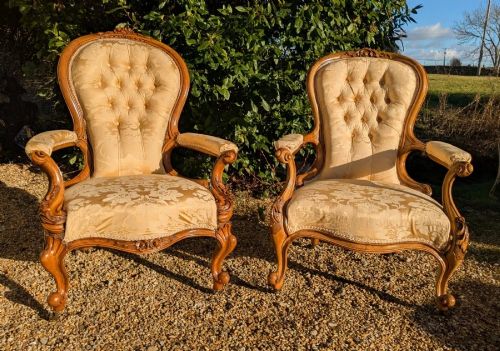


Rococo Revival Armchairs Pair
These rococo revival armchairs pair seating options bring extravagant nineteenth-century curves and ornate carved frames directly into your principal reception rooms.
Rococo Revival Armchairs Pair
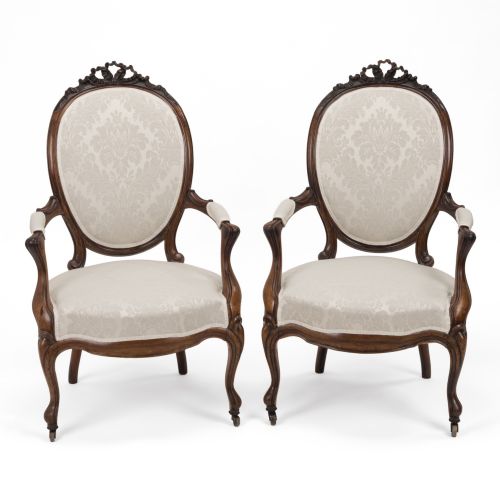
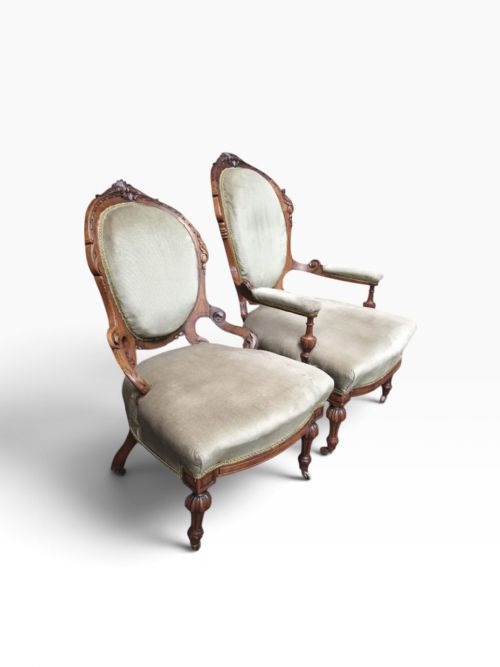
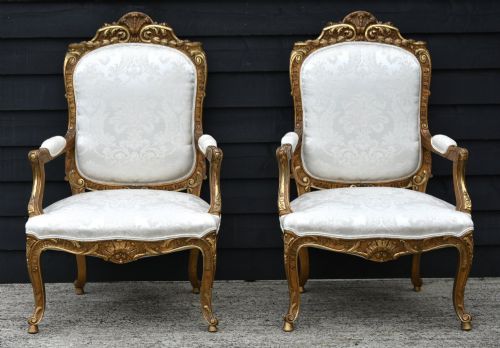
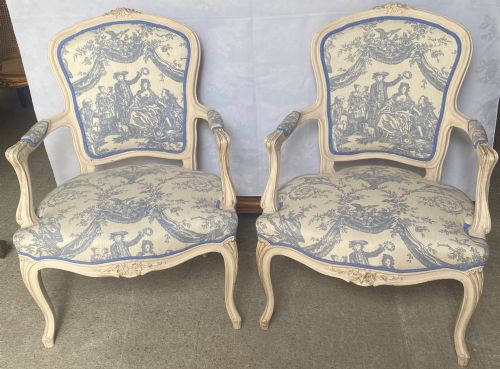
When searching for a rococo revival armchairs pair, you encounter nineteenth-century walnut, mahogany, rosewood, and giltwood frames shaped with characteristic asymmetric scrolls. The Victorian era and French Napoleon III periods dominate these offerings, alongside later early twentieth-century interpretations.
Most entries comprise matching gentleman and lady elbow chairs, salon suites with settee combinations, or open armchairs upholstered in velvet, silk, and patterned fabrics. These seating types reflect both domestic Victorian comfort and continental French chateau elegance.
The silhouettes rely heavily on spoonback designs, cabriole legs, and deeply carved wooden frames that emulate eighteenth-century Louis XV aesthetics. You select these pieces to anchor a drawing room or library with established historical character.
Materials and construction methods
Cabinetmakers shaped dense hardwoods like walnut, rosewood, and mahogany using traditional hand-carving techniques to achieve the characteristic sweeping floral motifs and scrolls. Giltwood and painted finishes added opulent surface sheen to many French salon examples.
Joinery involved sturdy mortise and tenon frames designed to support robust upholstery foundations, which originally utilised horsehair or springing before later restorations. Open armchairs and closed giltwood frames required precise tensioning to secure velvet and silk coverings.
Rococo Revival Armchairs Pair Retail Price Guide 2026
Typical asking prices for rococo revival armchairs pair among the pieces listed under this phrase on Sellingantiques today, from the lower quarter to the upper quarter. They describe what is for sale here now, not the wider market.
Distinguishing quality across examples
The depth and crispness of the hand-carved wooden ornament separate standard production from superior craftsmanship, as finer frames exhibit undercut foliage and deeply chased scrollwork. Simpler mouldings indicate more utilitarian workshop output.
The selection of primary timber and the integrity of the gilded or polished surface finish dictate visual prestige, with rich walnut and heavy fire-gilt surfaces commanding attention. Original upholstery materials or sympathetic period silk replacements enhance historical authenticity.
The Rococo Revival Armchairs Pair Glossary
- Cabriole leg
- A furniture leg that bends outward in a convex curve and tapers inward to a foot, typical of rococo design. This form emulates animal limbs and adds fluid grace to heavy wooden chairs.
- Spoonback
- An upholstered chair back shaped in a concave oval resembling the bowl of a spoon. This ergonomic form supports the human spine comfortably.
- Fauteuil
- An open-arm armchair with upholstered back and seat, originating in France. The wooden armrests typically feature padded elbows.
- Giltwood
- Wood that has been coated with gold leaf or a gold-coloured metallic finish. It creates a reflective, luxurious surface popular in formal French salons.
- Salon suite
- A coordinated set of seating furniture, including armchairs and settees, designed for formal entertaining rooms. These groupings ensure stylistic harmony in domestic interiors.
Rococo Revival Armchairs Pair: Frequently Asked Questions
How do I place a rococo revival armchairs pair?
Position them flanking a fireplace or facing each other across a low table to maintain a balanced, conversational arrangement in a principal room.
Their ornate carved backs and curved wooden frames look best when they have sufficient physical space to be viewed from multiple angles.
Were these chairs used in bedrooms?
Victorian and French salon chairs often served dual purposes in both public reception spaces and private dressing rooms or boudoirs.
Smaller ladies elbow chairs and open armchairs suited bedroom seating, while larger matching gentleman chairs remained downstairs.
How do I distinguish French from Victorian examples?
French pieces frequently utilise giltwood finishes, cabriole legs, and specific stylistic nods to Louis XV design alongside open armrest constructions.
Victorian English equivalents tend to employ darker polished walnut or mahogany with deep buttoning and enclosed spoonback wooden frames.
Can I mix these chairs with modern interiors?
The dramatic curves and rich textiles of nineteenth-century seating provide a striking focal point against minimalist contemporary backgrounds.
Pairing antique carved wood with neutral modern surroundings highlights the intricate craftsmanship of the period frames.