
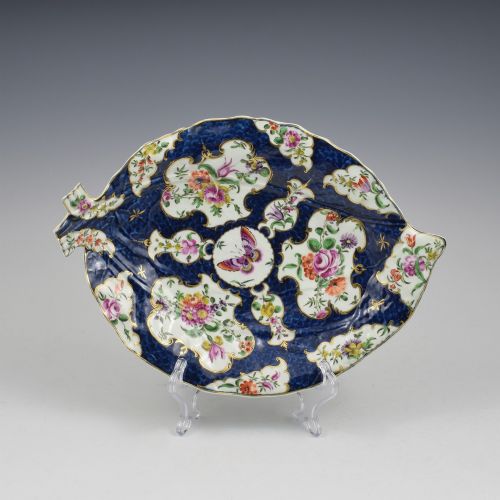
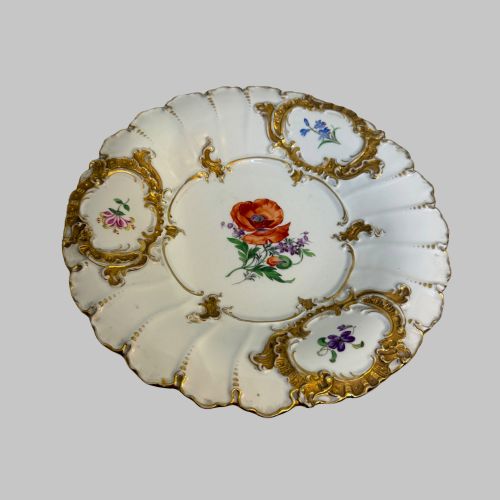
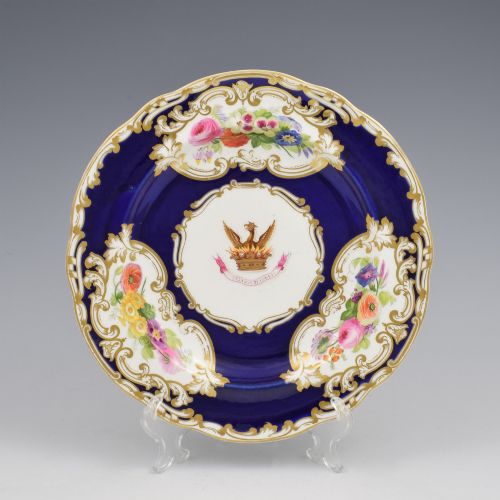


Rococo Porcelain Plates
Rococo porcelain plates bring asymmetrical scrolls and hand-painted scenes directly to the table, offering centuries of European artistry.
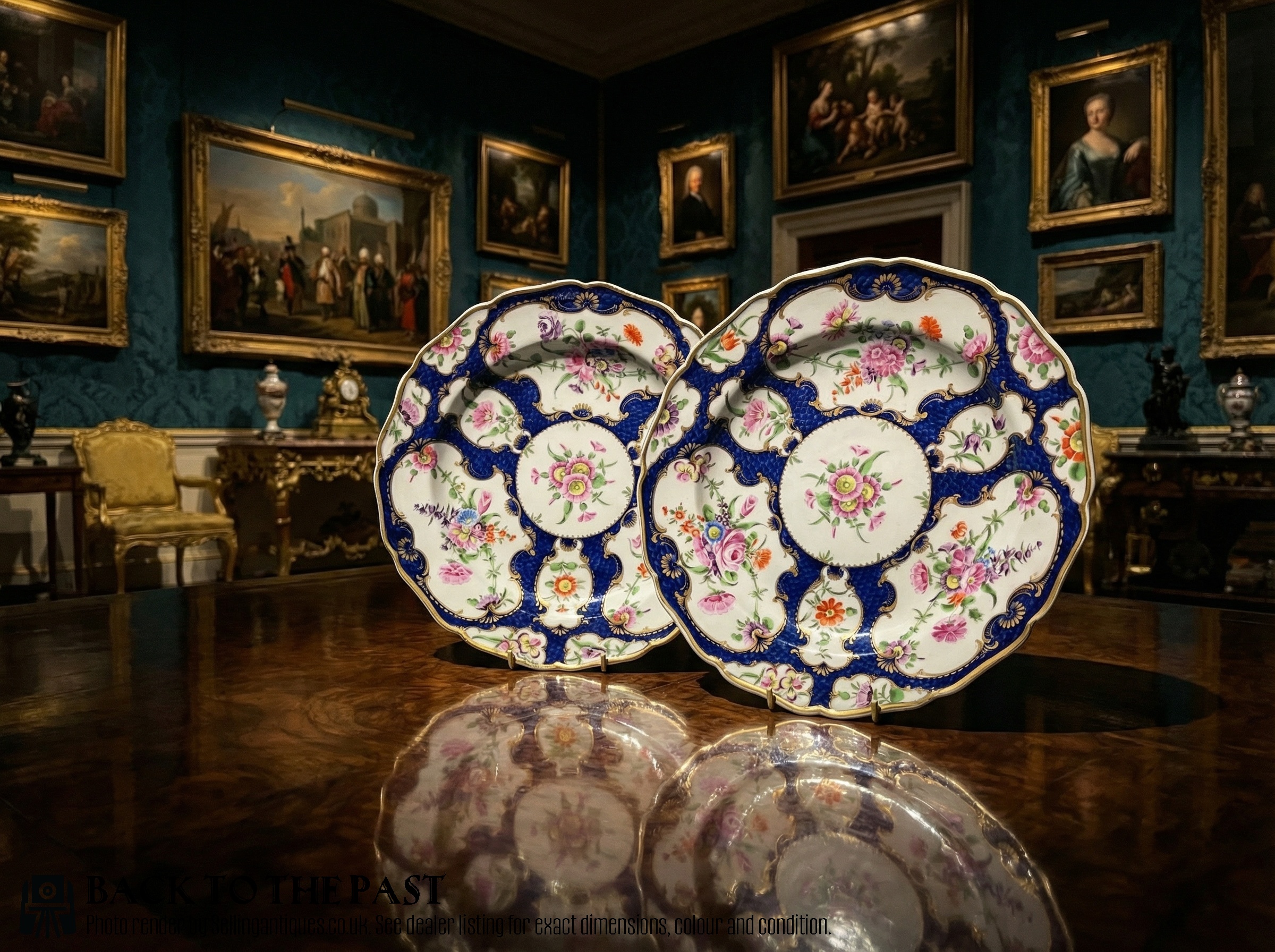
Rococo Porcelain Plates
When you search for rococo porcelain plates, you encounter intricate serving dishes, cabinet plates, and dessert services spanning the eighteenth and nineteenth centuries. These pieces reflect the exuberant, scroll-heavy aesthetic that first emerged in France and later inspired revivals across England and Germany. On this page, you are most likely to meet nineteenth-century interpretations alongside eighteenth-century originals, ranging from cabinet displays to decorative table dishes.
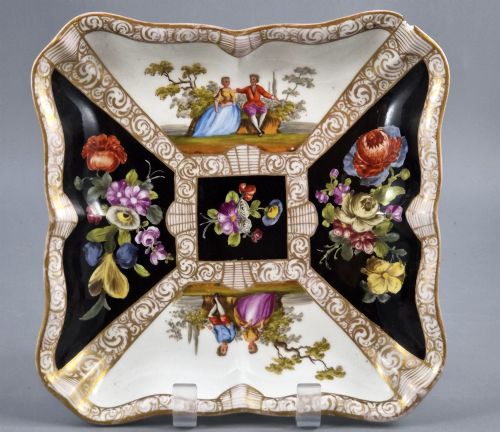
The forms vary from square dishes and soup plates to traditional round plates, often shaped with moulded borders such as ozier patterns. Many examples function purely as display pieces, designed for cabinets rather than everyday dining. Their origins stretch from Worcester and Chelsea in England to Meissen, Chantilly, and Sevres on the continent.
Materials and technique
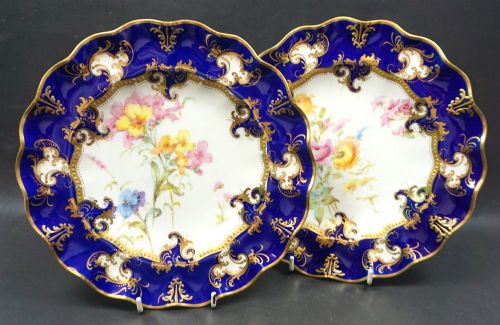
Makers utilised soft-paste and hard-paste porcelain, alongside bone china, as the foundational canvas for these decorative items. The bodies were shaped and moulded into undulating forms, frequently featuring the characteristic relief scrolls of the style. Enamel paints were then applied by hand to create intricate floral bouquets, bird studies, and pastoral figure scenes.
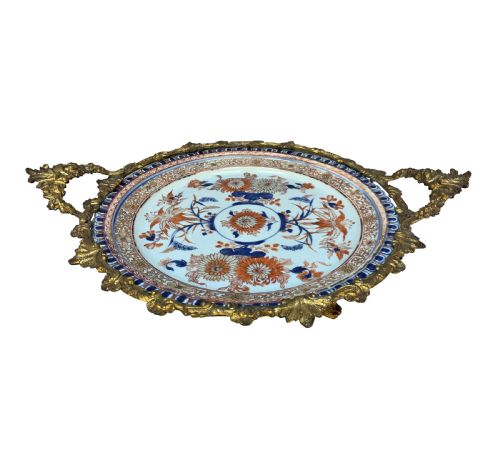
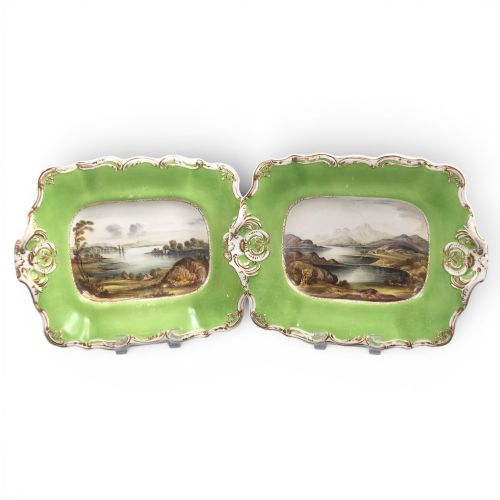
Gilding and gold leaf were carefully added to rims and moulded edges, often complementing blue scale grounds or vibrant green and black colourways. Ormolu mounts occasionally frame the porcelain, merging metalwork with ceramic to elevate the status of the dish. Firing techniques varied between factories, dictating the ultimate translucency and gloss of the glaze.
Object forms range from simple plates and saucers to elaborate dessert service dishes, square dishes, and ormolu-mounted Chinese imari imports.
What varies in quality
The standard of painting largely defines the tier of a piece, distinguishing workshop output from master-level artistry in hand-painted motifs like Watteau scenes or botanical studies. Crispness in the moulded rococo borders and the precision of the gilt application also separate standard production from finer cabinet pieces. Furthermore, the fidelity of the porcelain paste and the preservation of the enamel colours over centuries play a vital role in determining distinction.
Meissen·Royal Crown Derby·Copeland and Garrett·Worcester·Copeland·John Ridgway·Paul Muller Selb·Chantilly·Helena Wolfsohn·Royal Worcester·Veuve Perrin·Chelsea·Sevres
The Rococo Porcelain Plates Glossary
- Soft-paste porcelain
- A glassy ceramic composite fired at lower temperatures than hard-paste, common in early English and French manufactories. It possesses a warm, slightly creamy tone beneath the glaze.
- Hard-paste porcelain
- A true porcelain made from kaolin and petuntse, fired at high temperatures to yield a durable, bright white body. This material forms the basis of many German and continental pieces.
- Ozier border
- A basket-weave moulded pattern found on the rims of eighteenth and nineteenth-century plates. It provides a textured frame for painted floral motifs.
- Ormolu
- Gilded bronze used for decorative mounts on porcelain vessels and plates. It enhances the sculptural quality of the object.
- Cabinet plate
- A decorative plate intended for display in a cabinet rather than functional dining use. These pieces often feature elaborate hand-painted scenes and heavy gilding.
Rococo Porcelain Plates: Frequently Asked Questions
Were rococo porcelain plates used for dining?
Many examples on this page served as part of dessert services or specialised dining setups during the eighteenth and nineteenth centuries. Wealthy households utilised them for sweet courses or grand presentations.
Over time, surviving pieces often transitioned into cabinet displays or decorative wall plates to preserve their delicate hand-painted surfaces.
How do I identify eighteenth-century pieces?
Eighteenth-century examples often exhibit soft-paste bodies with distinct glaze characteristics and period-specific hand-painted palettes. Early factories like Worcester, Chelsea, and Chantilly employed specific marks and material formulations.
Comparing the moulded border styles and enamel techniques against known factory timelines helps narrow down the production era.
What is the difference between German and English plates?
German manufactories such as Meissen predominantly utilised hard-paste porcelain, producing crisp white bodies with vibrant floral and figural painting. English makers frequently experimented with soft-paste or bone china during earlier periods.
Stylistic adaptations also vary, with English revivals often putting a distinct local spin on French rococo motifs.
How should I display a cabinet plate?
Cabinet plates require secure wall brackets or specialised plate stands designed to support the weight of the porcelain without obscuring the rim. Placing them away from direct sunlight protects the enamel colours and gilding from fading.
Ensure the display location has stable humidity to safeguard the ceramic body and any historical mounts.