


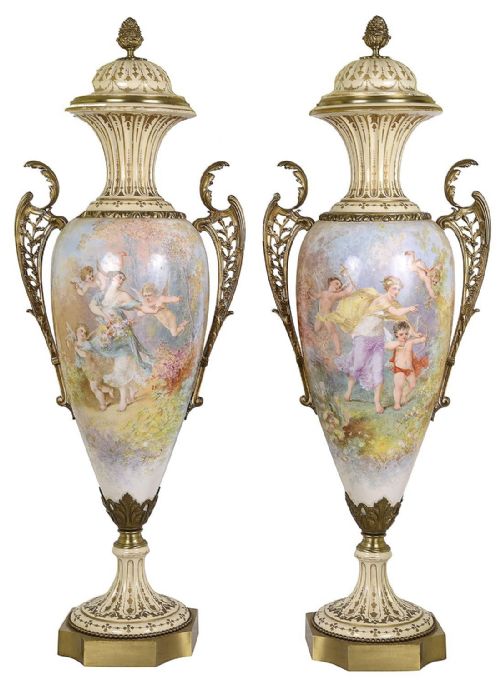


Rococo Gilt Bronze Urn
These rococo gilt bronze urn pieces bring French revival ornamentation and heavy cast mounts to nineteenth-century interiors.
Rococo Gilt Bronze Urn
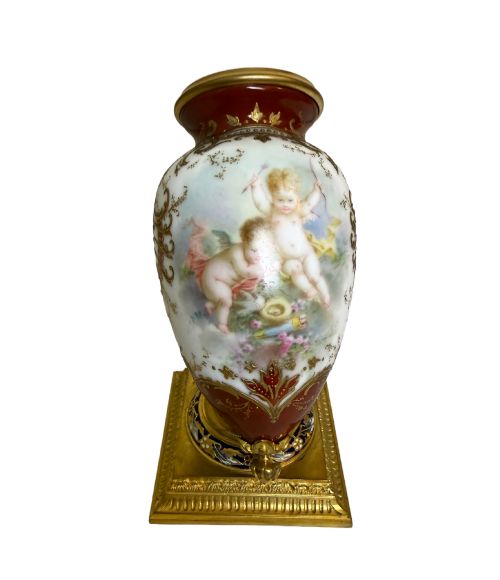
A rococo gilt bronze urn most frequently appears as a lidded porcelain vase mounted in cast metal, aligning with nineteenth-century French revival tastes. These pieces draw heavily on Sevres style aesthetics, often combining cobalt blue or pink painted porcelain bodies with elaborate metallic mounts.
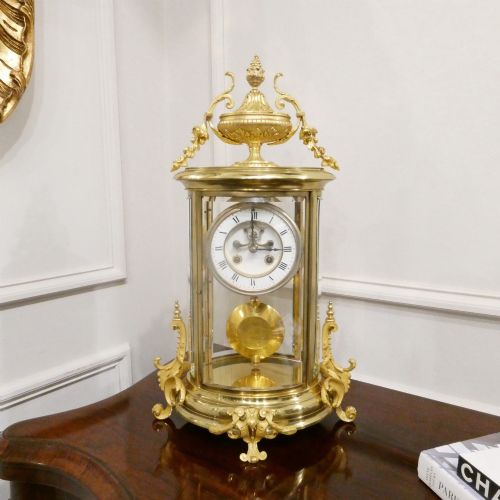
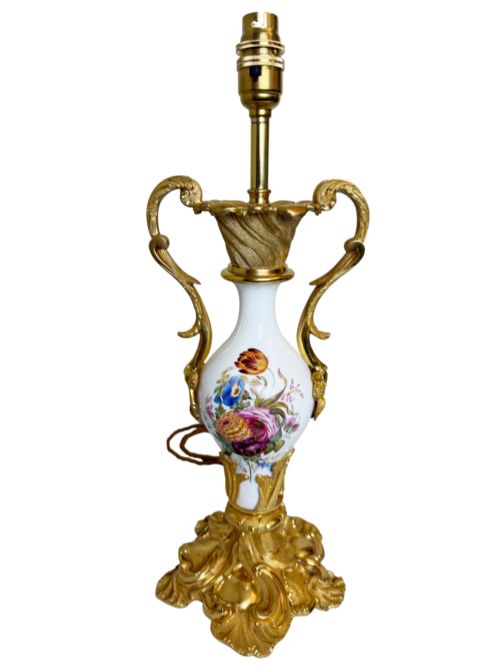
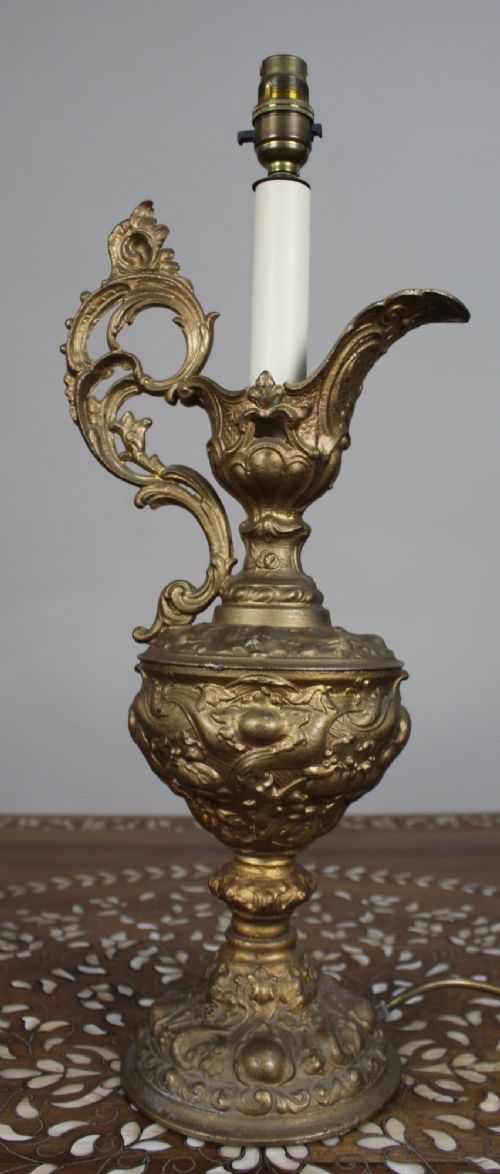
Beyond standalone vases, the selection includes garniture sets, mantel clocks, and table lamps that incorporate similar cast metal elements. Makers adapted the characteristic scrolling motifs of the eighteenth century into Victorian domestic lighting and decorative centrepieces.
The materials span from the nineteenth century into later twentieth-century interpretations, maintaining the visual vocabulary of French chateau decoration. Porcelain and glass bodies support the heavy cast metal collars, handles, and bases.
Materials and Casting Techniques
The metal components rely on bronze, brass, or ormolu, cast from detailed models and subsequently chased to sharpen the asymmetric scrollwork of the revival style. Gilding is applied to the bronze surfaces to create a bright, reflective finish that contrasts with the painted porcelain bodies.
Porcelain bodies, frequently styled after Sevres or Meissen production, are hand-painted with floral subjects or pastoral scenes before receiving their metallic mounts. Enamel, onyx, and glass also appear as secondary structural elements within the larger clock and lamp configurations.
At least one massive bracket clock manages to combine heavy Chinese blue and white ceramics with French rococo gilt bronze mounts.
Assessing Craftsmanship and Mounts
Quality rests heavily on the crispness of the bronze chasing and the weight of the cast mounts. Finer examples display deep, sharp relief in the scrollwork and foliage, whereas lesser pieces show softer, shallower casting details from worn moulds.
The integration between the porcelain body and the metal mounts indicates the level of workshop care. Superior items feature mounts custom-fitted to the ceramic contours, whilst simpler productions rely on standardised collars and generic fixings.
Samuel Marti·Vincenti of Paris·Henry Dasson
The Rococo Gilt Bronze Urn Glossary
- Ormolu
- A gilded bronze technique utilising a mercury amalgamation process to bind gold to a bronze base. This creates the characteristic bright metallic finish seen on nineteenth-century French mounts.
- Garniture
- A set of three or more matching decorative objects, typically comprising a central clock or vase flanked by matching vases or candelabra. These sets were designed to sit symmetrically on a mantelpiece.
- Sevres Style
- An aesthetic imitating the soft-paste porcelain and decorative schemes produced by the French royal factory. It is characterised by rich coloured grounds, hand-painted panels, and heavy gilding.
- Chasing
- The manual finishing of a cast metal object using small punches and hammers to refine surface details. Skilled chasing separates high-end mounts from basic commercial castings.
- Potpourri
- A vase or urn featuring a pierced or perforated lid designed to diffuse scent from dried botanicals held within. These vessels are frequently mounted in elaborate metal scrollwork.
Rococo Gilt Bronze Urn: Frequently Asked Questions
What periods do these pieces date from?
The majority of these pieces originate from the nineteenth century, spanning the Victorian era through to the late eighteen-hundreds. A small number reflect later twentieth-century production.
Production methods remained consistent across these decades, utilising traditional casting and hand-painting techniques rooted in earlier French revival styles.
How were garniture sets used?
Garniture sets were placed on mantelpieces or console tables as symmetrical decorative displays, usually framing a central clock or large urn. They created a balanced focal point in nineteenth-century formal reception rooms.
The matching side pieces often doubled as functional lidded vessels or candle holders alongside their central companion.
Are the lamps original conversions?
Many table lamps listed in this category incorporate antique porcelain bodies and gilt bronze mounts that were adapted for lighting. Some retain nineteenth-century wiring configurations while others reflect later updates.
Buyers should examine the fitting points to understand how the original vessel was modified to house electrical components.
How do I identify Sevres style porcelain?
Sevres style pieces are recognised by their distinctive coloured ground colours, most notably cobalt blue and pink, paired with gilt highlights. Hand-painted panels featuring birds, flowers, or figures are typical.
These items emulate the royal French factory output rather than claiming direct manufacture, focusing instead on nineteenth-century revival decorative appeal.