


Rococo Floral Needlepoint
These rococo floral needlepoint pieces bring exuberant carving and intricate stitched blooms straight into a room.
Rococo Floral Needlepoint
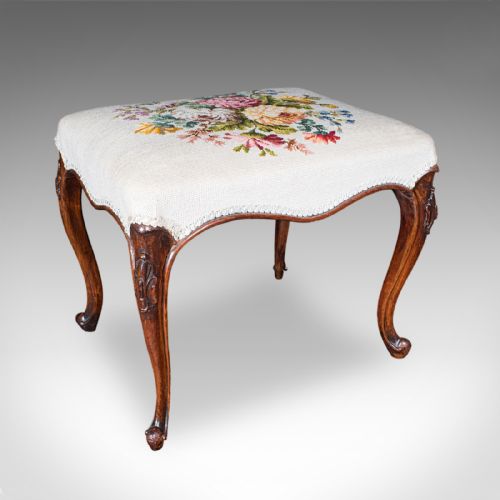
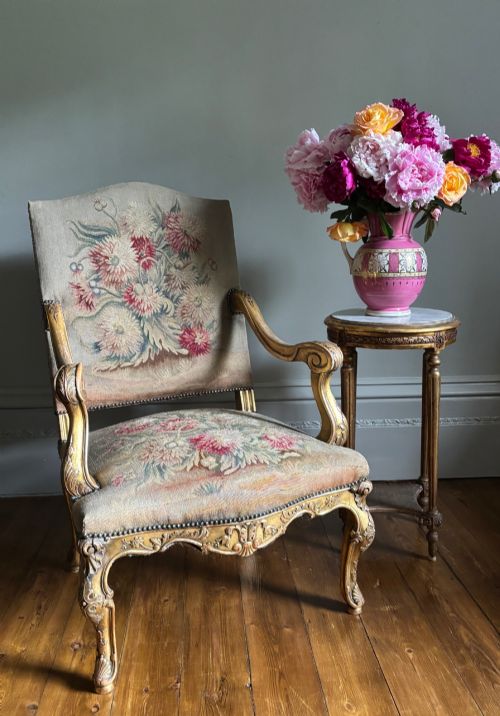
When searching for rococo floral needlepoint, collectors encounter a focused range of upholstered seating and decorative screens spanning the eighteenth and nineteenth centuries. These items combine ornate woodwork with detailed textile panels worked in wool and silk.
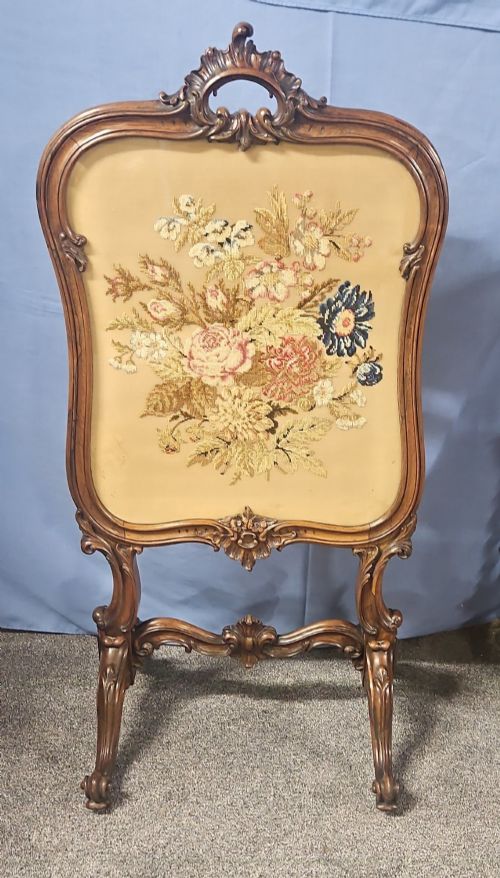
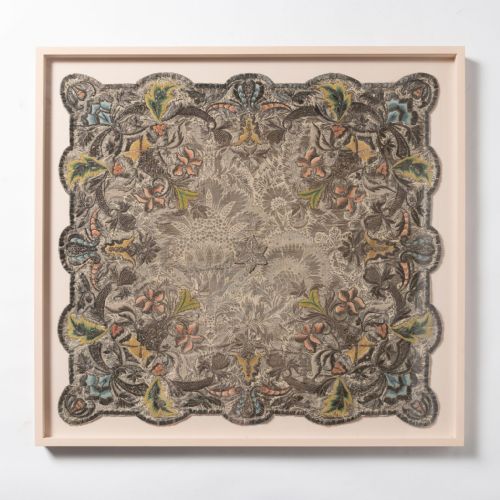
Armchairs, settees and footstools form the core of the selection alongside pole fire screens and framed panels. Victorian rococo revival examples alongside French pieces dominate the current offerings, showing the enduring appeal of asymmetrical curves and naturalistic floral motifs.
How they were made
Makers utilised dense timbers such as walnut, rosewood and giltwood to build sturdy frames capable of supporting elaborate carved ornamentation. Artisans shaped these woods into sweeping cabriole legs and scrolled cartouches characteristic of the style.
Needlepoint and tapestry panels were hand-stitched using wool and silk threads, later mounted tightly over padded wooden frames or drop-in seats. Glass protection occasionally appears on framed textile art to preserve the delicate fibres of the embroidery.
A good needlepoint screen once saved many a Victorian complexion from melting by the hearth.
What varies in quality
The sophistication of the carved woodwork sets finer items apart from simpler productions, with deeply undercut foliage and crisply defined scrolls indicating superior craftsmanship. The density and precision of the needlepoint stitches also dictate the overall fineness of the textile panels.
The integrity of the original pairing between frame and needlework influences the standing of a piece. Examples retaining their untouched period upholstery display a more authentic harmony of design than later adaptations.
The Rococo Floral Needlepoint Glossary
- Needlepoint
- A form of counted thread embroidery stitched on a stiff open weave canvas. It provides the durable surface necessary for upholstery on heavily used armchairs and stools.
- Giltwood
- Timber treated with a thin layer of gold leaf over a prepared gesso ground. This finish catches the light and highlights the elaborate carved details on frames.
- Pole screen
- A vertical decorative screen mounted on a slender tripod base with an adjustable panel. It protected faces from the intense heat of an open fireplace.
Rococo Floral Needlepoint: Frequently Asked Questions
What is rococo floral needlepoint?
These pieces combine mid-eighteenth century inspired scrollwork frames with hand-stitched botanical embroidery. They span functional furniture like armchairs and footstools alongside decorative screens.
Craftsmen built them using traditional timbers and textile arts that survive as highlights of period interior decoration.
How were fire screens used?
Fire screens served a practical purpose in period homes by shielding occupants from the direct radiant heat of coal fires. The adjustable needlepoint panels could be raised or lowered on their wooden poles.
They also protected expensive facial cosmetics and delicate wallpapers from scorching.
How do I date these items?
Dating relies on examining the timber species, construction joints and the style of the carving. Eighteenth-century originals differ significantly in joinery from nineteenth-century revival interpretations.
Textile analysis of the wool and silk threads further helps establish the period of the embroidery.
How do I live with them?
Living with these textiles requires mindful placement away from direct sunlight to prevent the silk and wool threads from fading. Regular gentle dusting keeps the carved woodwork and needlepoint clean.
They integrate well into traditional and modern interiors as focal points of texture and colour.