


Rococo Executive Writing Desk
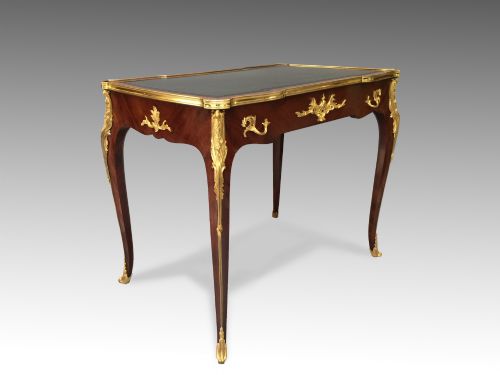
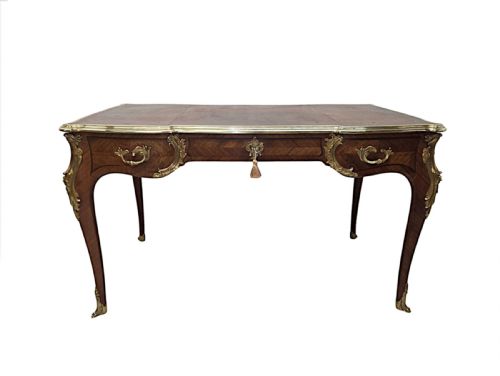
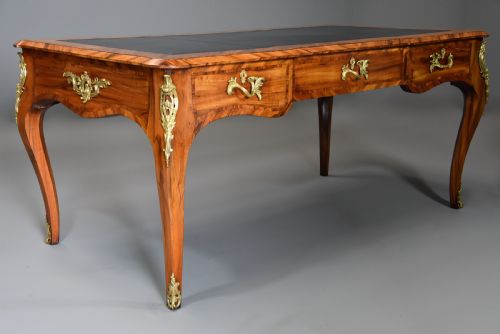
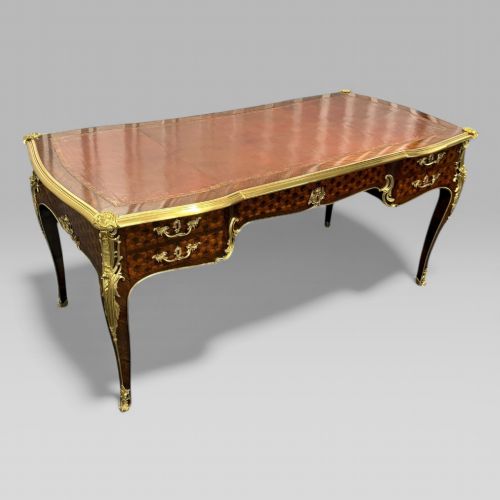
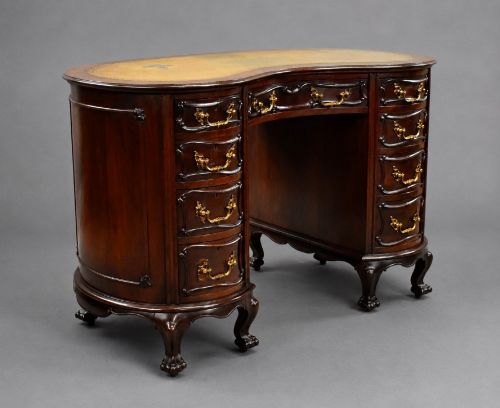
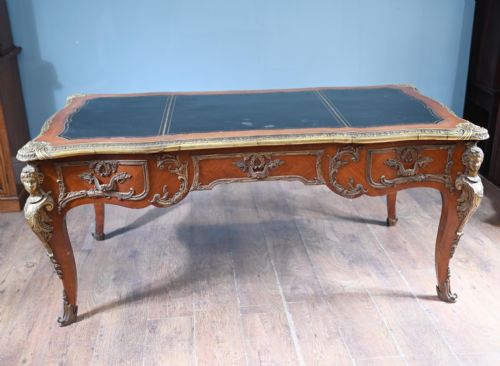
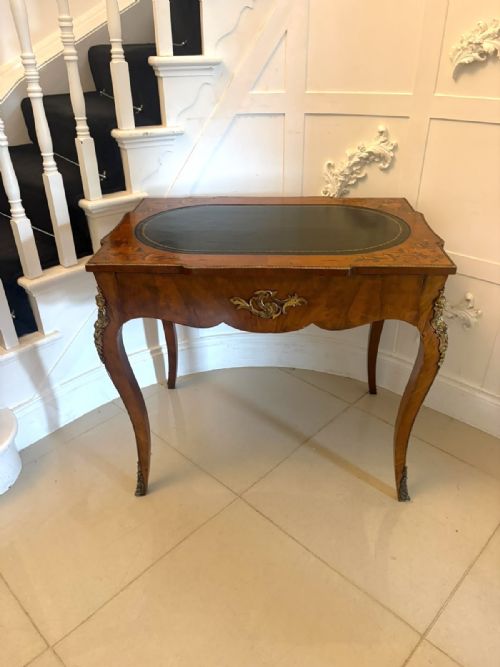
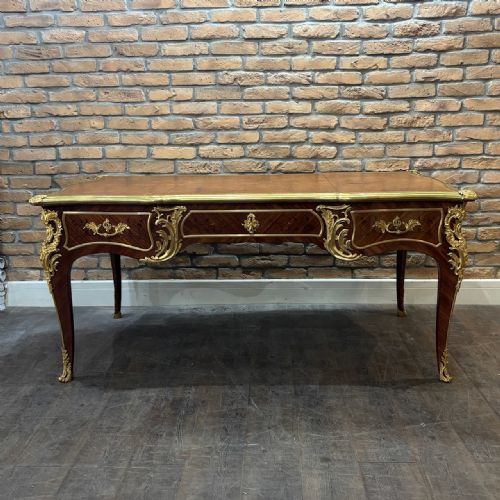
A rococo executive writing desk offers a sweeping serpentine form and rich gilt bronze mounts that bring dramatic French flair to a study.
Rococo Executive Writing Desk
A rococo executive writing desk is typically encountered as a freestanding bureau plat, designed to sit in the centre of a room rather than against a wall. These pieces draw heavily on French Louis XV and Louis XVI revival aesthetics, showcasing exuberant curves and refined asymmetrical detailing.
The materials span rich exotic timbers such as kingwood, walnut, and mahogany, frequently complemented by bronze or ormolu mounts and inset leather writing surfaces. Most examples date from the nineteenth century, though the revival styles extend into the twentieth century.
The form functions primarily as a writing table, often featuring drawers integrated into the shaped aprons while maintaining a finished appearance on all four sides.
How they were made
Cabinetmakers constructed these desks using solid and veneered hardwoods like kingwood, walnut, mahogany, and goncalo alves, often enhanced by intricate marquetry or parquetry patterns. The timber carcasses supported heavy cast ormolu and bronze mounts that framed the drawers and accentuated the characteristic cabriole legs.
Working surfaces typically utilised supple leather hides tooled with gold leaf borders, inset directly into the wooden tops. Skilled artisans cast and chased the metal mounts by hand before applying them to the complex, serpentine wooden structures.
What varies in quality
Quality rests heavily on the crispness of the bronze or ormolu casting and the precision of the timber veneers. Finer pieces demonstrate deep, tactile chasing on the metal mounts and seamless integration of marquetry across curved surfaces.
The integrity of the structural joinery and the presence of original materials, such as the fitted leather writing surface, distinguish workshop output. Master makers achieve a fluid harmony between the timber carcase and the applied metalwork that lesser examples lack.
François Linke·Edwards and Roberts·Zweiner
The Rococo Executive Writing Desk Glossary
- Bureau plat
- A freestanding double-sided writing table with drawers, popular in France from the eighteenth century onwards. This form serves as the primary shape for these executive desks.
- Ormolu
- Gilded bronze used for decorative mounts and hardware on furniture. It provides a bright metallic contrast against dark timbers like kingwood and mahogany.
- Marquetry
- Inlaid wood veneers arranged in decorative patterns or pictorial scenes. Craftsmen utilise different timber species to create tonal contrast across the desk top.
- Cabriole leg
- A furniture leg that curves outward and then tapers inward, ending in a pad or scroll foot. This shape defines the classic revival aesthetic.
- Parquetry
- Geometric wood inlay patterns applied to furniture surfaces. It creates orderly tiled designs across the tops and drawers of writing tables.
Rococo Executive Writing Desk: Frequently Asked Questions
Can a bureau plat sit in the middle of a room?
These desks are finished on all sides precisely so they can float in the centre of a study or office rather than pushed against a wall.
The finished backs and symmetrical detailing allow them to serve as dramatic centrepieces from any viewing angle.
What is the difference between a writing table and a bureau plat?
A bureau plat is a specific type of writing table featuring drawers set into the frieze, traditionally designed for executive use.
While all bureau plat examples function as writing tables, not every writing table includes the compartmentalised drawers characteristic of these executive desks.
How do I identify a revival piece from an original eighteenth century model?
Most examples found here date from the nineteenth century revival periods, reflecting the Victorian enthusiasm for French Louis XV designs.
Examination of the secondary woods, machine-cut elements, and construction techniques helps determine the exact nineteenth or twentieth century production era.
How should I care for the leather writing surface?
The inset leather top requires gentle dusting and occasional treatment with appropriate conservation balms to prevent drying and cracking.
Avoiding direct sunlight and excessive moisture preserves both the supple hide and the surrounding gilt toolwork.