
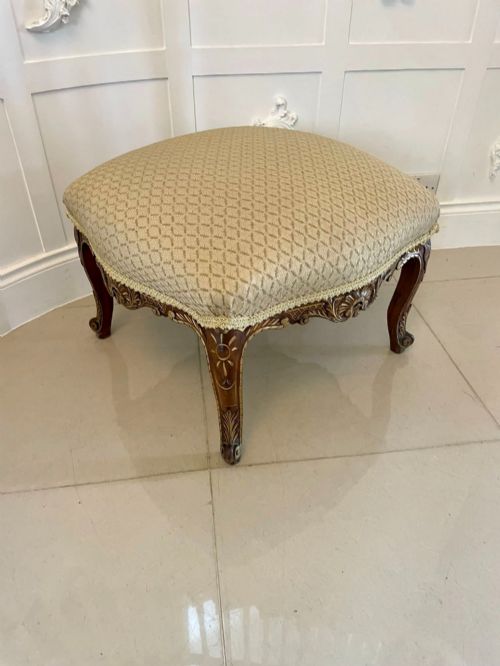
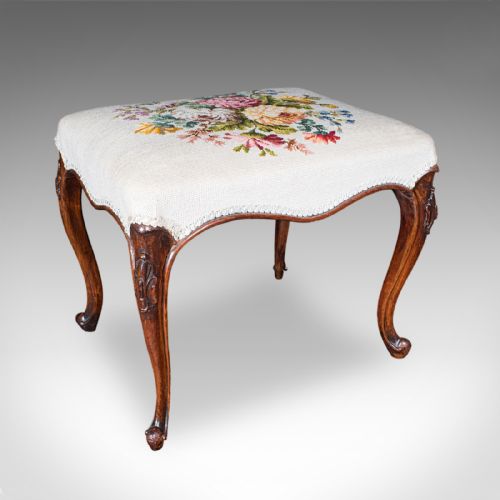
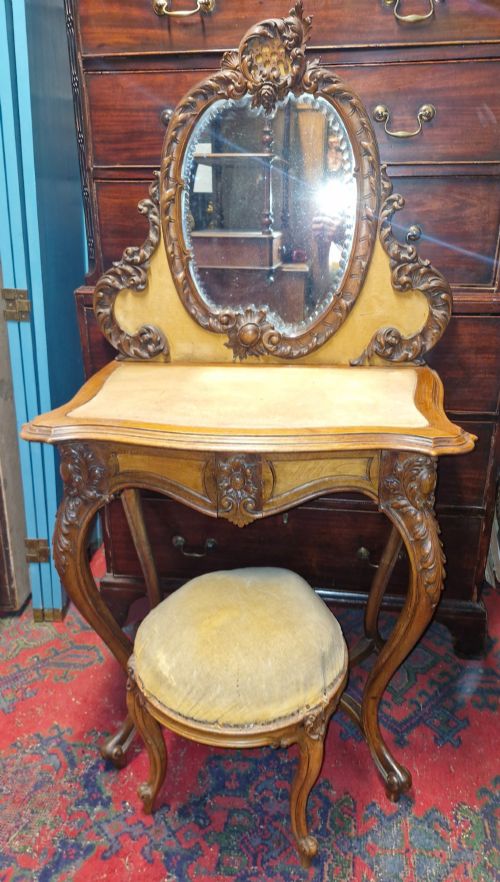
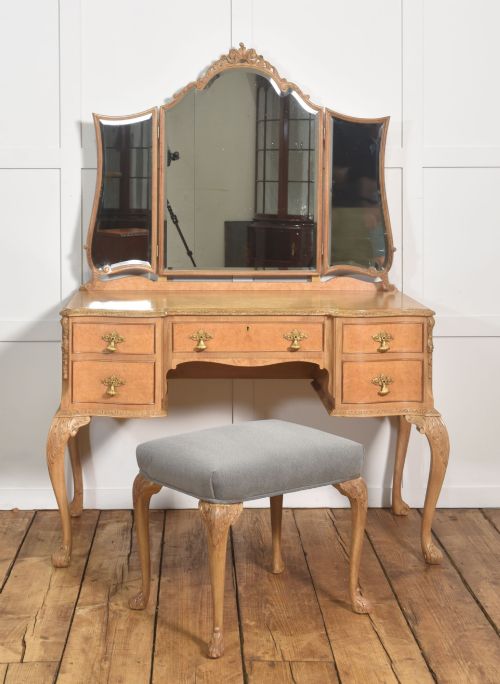


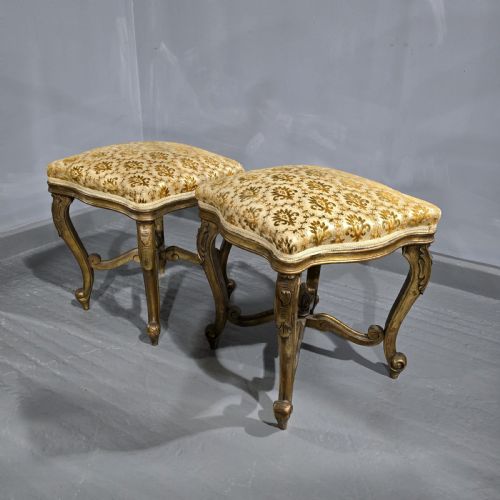

Rococo Dressing Stool
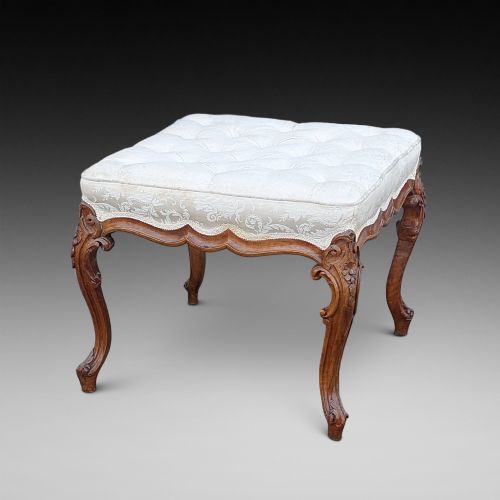
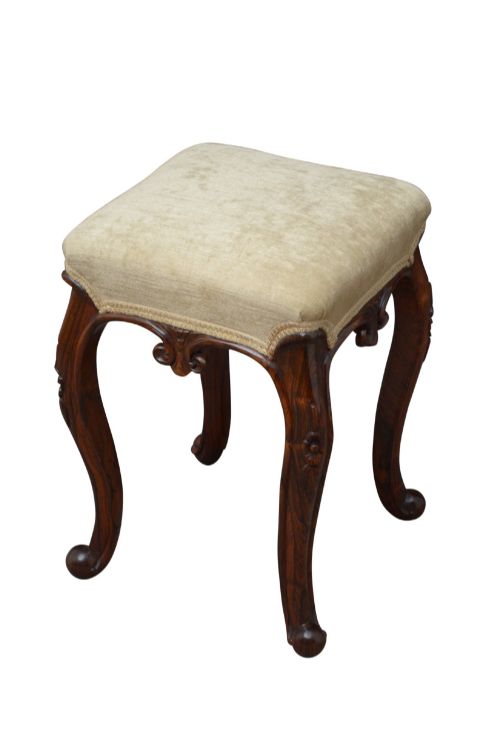
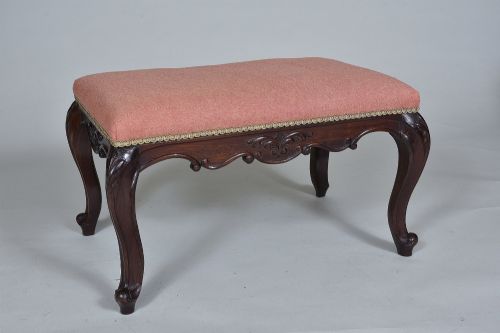
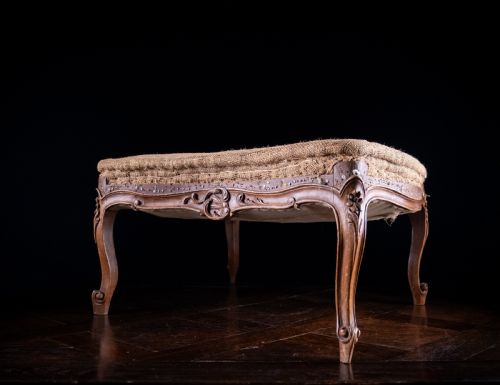
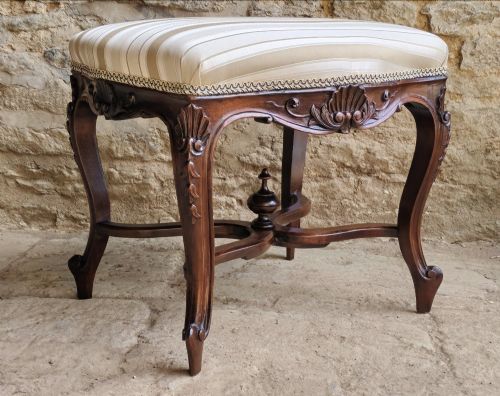
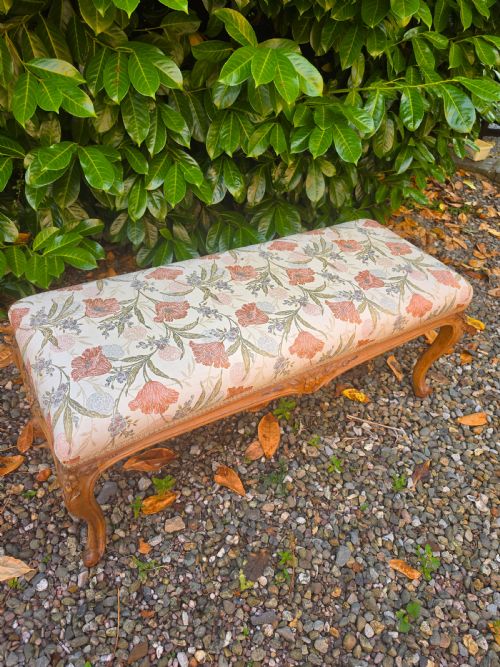
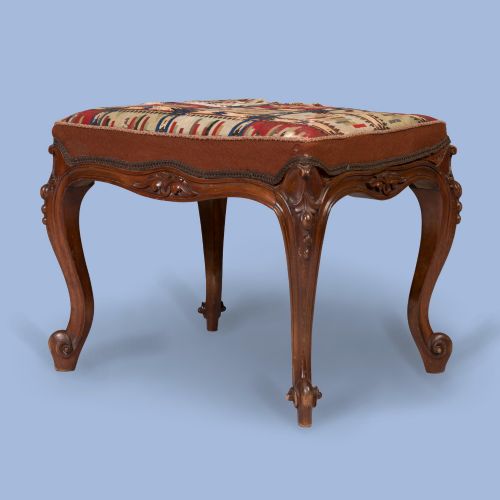
A rococo dressing stool brings curved cabriole legs and ornate carved detail into a bedroom or dressing room scheme.
Rococo Dressing Stool
When you search for a rococo dressing stool, you encounter low seats designed for dressing tables or salon use, most frequently appearing in Victorian and nineteenth-century interpretations of French Louis XV taste. These low seats stand on curved cabriole legs, often accompanied by matching dressing tables or offered as freestanding salon pieces.
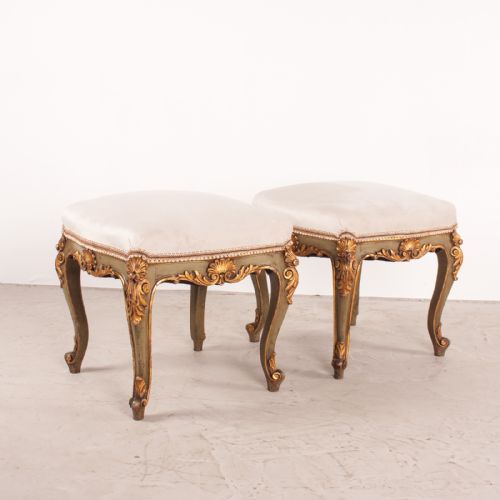
The prevailing examples on this page date from the Victorian era down to the early twentieth century, spanning decades from eighteen sixty to nineteen thirty. Makers of these periods drew heavily on curvilinear revival styles, producing both single stools and symmetrical pairs in various woods and painted finishes.
How they were made
Cabinet makers constructed the frames of these stools using dense timbers such as walnut, mahogany, rosewood, and beech, alongside decorative alternatives like goncalo alves wood and painted or gilded surfaces. Artisans shaped the structural wooden frames into flowing curves, integrating cabriole legs directly into the seat rail construction.
Upholstery completed the piece, utilising traditional textile coverings including needlepoint and fabric over padded seat foundations. Workshops also produced giltwood and painted wood variants, applying gilding and decorative paint directly to carved wooden frames.
What varies in quality
The depth and crispness of the wood carving dictate the distinction between standard production and superior craftsmanship, particularly visible in the execution of cabriole legs and floral motifs. Finer examples display deeply undercut carvings and substantial timber scantlings rather than shallow surface decoration.
The choice of primary wood and the integrity of the frame construction further separate individual pieces, with dense hardwoods like walnut and rosewood holding carved detail more sharply than softer alternatives. Original upholstery methods and period textile survivals also influence the character of the finished seat.
The Rococo Dressing Stool Glossary
- Cabriole leg
- A furniture leg that curves outward and then tapers inward, finishing in a pad or scroll foot. This form mimics animal limbs and appears on almost all pieces of this type.
- Louis XV style
- A decorative design movement characterised by asymmetrical scrollwork, naturalistic plant motifs, and curved lines. Nineteenth-century makers revived this aesthetic across seating and tables.
- Needlepoint
- A type of canvas work embroidery used historically for seat covers and footstools. It provides a textured, durable surface featuring floral or geometric patterns.
- Giltwood
- Timber that has been coated with a thin layer of gold leaf or gilt paint. This finish imparts a reflective metallic surface to decorative frames.
Rococo Dressing Stool: Frequently Asked Questions
How do I use a dressing stool today?
These low seats function effectively at dressing tables, vanities, or as decorative footstools in a living space. Their compact dimensions allow them to tuck neatly beneath tables when not in use.
They also serve as occasional seating in bedrooms or hallways, where their carved wooden frames and upholstered tops add period character to an interior.
What periods do these stools come from?
The listings on this page span the Victorian era, the nineteenth century, and into the early twentieth century up to nineteen thirty. Most pieces reflect revival styles inspired by earlier French design.
Craftsmen produced these variations across several decades, resulting in diverse interpretations utilising walnut, mahogany, rosewood, and painted finishes.
Are these stools sturdy enough for daily seating?
Period wooden frames built from hardwoods like walnut, mahogany, and rosewood offer substantial structural stability for normal seating use. The curved cabriole leg design distributes weight effectively across the four corners.
Evaluating the underlying frame condition ensures the piece remains suitable for regular sitting rather than purely decorative placement.
How do I identify a revival style piece?
Nineteenth-century revival pieces incorporate characteristic Louis XV motifs such as C-scrolls, acanthus leaves, and asymmetric cartouches carved into walnut or mahogany frames. Makers combined these traditional decorative elements with contemporary nineteenth-century upholstery techniques.
Examining the wood species, joinery methods, and wear patterns helps distinguish these later revival interpretations from earlier eighteenth-century originals.