






Rococo Desk Clock
A rococo desk clock brings asymmetric scrollwork and gilt metal to a table or mantel, combining ornate French revival styling with timekeeping.
Rococo Desk Clock
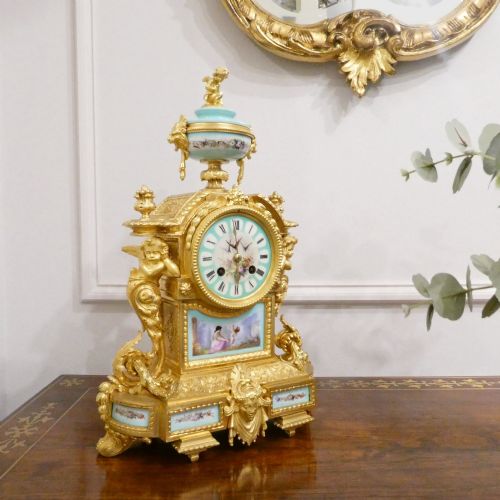
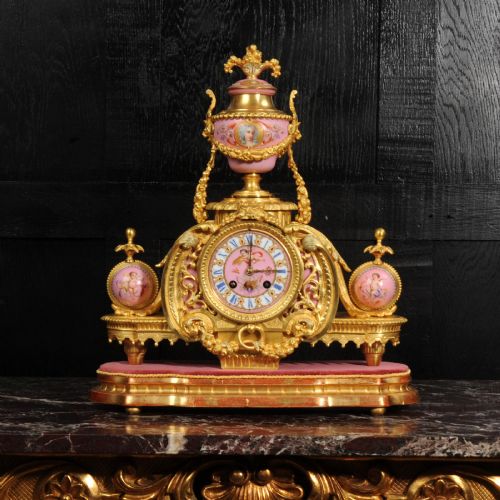
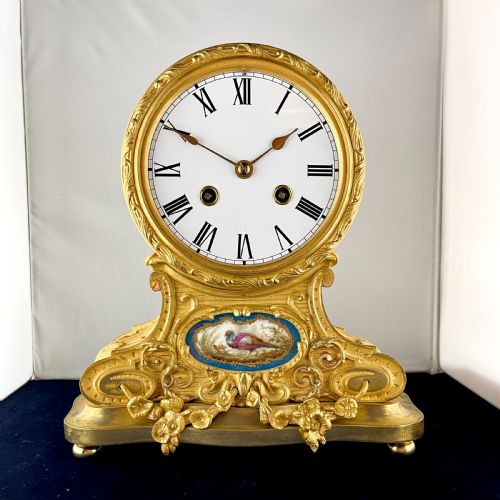
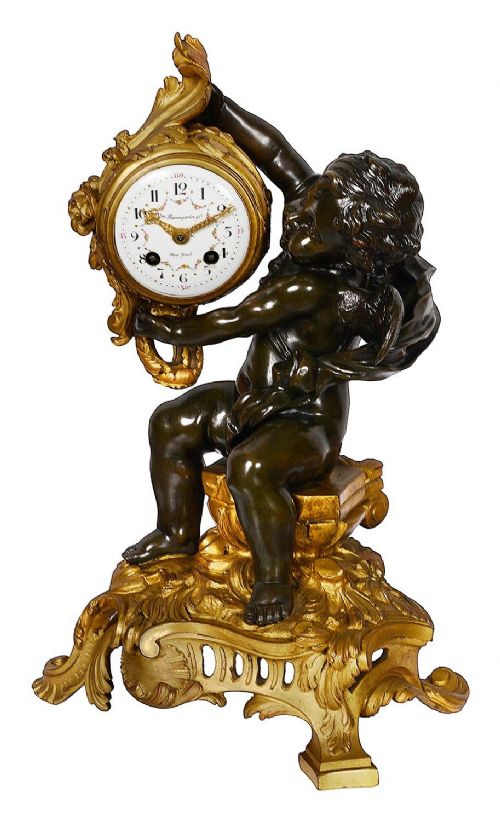
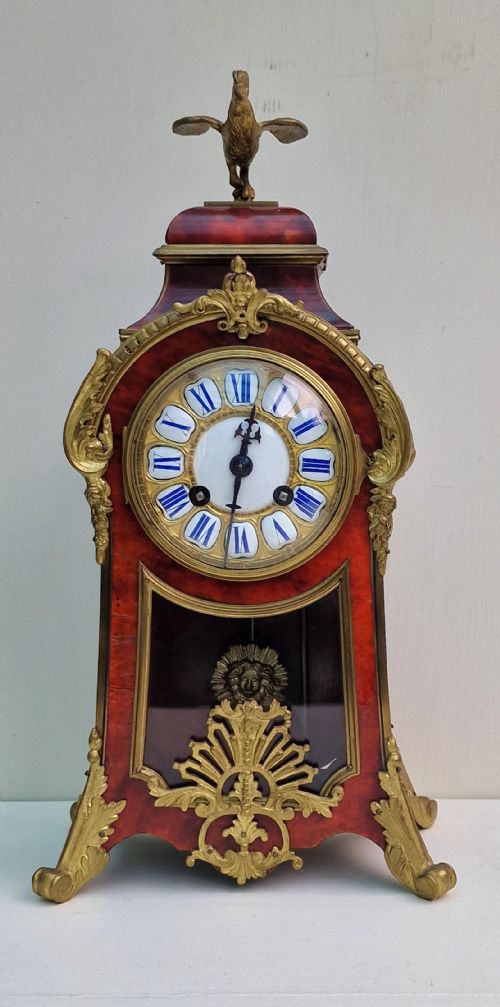
A rococo desk clock draws on eighteenth-century design principles, though the pieces gathered here typically date from the nineteenth century. These objects appear as mantel clocks, boudoir pieces, and drumhead designs executed during the Victorian era and the broader nineteenth century.
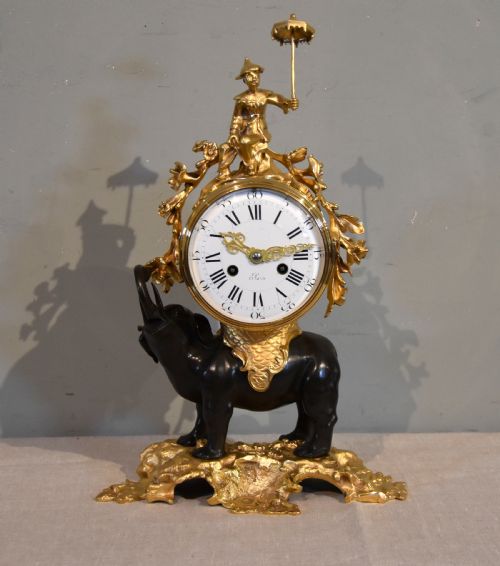
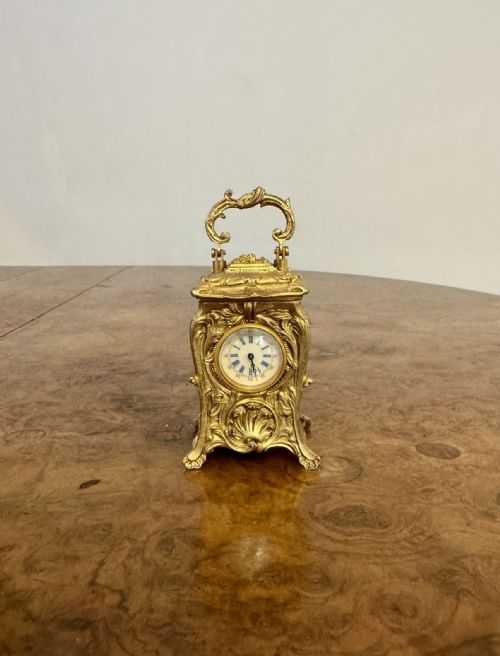
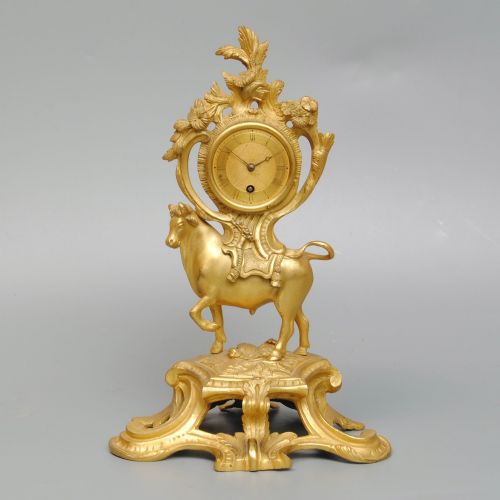
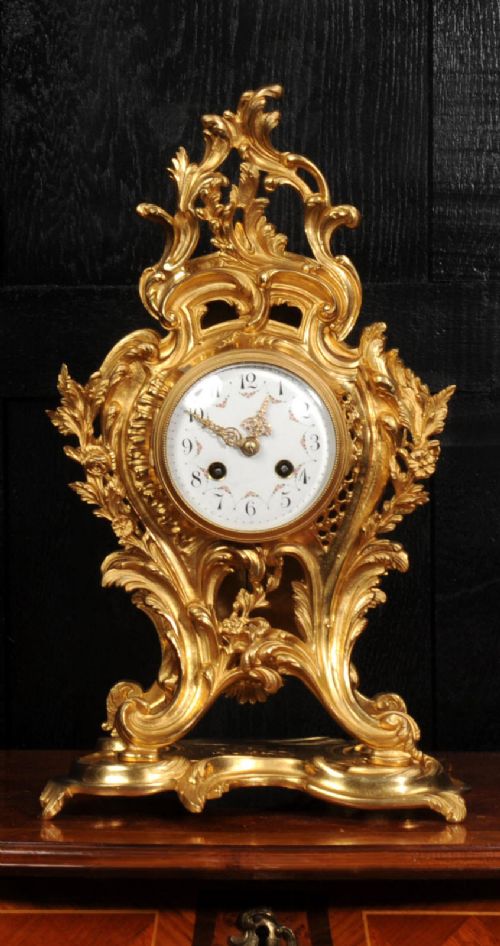
Makers drew heavily on French Louis XV and Rococo Revival idioms, producing ornate cases with characteristic C-scrolls and asymmetrical contours. Alongside standard mantel formats, smaller desk clocks and miniature bedside pieces emerge frequently within this group.
Materials and Construction
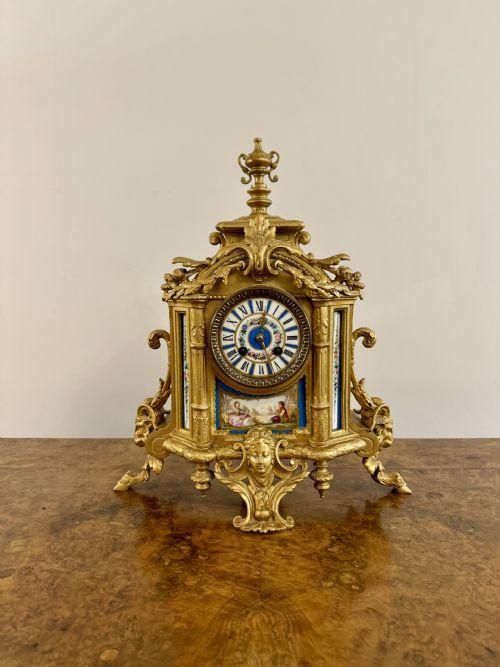
Foundries and workshops constructed these bodies primarily from cast ormolu, gilt bronze, and gilt brass, often combined with painted porcelain panels and enamel dials. Artisans chased the metal surfaces by hand to sharpen the leaf and scroll motifs typical of the style.
Movements inside these cases required skilled mechanical assembly, ranging from standard platform escapements in carriage pieces to twin train mechanisms for striking functions. Glazed bezels and panels protected the delicate enamel dials, while tortoise-shell and walnut occasionally supplemented the metal framework.
Object forms recorded here span mantel clocks, boudoir clocks, clock sets, drumhead formats, and miniature longcase designs.
Distinctions in Execution
Quality reveals itself in the crispness of the bronze casting and the depth of the subsequent fire gilding. Superior examples display sharply defined asymmetry and hand-chased detail rather than softened edges from worn moulds.
The sophistication of the internal movement and the integration of hand-painted Sèvres-style porcelain panels further separate standard production from finer horological work.
Achille Brocot·Leon Message·Jollet et Cie·Samuel Marti·William Payne·John Barwise·Dehné of Paris
The Rococo Desk Clock Glossary
- Ormolu
- Gilded bronze produced by applying a mercury and gold amalgam to a bronze base and heating it to drive off the mercury. This technique leaves a durable golden finish characteristic of fine nineteenth-century French metalwork.
- Rococo Revival
- A nineteenth-century design movement that reinterpreted the swirling asymmetry and naturalistic motifs of the mid-eighteenth-century French court style. It relies heavily on C-scrolls, floral elements, and irregular cartouches.
- Mantel Clock
- A clock designed to sit on the shelf above a fireplace, often featuring an architectural or decorative case made to be viewed from the front and sides.
- Fusee
- A conical pulley used in clock and watch movements to equalize the declining power of the mainspring as it unwinds. This mechanism helps maintain consistent timekeeping accuracy.
Rococo Desk Clock: Frequently Asked Questions
How do I date a rococo desk clock?
Dating relies on examining the casting techniques, the style of the enamel dial, and any maker marks stamped on the movement backplate. Nineteenth-century revival pieces often incorporate mechanical improvements alongside historical decorative idioms.
Comparing the materials, such as the specific hue of the ormolu or the composition of the porcelain panels, helps place the object within the Victorian period.
Were these clocks made for desks?
While many examples function as smaller boudoir or desk clocks, larger iterations served as mantel clocks for principal rooms. The terminology often overlaps depending on the physical scale of the piece.
Compact carriage formats and miniature bedside clocks were specifically proportioned for portable use or smaller surfaces.
How do I care for gilt bronze?
Cleaning requires only a soft, dry cloth to remove dust from the crevices of the chased metalwork. Chemical polishes will strip the original fire gilding and must be avoided entirely.
Handling the clock with clean hands prevents natural oils from tarnishing the exposed brass and bronze surfaces over time.