



Rococo Carved Wall Lights
Rococo carved wall lights bring theatrical curves and gilt illumination to a room, offering ornate decoration rooted in eighteenth-century excess.
Rococo Carved Wall Lights
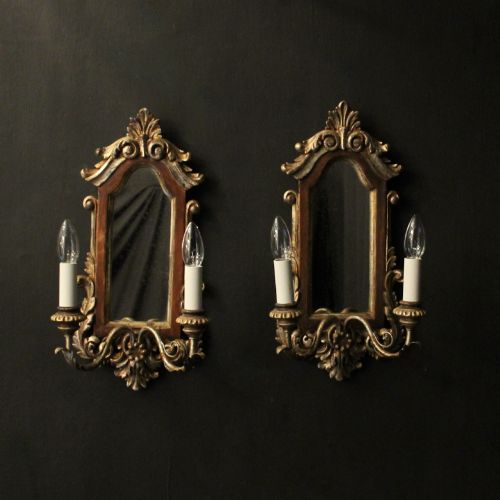
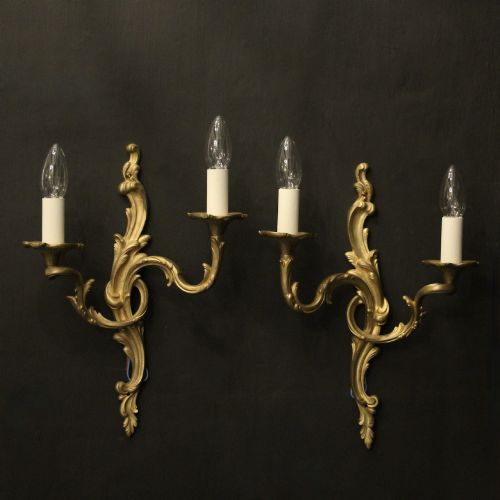
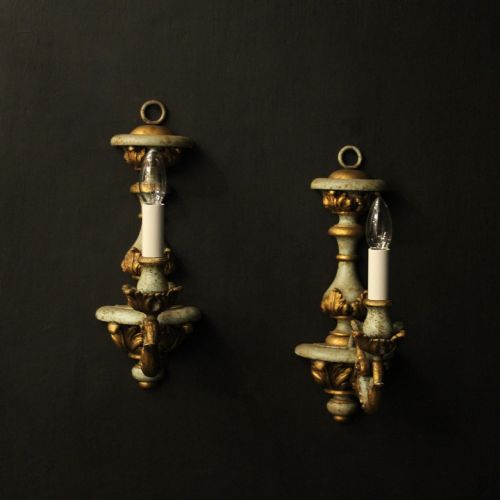
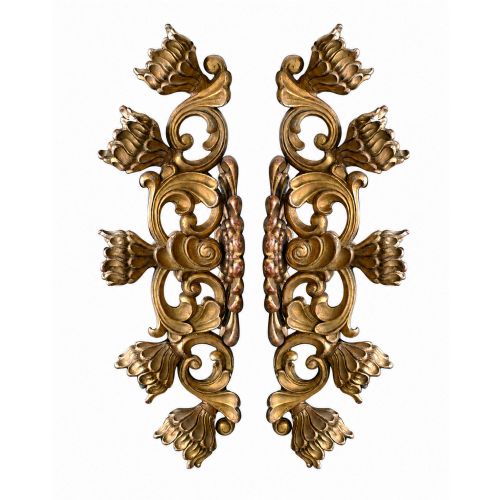
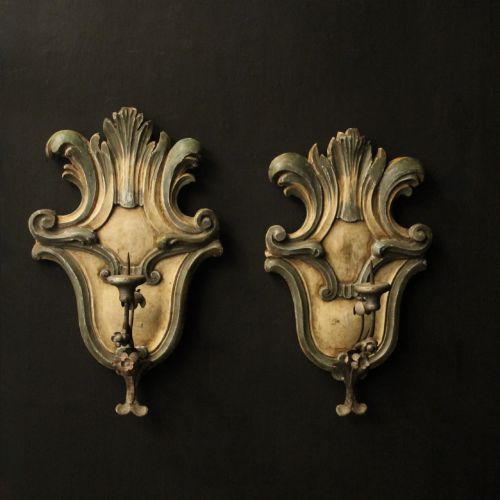
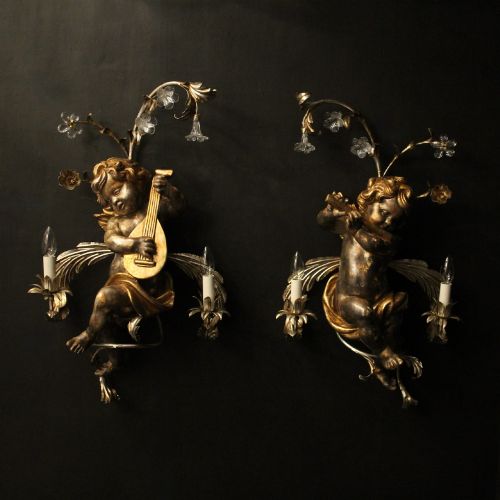
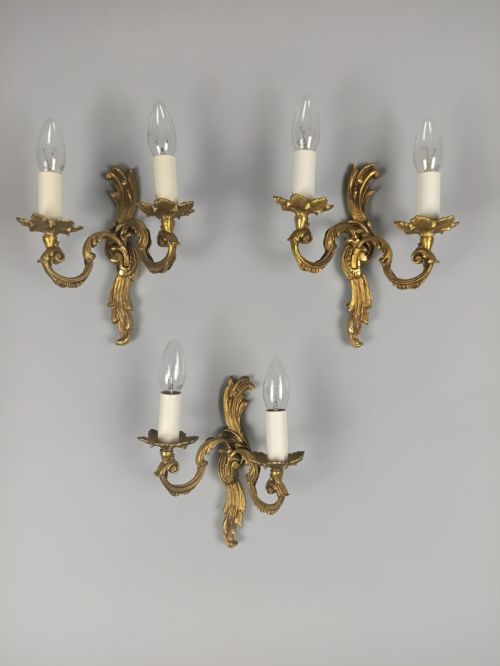
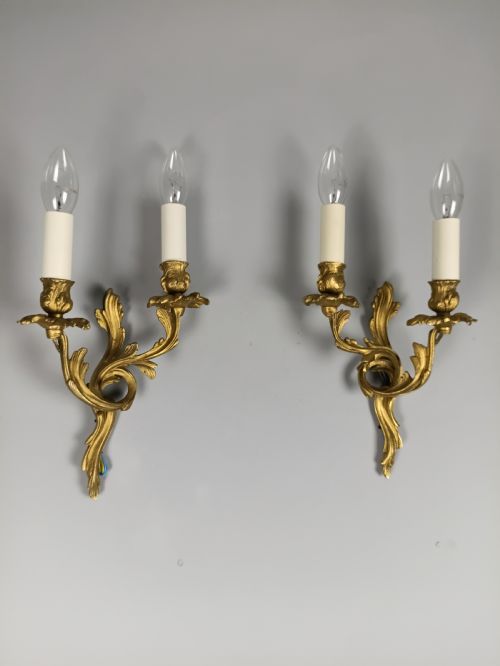
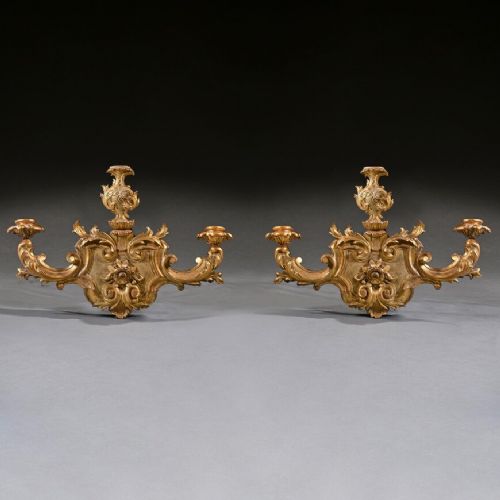
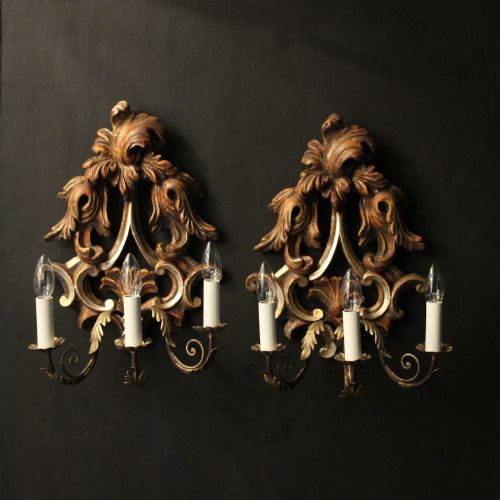
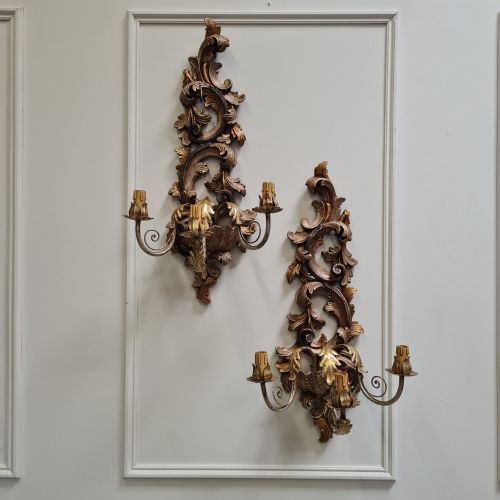
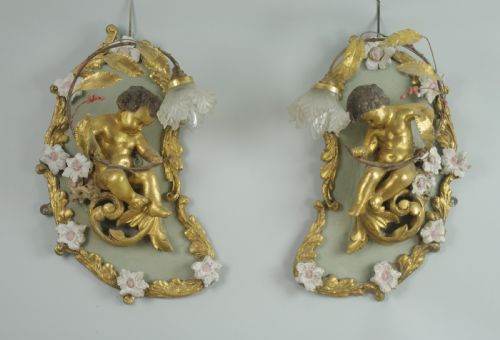
The forms frequently feature asymmetrical scrolls, acanthus leaves and putti, styled in Florentine and French variants. Twin, triple and four-arm arrangements dominate the selection, often paired symmetrically to flank mirrors or doorways.
Dating ranges from the eighteenth century through Victorian revivals up to the 1930s, showing enduring demand for dramatic wall-mounted illumination.
Materials and construction methods
Makers shaped these fixtures primarily from carved wood, gesso and giltwood, applying gold leaf or silver gilt over complex wooden substrates. Metal alternatives include gilt bronze, ormolu and brass, providing sturdy armatures for multiple candle branches.
Gesso layers were built up over carved timber to create crisp relief details before gilding, while glass elements such as Murano drops or mirrored backplates enhanced the reflective quality of the illumination.
Listings feature periods spanning from the eighteenth century through the 1930s, using giltwood, gesso, brass and gilt bronze.
Assessing quality and craftsmanship
Quality rests upon the crispness of the carving and the application of the gilding, where hand-tooled details distinguish superior artisan output from mechanical repetition. The depth and fluidity of the scrolling foliage dictate the visual success of the piece.
The integrity of the underlying wooden or bronze structure dictates longevity, alongside the preservation of original gold leaf surfaces rather than modern overpainting.
The Rococo Carved Wall Lights Glossary
- Giltwood
- Wood that has been coated with gold leaf or powder. This technique provides a luminous surface that catches candlelight.
- Girandole
- A branched wall light featuring a mirrored backplate. The glass multiplies the illumination within the interior space.
- Putti
- Depictions of chubby male infants, often winged, borrowed from classical mythology. They frequently appear supporting the arms of wall sconces.
- Gesso
- A plaster mixture applied to wood surfaces as a base for gilding. It allows carvers to achieve sharp, intricate relief details.
- Ormolu
- Gilded bronze used for decorative hardware and lighting mounts. The alloy gives a rich, metallic warmth to French fixtures.
Rococo Carved Wall Lights: Frequently Asked Questions
How do I hang heavy wall lights?
Heavy carved wood and gilt bronze fixtures require secure masonry fixings or direct attachment to wall studs. The weight of multiple metal arms demands robust structural support.
Professional installation prevents sagging and protects delicate gesso and carved details from stress fractures over time.
Are these lights rewired for electricity?
Many surviving sconces retain candle sockets or have been adapted for modern electrical wiring during the twentieth century. Inspection of the internal wiring is necessary before connecting to mains power.
Some examples remain configured strictly for candles or require professional conversion to meet current safety standards.
How do I clean giltwood safely?
Giltwood surfaces require gentle dusting with a soft, dry brush to prevent damage to fragile gold leaf layers. Moisture and chemical cleaners strip the delicate gesso and gilding.
Preserving the original surface finish depends entirely on avoiding harsh liquids and abrasive cloths.
How do French and Italian styles differ?
French rococo designs lean towards refined gilt bronze and symmetrical ormolu mounts inspired by royal chateaux. Italian Florentine variants often utilise carved wooden gesso frames with polychrome highlights and vibrant floral motifs.
Both traditions embrace theatrical asymmetry, yet regional material choices create distinct visual weights.