




Rococo Candelabra Set
A rococo candelabra set brings exuberant 19th-century French revival drama to a mantelpiece, combining swirling asymmetrical bronze or ormolu with matching candlesticks.
Rococo Candelabra Set
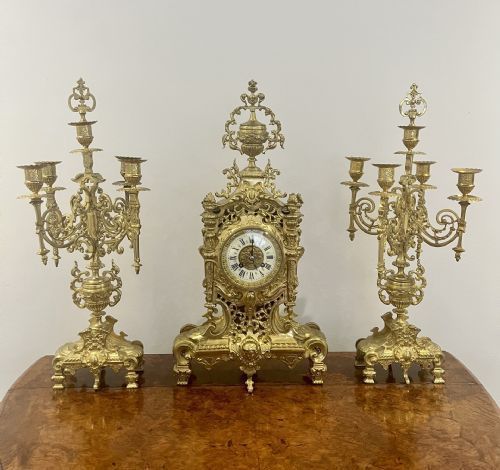
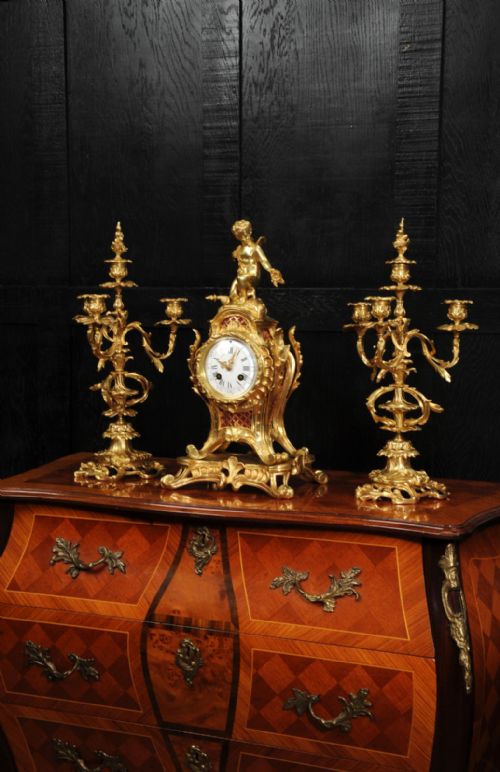
When you search for a rococo candelabra set, you encounter ornate 19th-century decorative groupings designed for grand interiors. These arrangements typically comprise a central mantel clock flanked by matching candelabra or candlesticks, forming a complete clock garniture set.
The objects appearing on this page stem predominantly from the 19th century, spanning the 1850s through to Edwardian interpretations around 1910. French influences dominate, particularly French Rococo Revival, Louis XV styles, and French Sevres style porcelain integrations.
Forms vary from heavy bronze or ormolu clock sets featuring classical subjects like Cupid to silver-plated suites and porcelain-mounted garnitures. Buyers most frequently meet Victorian rococo revival brass pieces and elaborate French ormolu assemblies on this page.
How they were made
Makers utilised cast bronze, brass, and ormolu as the structural foundation for these ornate objects, frequently applying fire-gilding to achieve a rich golden surface. Ormolu mounts were then combined with contrasting materials such as porcelain, enamel, red marble, and steel clock movements.
Surface ornamentation relies heavily on the chasing and chiselling of metal after casting to sharpen the scrolling foliage and shell motifs characteristic of the style. Silver plating over a base metal also appears on suites from the mid-19th century onward.
Rococo Candelabra Set Retail Price Guide 2026
Typical asking prices for rococo candelabra set among the pieces listed under this phrase on Sellingantiques today, from the lower quarter to the upper quarter. They describe what is for sale here now, not the wider market.
Cupid frequently lurks among the bronze scrolls, keeping a watchful eye on time from his perch atop the mantel.
What varies in quality
The crispness of the cast metal ornament dictates visual success, separating sharply defined scrolling foliage from soft, muddy casting work. Finer examples retain the original mercurial gilt ormolu finish, showing varied tones rather than a flat modern plating.
Integration of secondary materials marks the upper tier of production, where hand-painted porcelain panels or matched marble bases align precisely with the metalwork. The inclusion of signed clock movements by established Paris makers elevates the standing of a garniture set.
Smith & Sissons & Co·Raingo Fres Paris·Meissen
The Rococo Candelabra Set Glossary
- Ormolu
- Gilded bronze produced by applying an amalgam of gold and mercury to a bronze object and heating it until the mercury vaporised. This technique creates a durable, golden surface typical of fine 19th-century French metalwork.
- Clock Garniture
- A decorative set consisting of a central mantel clock accompanied by matching side pieces such as candelabra or vases. These suites were designed to create a symmetrical arrangement on a fireplace mantel.
- Rococo Revival
- A 19th-century design movement that revived the 18th-century French rococo style, characterised by asymmetrical curves, C-scrolls, and naturalistic plant motifs. It is the defining aesthetic for the clock sets seen here.
- Sevres Style
- Porcelain decoration imitating the soft-paste wares produced by the royal French porcelain factory, often featuring hand-painted panels within gilt bronze mounts. Pieces in this style bring colourful ceramic contrast to metal garnitures.
Rococo Candelabra Set: Frequently Asked Questions
What is a clock garniture?
A clock garniture is a coordinated decorative set featuring a central mantel clock accompanied by matching side ornaments like candelabra or urns.
Designed for fireplace placement, these suites created a balanced visual display popular in grand 19th-century reception rooms.
Are these sets French?
Many of these garnitures originate from France, particularly Paris workshops influenced by Louis XV design traditions and the later revival movements.
English makers also produced silver-plated candelabra suites during the Victorian era, offering a different material interpretation of the same formal demand.
Where should I display a garniture?
These sets suit prominent locations such as a wide mantelpiece, a sideboard, or a dedicated console table where the central clock and matching candelabra can be viewed together.
Because the pieces are matched in height and ornamentation, keeping the set united preserves its decorative intent.