
Rococo Bureau Plat
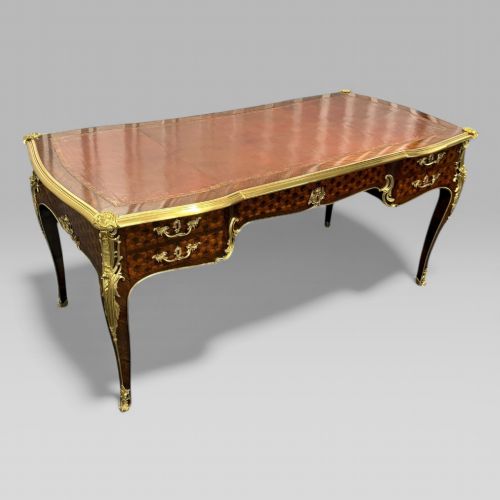
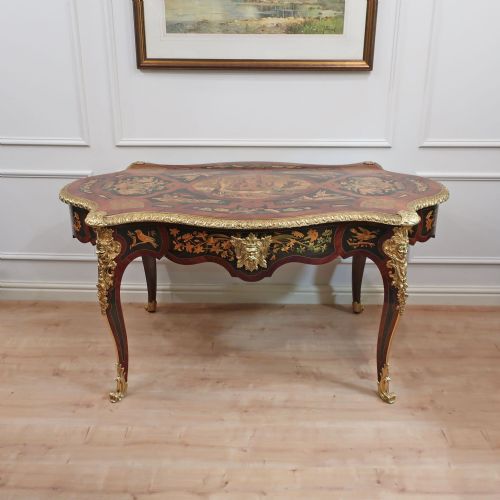
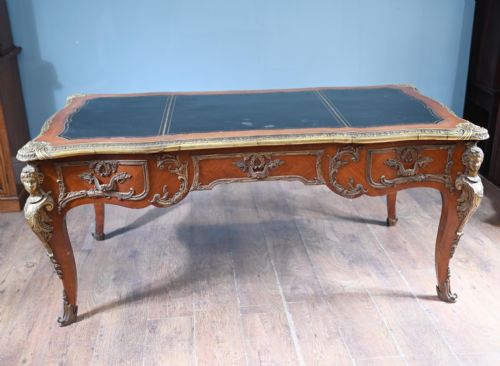
A rococo bureau plat is a freestanding writing table carrying serpentine curves and ormolu mounts, designed to anchor the centre of a grand room.
Rococo Bureau Plat
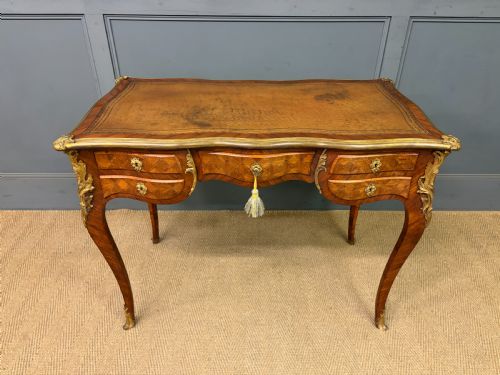
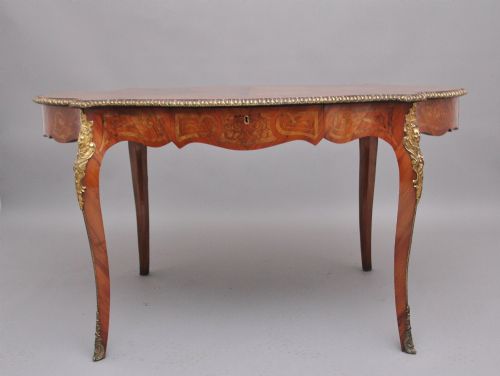
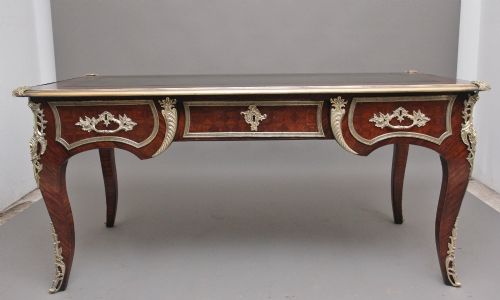
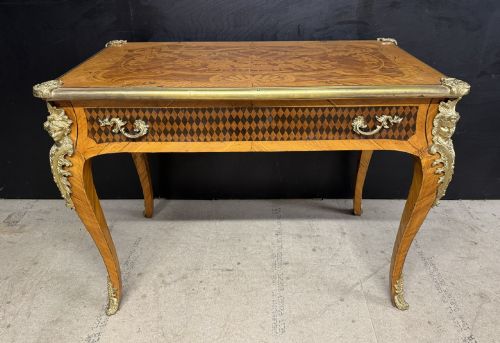
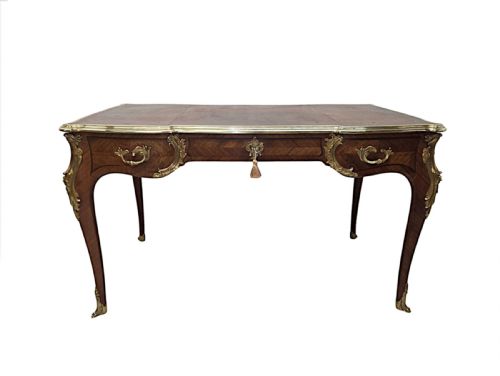
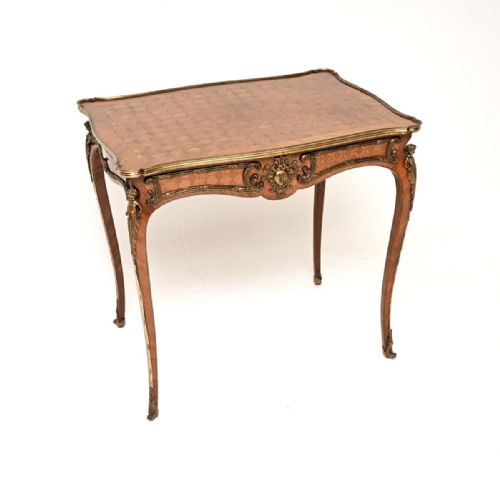
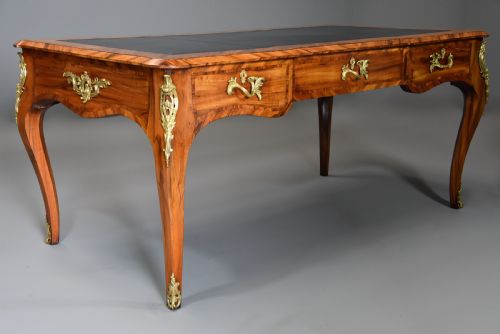
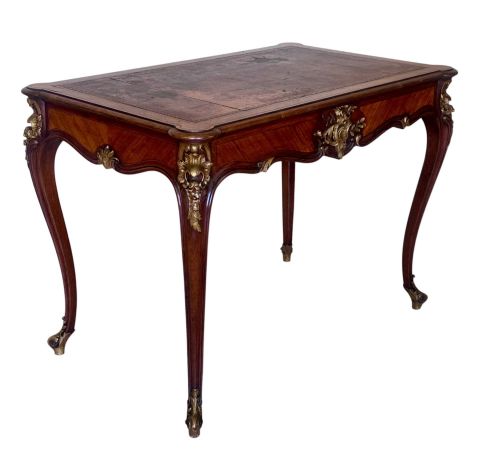
A rococo bureau plat is primarily a freestanding desk intended to sit in the middle of a room rather than against a wall. The pieces recorded here span the nineteenth century into the twentieth, drawing heavily on French Louis XV design principles through revival styles.
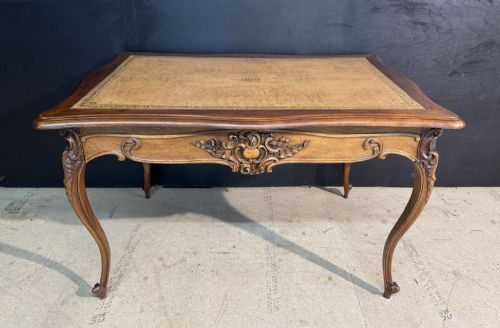
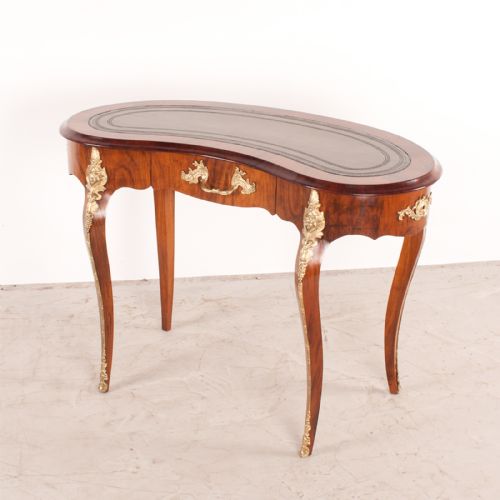
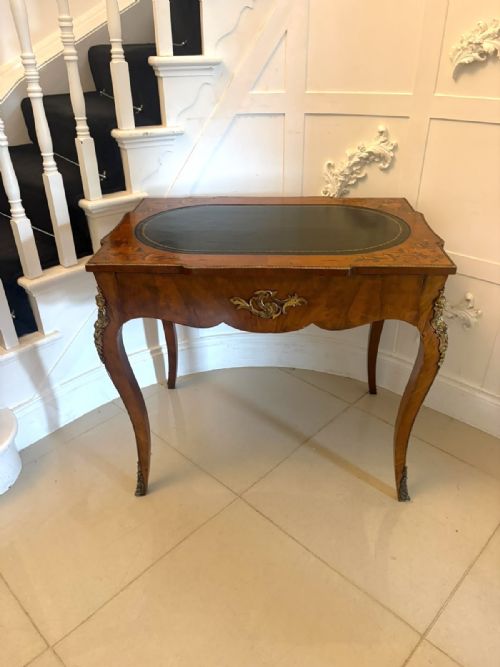
The form appears in various guises including kidney shapes, serpentine fronts, and kneehole desks alongside writing tables. Makers utilised walnut, kingwood, mahogany, and exotic timbers to construct these writing surfaces, frequently integrating leather tops.
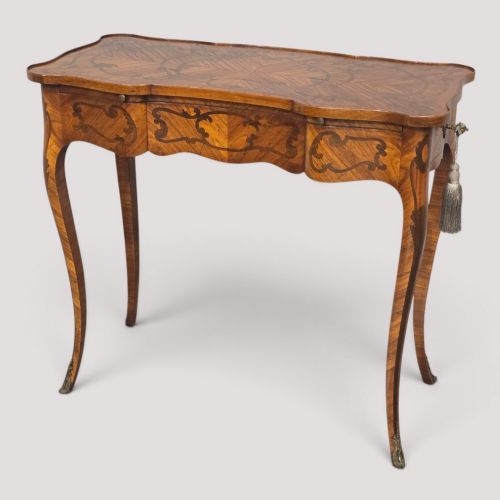
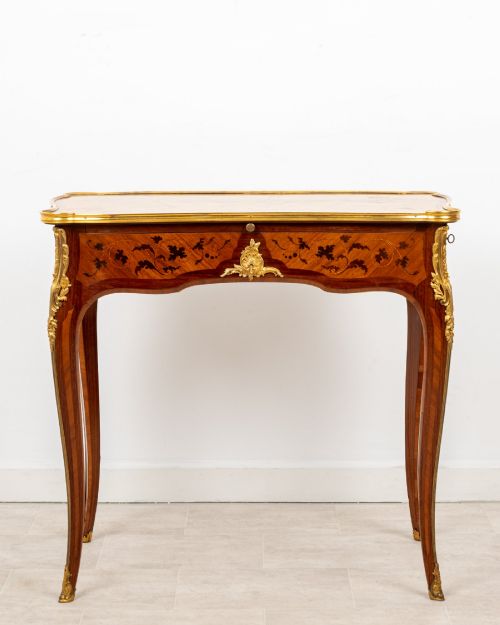
Buyers encounter walnut, mahogany, and rosewood versions alongside marquetry and parquetry decorated examples. The prevailing aesthetic relies upon asymmetrical curves, scrolling foliage, and elaborate mounts that echo eighteenth-century Parisian models.
Materials and Construction
Cabinetmakers built these desks using foundational carcases of oak or pine veneered with figured timbers like kingwood, walnut, and tulipwood. Marquetry and parquetry patterns were meticulously cut and fitted by hand into the timber surfaces.
Ormolu and gilt bronze mounts were cast, chased, and fire-gilded before being fixed to the angles, aprons, and legs. Leather inserts were tooled in gold leaf to provide a durable writing surface atop the wooden carcase.
Listings feature ormolu, kingwood, mahogany, and walnut alongside leather-lined writing surfaces across various nineteenth-century periods.
The Measure of Quality
Quality rests upon the crispness of the bronze chasing and the weight of the ormolu mounts fixed to the frame. Superior examples demonstrate fluid hand-carving in the wooden mounts and rigorous symmetry in the parquetry or marquetry veneers.
The choice of timber underpins the overall success of the piece, with dense kingwood and finely grained walnut commanding attention. Interior secondary woods and the precision of drawer dovetailing reveal the competence of the workshop.
François Linke·Edwards and Roberts·Durand·CH Jeanselme and Co
The Rococo Bureau Plat Glossary
- Bureau plat
- A freestanding writing table, typically fitted with drawers in the frieze. It is finished on all sides so it can stand in the middle of a room.
- Ormolu
- Gilded bronze applied to furniture mounts and decorative hardware. The technique involves mercurial gilding on cast bronze.
- Marquetry
- Decorative veneer work forming pictures or geometric patterns using various coloured woods. Craftsmen cut these designs from thin sheets of timber.
- Parquetry
- Geometric wood inlay forming patterns such as cubes or chequers on a surface. It differs from marquetry by relying on repeating geometric tiles.
- Serpentine
- A curved line that is convex in the middle and concave at the ends. This contour defines the front edges of many revival desks.
Rococo Bureau Plat: Frequently Asked Questions
What is a bureau plat?
A bureau plat is a freestanding writing desk with a finished back, designed to sit in the centre of a room rather than against a wall. These tables typically feature a leather writing surface surrounded by wooden framing.
Drawer compartments are built into the frieze beneath the top, providing storage for writing materials. The form originated in France and remains popular for its decorative versatility.
How do I style a bureau plat?
Place the desk in the middle of a study or living space where its finished back and ormolu mounts remain visible from all angles. Pair the piece with a matching antique chair or keep the surface minimal with a traditional desk lamp.
Because the design is ornate, surrounding furnishings should remain relatively subdued to let the timber grain and bronze mounts command attention.
What timber was used?
Cabinetmakers employed a range of luxury timbers including kingwood, walnut, mahogany, rosewood, and tulipwood. Veneers were selected for their pronounced grain patterns and used in marquetry compositions.
Secondary woods like oak or pine form the internal carcase and drawer linings to ensure structural stability beneath the decorative exterior.
Are these desks antique?
The pieces recorded here largely date from the nineteenth century and early twentieth century, reflecting the widespread revival of earlier French aesthetics. Makers during this period reinterpreted eighteenth-century models with great technical skill.
Construction details and timber ageing help distinguish these nineteenth-century interpretations from original eighteenth-century productions.