


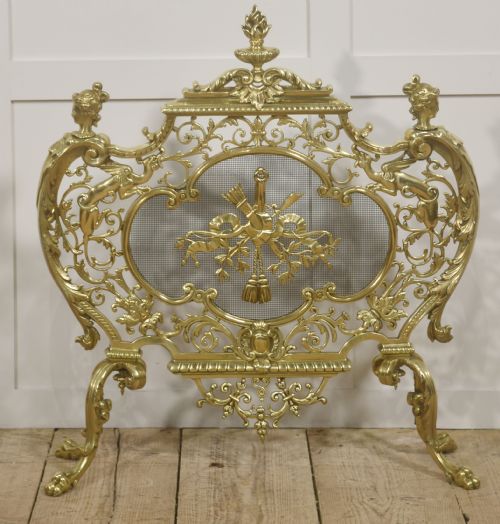


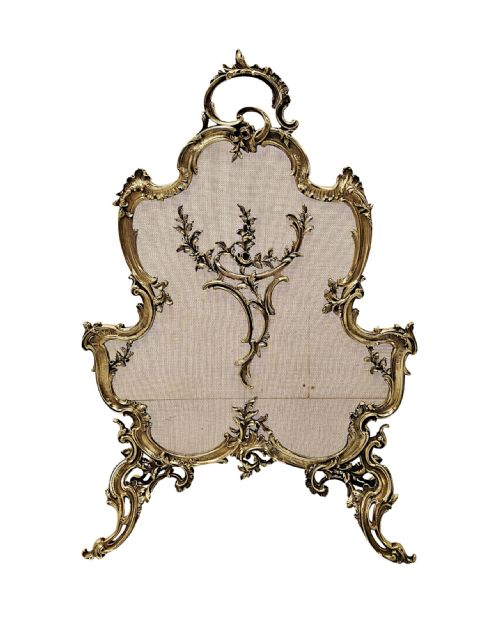
Rococo Brass Spark Screen
A rococo brass spark screen brings French styling and hearth protection together in a single polished frame.
Rococo Brass Spark Screen
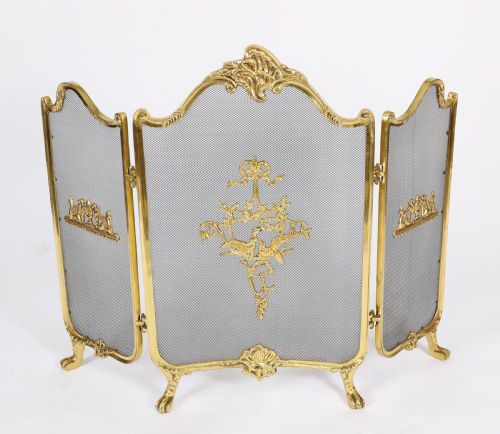
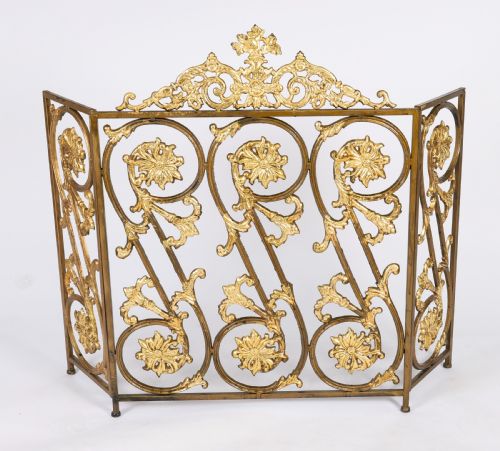
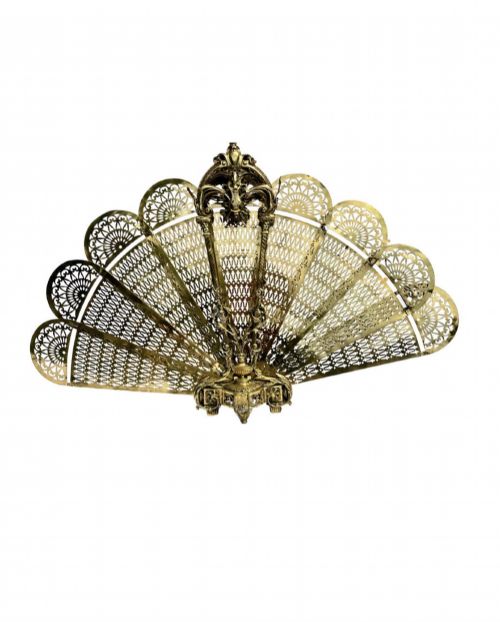
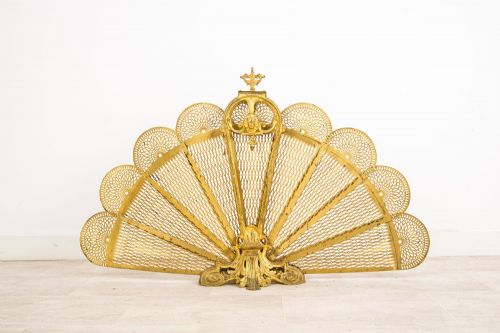
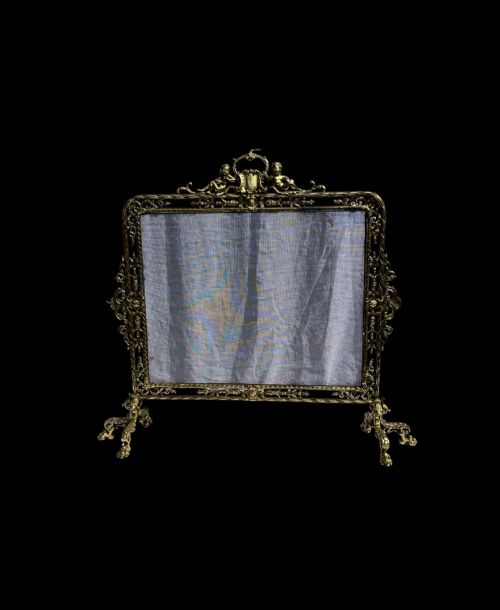
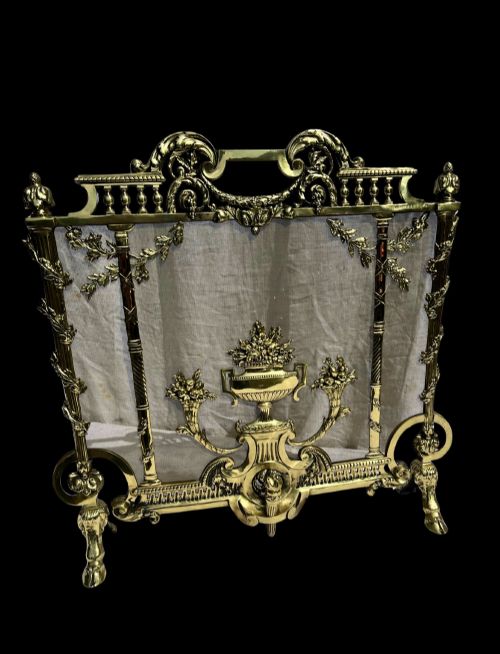
A rococo brass spark screen acts as a decorative barrier in front of an open hearth while stopping stray embers from reaching the room. These fire screens appear in various forms, including folding peacock fan designs, multi-panel folding frames, and flat mesh guards.
Most examples found here date from the nineteenth century and carry French revival styling. Makers drew heavily on Louis XV and Louis XIV motifs, shaping metal into elaborate curves and scrolls.
The objects function primarily as fireplace accessories, though many survive simply as decorative interior pieces. Common variations include pierced brass plates, cast frames, and fine wire mesh panels.
How they were made
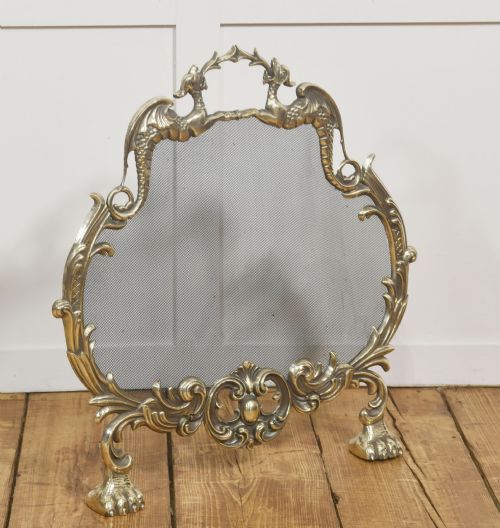
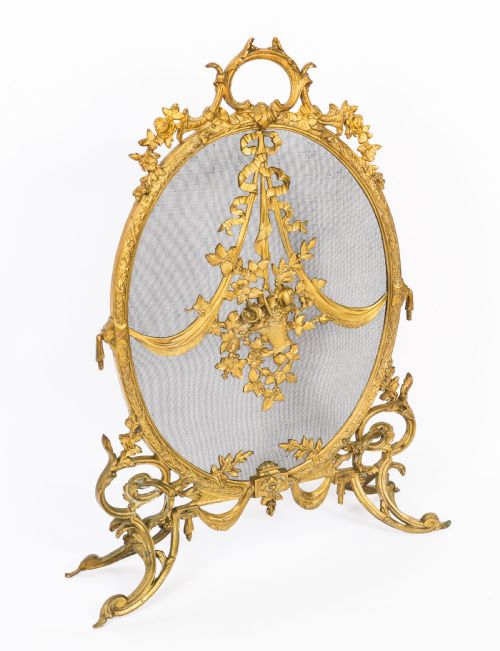
Craftsmen utilised cast brass, gilt bronze, and ormolu to build the heavy decorative frames. These metals were shaped into asymmetrical rococo scrolls, flaming torches, and dolphin motifs.
Metal mesh and wire mesh were stretched across the central aperture to catch sparks while maintaining visibility of the fire. Gilded finishes and fine piercing completed the surface detail.
Materials recorded across the inventory include wire mesh, cast brass, gilt bronze, and ormolu.
What varies in quality
The weight of the cast brass or gilt bronze framework sets the foundational standard for each piece. Heavier castings allow for deeper relief work and sharper definition in the scrolling foliage and figural elements.
The refinement of the surface finish also divides standard production from finer examples. Hand-chiselled detailing on ormolu mounts and the intricacy of pierced metalwork indicate superior workshop execution.
The Rococo Brass Spark Screen Glossary
- Ormolu
- Gilded bronze applied to ornamental metalwork. This technique creates a rich golden finish on decorative frames.
- Rococo Revival
- A nineteenth-century design movement mimicking eighteenth-century French style. It relies on asymmetric scrolls, shell motifs, and natural forms.
- Spark Screen
- A protective mesh barrier placed before an open fireplace. It prevents embers from escaping into the room.
- Pierced Brass
- Metal sheet punctured with decorative patterns. This technique lightens the visual weight of the fire screen while allowing heat to pass through.
Rococo Brass Spark Screen: Frequently Asked Questions
How do I clean a brass fire screen?
Dust the metal gently with a soft cloth to remove everyday particle buildup. Avoid harsh chemical cleaners that strip historical finishes.
For gilt bronze and ormolu sections, use mild soapy water on a damp cloth. Dry the metal thoroughly to prevent tarnishing.
Can I use these screens with a working fireplace?
Many nineteenth-century screens were built with wire mesh specifically to catch hearth sparks during active fires. Check that the mesh and frame remain structurally sound before exposure to direct heat.
Some decorative peacock fan designs and pierced brass panels serve better in non-working hearths. Consider the delicacy of the gilt surface before placement.
How do I identify a French rococo revival screen?
Look for characteristic design elements such as asymmetrical scrolls, C-scrolls, and shell motifs. These stylistic markers define French revival pieces from the nineteenth century.
Frames often incorporate cast brass or gilt bronze shaped into naturalistic foliage. Many examples also reference Louis XV or Louis XIV styling.
What is the difference between a fire screen and a fire guard?
The terms are often used interchangeably for nineteenth-century hearth accessories. Both function to block heat and contain sparks from an open fire.
Some guards feature specific folding configurations or mesh panels designed for safety. Others focus primarily on ornamental pierced brass.