

Rococo Brass Sconces
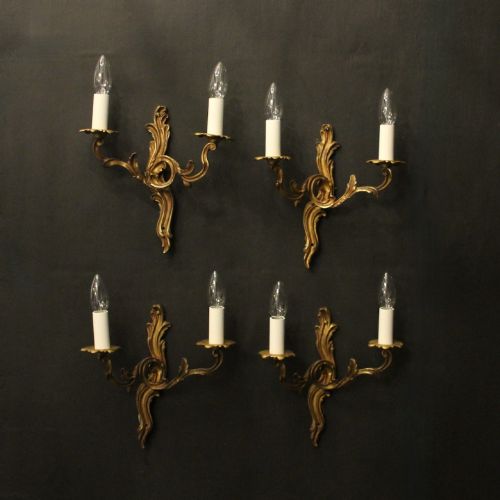
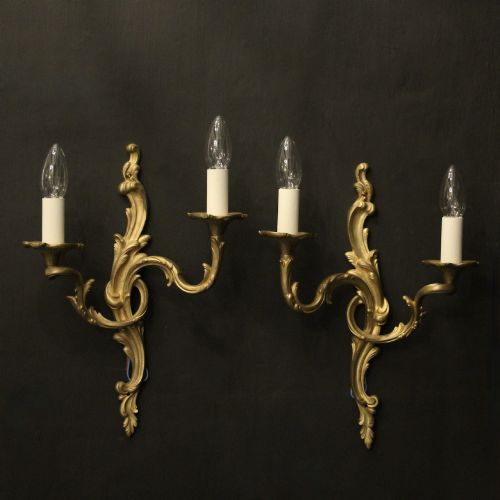
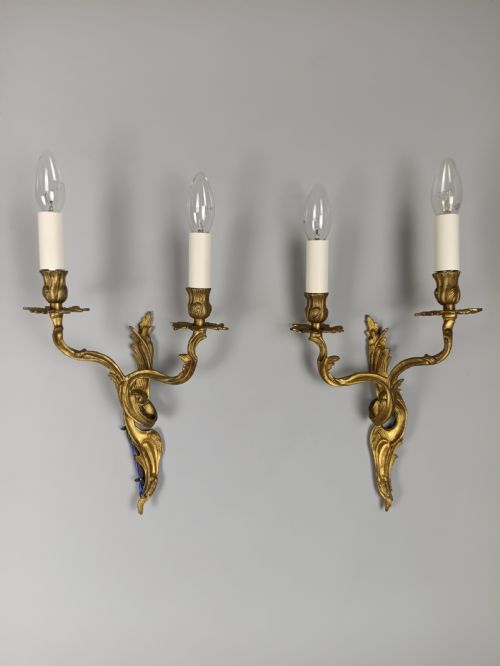
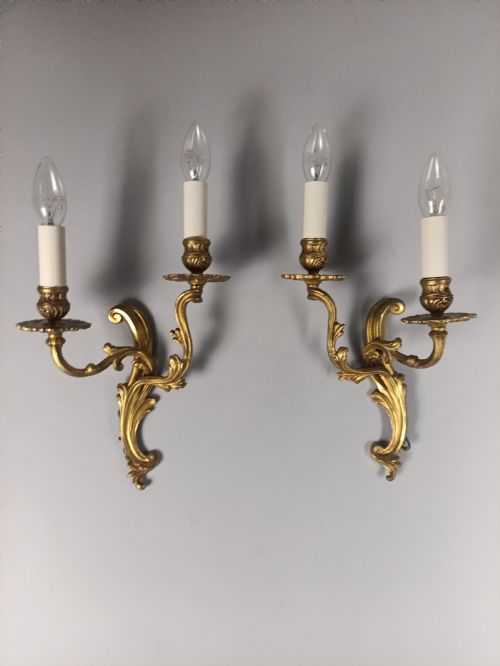
Rococo brass sconces bring fluid, asymmetrical lines and warm metallic illumination to interior walls.
Rococo Brass Sconces
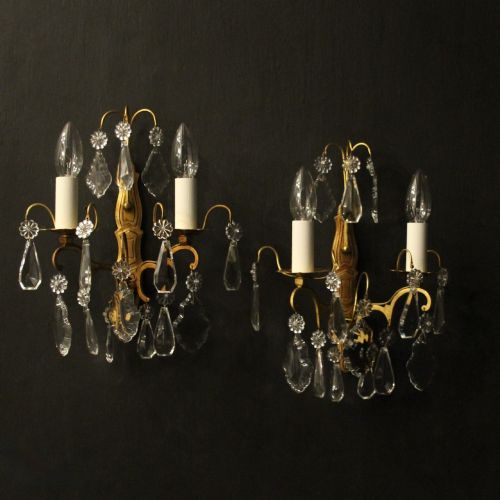
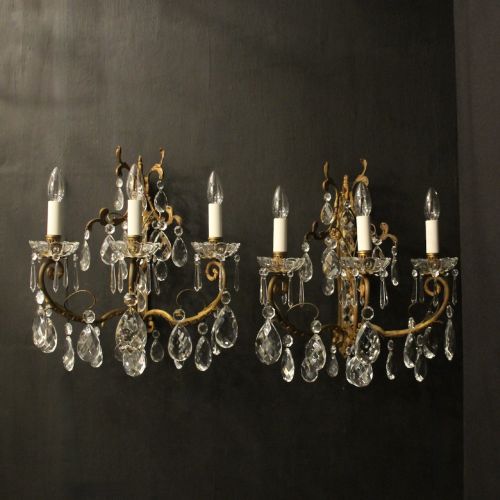
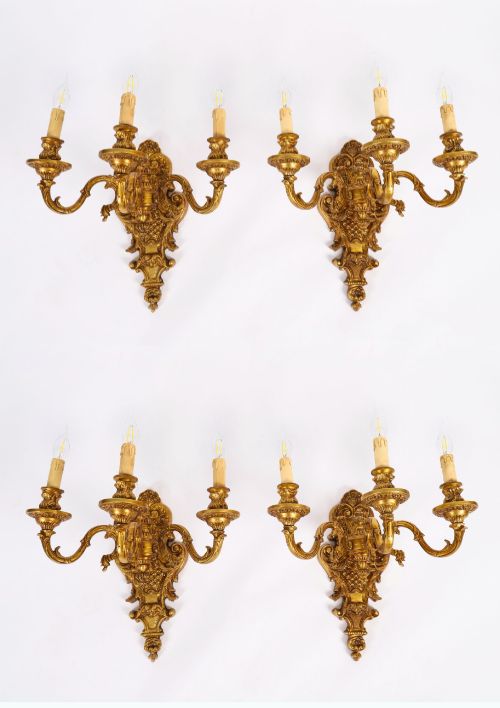
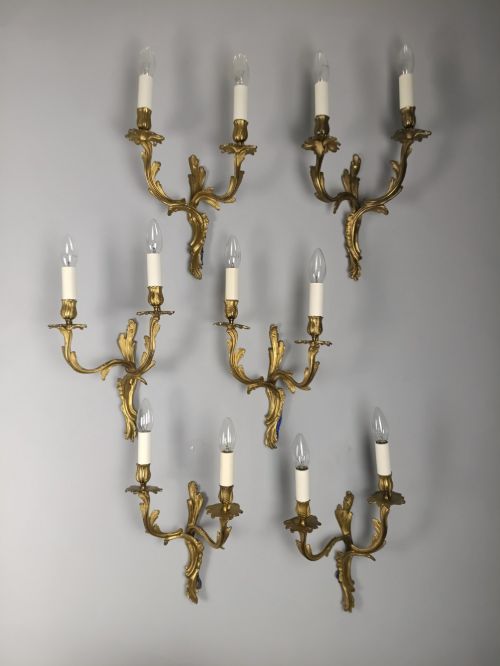
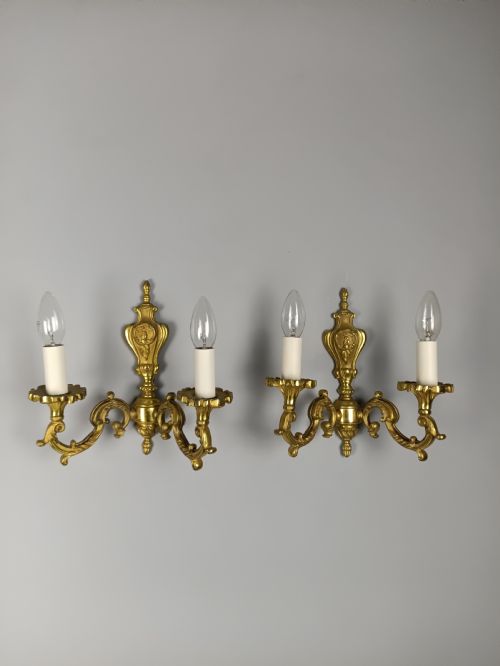
When you search for rococo brass sconces, you encounter wall-mounted light fittings designed to illuminate rooms with multiple candle or bulb branches. These pieces span periods from the mid nineteenth century through the early twentieth century, reflecting sustained revivals of earlier French aesthetics.
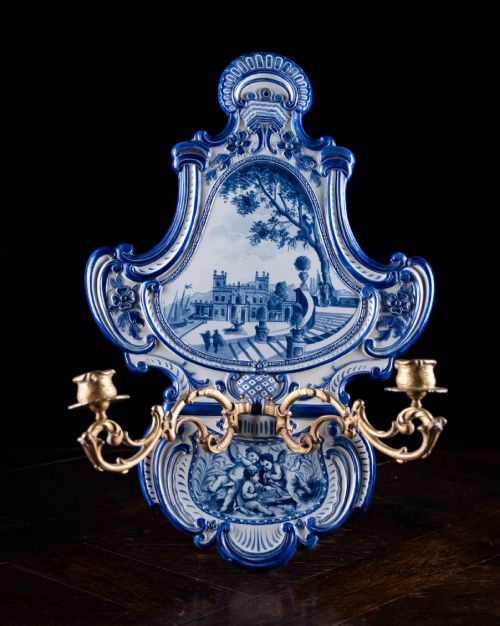
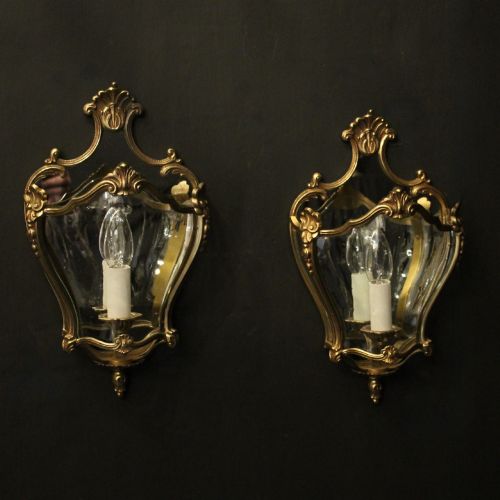
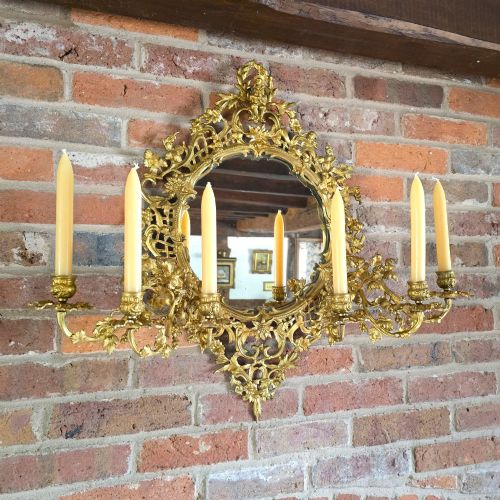
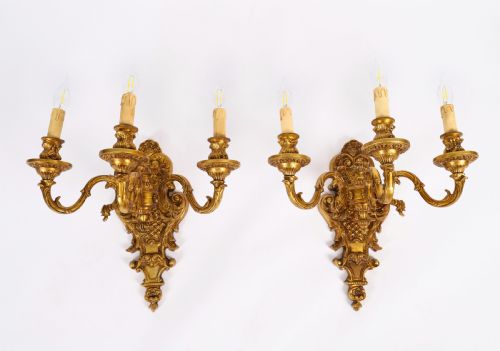
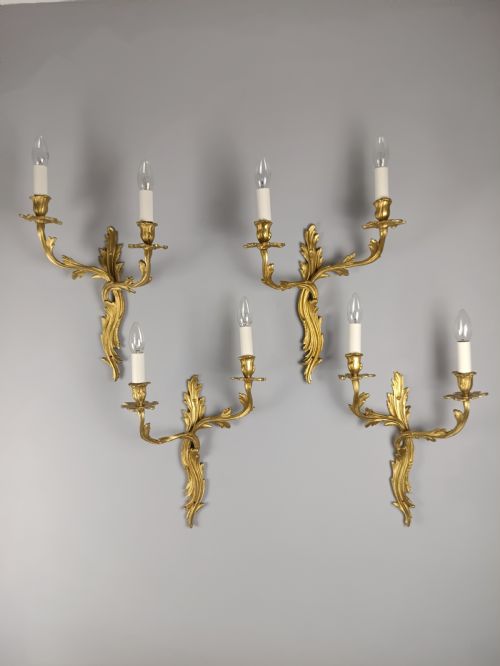
The most common versions on this page are French wall lights featuring twin or triple arms, cast in bronze or brass with heavy gilding. Alongside standard wall lights, the selection includes girandoles, wall mirrors with integrated candelabra branches, and half lanterns sharing the same ornamental vocabulary.
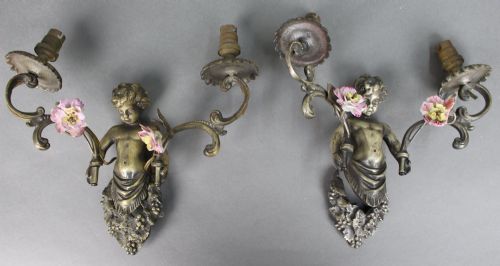
Makers and manufacturers during these periods adopted French Rococo, Louis XV Revival, and French Chateau styles. Pieces frequently incorporate characteristic motifs such as scrolling foliage, putti, cherubs, and porcelain flowers alongside the structural metalwork.
Materials and Construction
Makers utilised brass, bronze, and metal as foundational structures, applying surface treatments including gilding, ormolu, and silver plating to achieve a lustrous metallic finish. Gilded bronze and ormolu provide a deep, warm tone that reflects candlelight and electric illumination effectively.
Casting methods allowed workshops to produce complex, asymmetrical curves and ornate scrollwork integral to the French Rococo style. Components such as backplates, drip pans, and branching arms were assembled mechanically or joined to create rigid wall appliques.
Listings span production dates from the 1850s to 1930, capturing nineteenth-century French casting traditions and early twentieth-century revivals.
Factors of Quality
Quality in these wall lights rests upon the crispness of the cast detailing and the depth of the applied gilding. Finer examples display sharp, hand-finished chasing across foliage and figural elements, whereas simpler pieces show softer contours from worn moulds.
The structural robustness of the arm joints and backplates dictates how securely the fitting bears multiple candle branches. Heavier castings with integrated mirrors or complex sculptural groups demand substantial mounting points to support the weight safely.
Villeroy & Boch
The Rococo Brass Sconces Glossary
- Ormolu
- Finely ground high-carat gold mercury-gilded to a bronze object. This technique produces a rich golden surface characteristic of finer French decorative metalwork.
- Girandole
- A branched wall light or sconce incorporating a mirror backplate. The reflective glass enhances the illumination cast by the candles.
- Applique
- A wall-mounted light fitting secured directly to vertical surfaces. The term is frequently used interchangeably with wall sconce in French lighting.
- Putti
- Depictions of chubby male infants, often winged, derived from classical art. They appear frequently as sculptural supports in Rococo revival metalwork.
- Louis XV Style
- A design movement characterised by asymmetrical curves, scrollwork, and naturalistic motifs. This 18th-century aesthetic inspired numerous 19th and 20th-century revivals.
Rococo Brass Sconces: Frequently Asked Questions
How were rococo brass sconces used?
These wall lights were positioned in pairs or larger sets around reception rooms to provide ambient illumination alongside central chandeliers. The reflective metal surfaces and mirror backs amplified the flickering light of candles.
Over time, many surviving examples were adapted to accept electrical wiring while retaining their original decorative arrangement of branching arms.
How do I install antique wall sconces?
Most antique wall lights require secure attachment to wall studs or appropriate wall anchors due to the heavy weight of bronze and brass castings. Professional installation ensures the backplate supports the fixture safely.
Many pieces are supplied rewired and ready for connection to domestic electrical circuits by a qualified electrician.
How do I tell different periods apart?
Dating relies upon examining casting techniques, mounting hardware, and surface wear patterns across the metal. Mid 19th-century pieces often feature heavier, highly detailed hand-chased bronze work.
Early 20th-century reproductions and revivals frequently utilise standardised brass components and machine-applied gilding methods.
What is the difference between ormolu and gilt brass?
Ormolu specifically denotes mercury gilding applied to a bronze substrate, producing a deep and durable metallic lustre. This technique was widely practiced in French workshops during the nineteenth century.
Gilt brass involves a brass base metal with applied gold leaf, electroplating, or modern surface finishes, typically presenting a brighter yellow tone.