





Rococo Brass Handles Commode
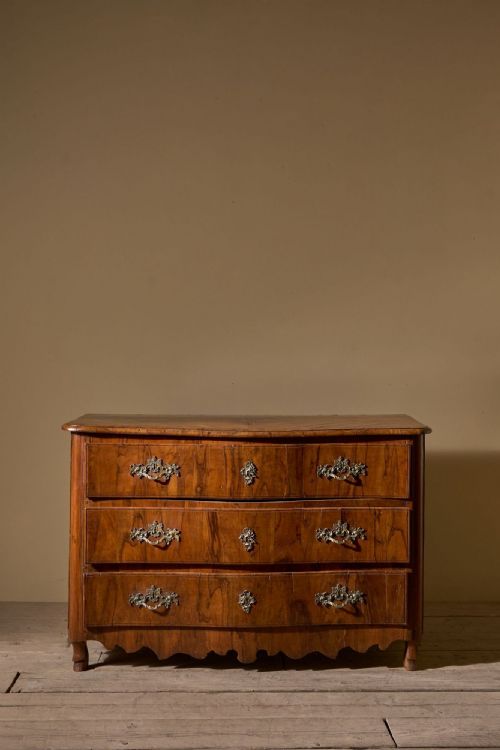
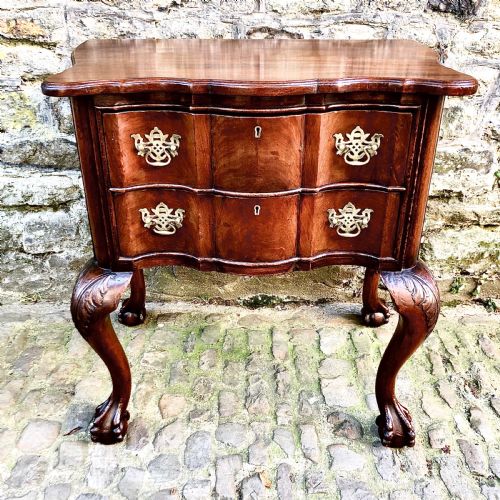
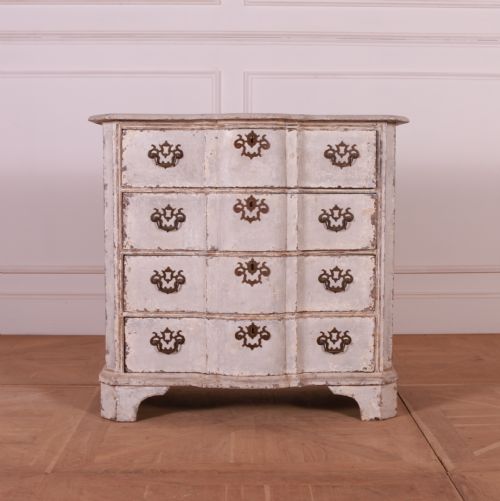
These rococo brass handles commode examples bring heavy timber serpentine fronts and distinct regional character to any room.

Rococo Brass Handles Commode
A rococo brass handles commode is a chest of drawers defined by serpentine or bombe shapes, substantial timber construction, and cast brass hardware. The pieces seen here span the eighteenth and nineteenth centuries, originating from diverse regions including the Netherlands, France, Portugal, Malta, and Scandinavia.
Most items on this page take the form of a chest of drawers, though miniature apprentice pieces also appear. They employ woods such as oak, mahogany, walnut, olivewood, and painted surfaces, frequently paired with marble tops.
The styles range across Dutch Rococo, French Provincial, Chippendale, and Portuguese Rococo. Buyers will encounter both grand proportions and smaller country interpretations.
How they were made
Cabinetmakers constructed these commodes using solid and veneered hardwoods like oak, mahogany, walnut, and olivewood, often shaping the timber into serpentine or bombe profiles. Painted wood and marble tops also feature among the surviving examples.
Hardware consists of cast brass handles and escutcheons designed in the rococo taste, fixed to drawers built to fit curved or straight carcasses. Joinery techniques reflect the eighteenth and nineteenth-century workshops of regional Europe.
Rococo Brass Handles Commode Retail Price Guide 2026
Typical asking prices for rococo brass handles commode among the pieces listed under this phrase on Sellingantiques today, from the lower quarter to the upper quarter. They describe what is for sale here now, not the wider market.
Listings span the 18th and 19th centuries, featuring materials such as brass, oak, mahogany, walnut, pine, olivewood, marble, and painted wood.
What varies in quality
Quality rests in the precision of the timber shaping and the crispness of the cast brass handles. Pieces with complex serpentine or bombe profiles demand advanced cabinetmaking skill compared to straight-fronted carcases.
The choice of primary timber also dictates the character, from figured walnut and olivewood to dense mahogany and painted finishes. The integration of the brass hardware into the overall design distinguishes standard regional pieces from finer workshop productions.
The Rococo Brass Handles Commode Glossary
- Commode
- A low chest of drawers or cabinet originating in France. It typically stands on legs and serves as both storage and a display surface.
- Serpentine
- A furniture front curved in a wave shape with a convex centre flanked by concave sides. This contour requires precise timber shaping.
- Bombe
- A swollen or bulging out profile characteristic of continental furniture. It creates a volumetric silhouette that requires considerable woodworking mastery.
- Apprentice piece
- A smaller version of a full-scale furniture form made by a trainee to demonstrate skill. These items exhibit the same joinery as larger examples.
- Chippendale
- A mid-eighteenth-century English furniture style influenced by rococo, Gothic, and Chinese designs. It appears in British and related regional cabinetwork.
Rococo Brass Handles Commode: Frequently Asked Questions
What is a rococo brass handles commode?
It is a chest of drawers featuring shaped fronts and decorative metalwork. These pieces date primarily from the eighteenth and nineteenth centuries across European regions.
They combine robust timber carcases with characteristic brass mounts. Regional variations range from Dutch bombe shapes to French provincial forms.
Where were these commodes made?
The pieces originate from various European countries including the Netherlands, France, Portugal, Malta, and Scandinavia. Each region applied distinct local timbers and styling.
Workshop traditions varied from provincial centres to larger urban hubs. This creates the diverse mix of painted finishes, olivewood, mahogany, and walnut seen today.
How do I style a commode at home?
Place the commode in a hallway, bedroom, or living space where its timber grain and brass hardware can act as a focal point. The surface provides practical space for lamps or decorative objects.
Ensure adequate clearance for drawers, particularly with serpentine or bombe profiles that project further into the room. Pair them with complementary antique or modern furnishings.
How do I tell different periods apart?
Eighteenth-century examples often display dynamic serpentine or bombe contours and regional rococo carving. Nineteenth-century pieces may continue these continental traditions with slight variations in construction.
Examine the secondary woods, dovetails, and handle fixings to understand the manufacturing date. Regional stylistic traits help assign pieces to specific countries like the Netherlands or Portugal.