

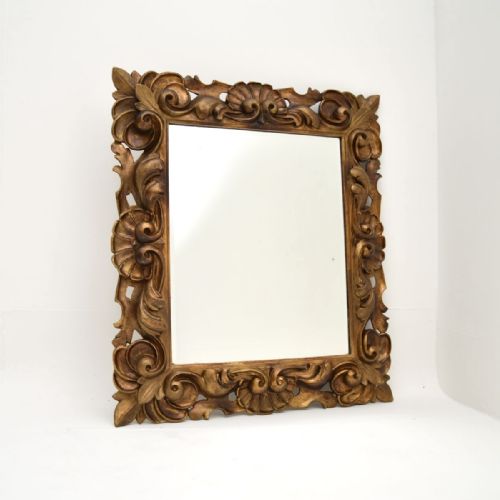
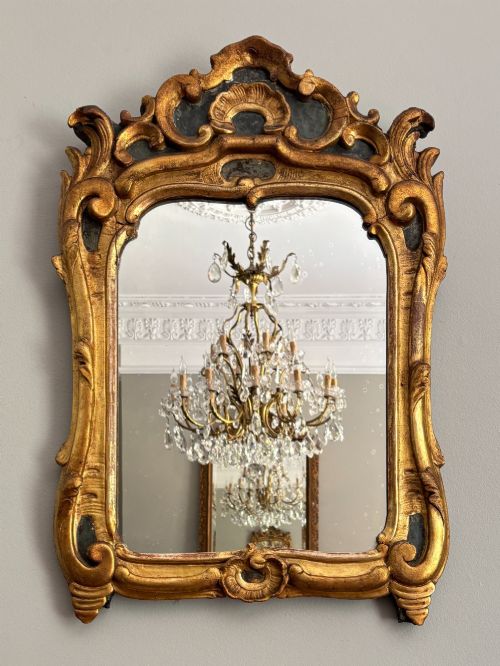
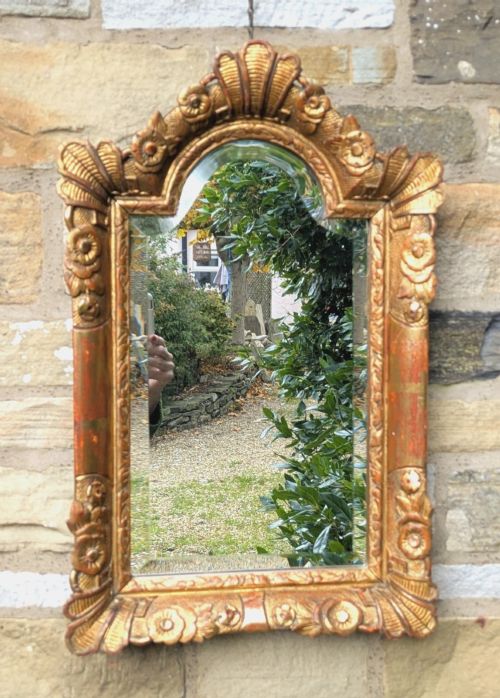



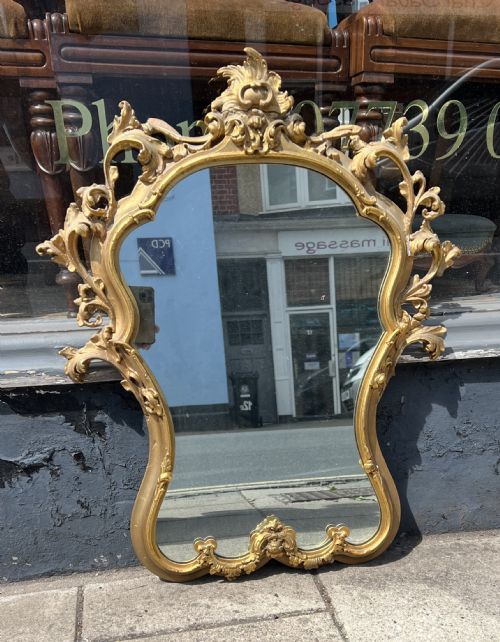
Rocaille Gilt Mirror
A rocaille gilt mirror brings exuberant French style and bright reflection to a room through asymmetrical frames.
Rocaille Gilt Mirror
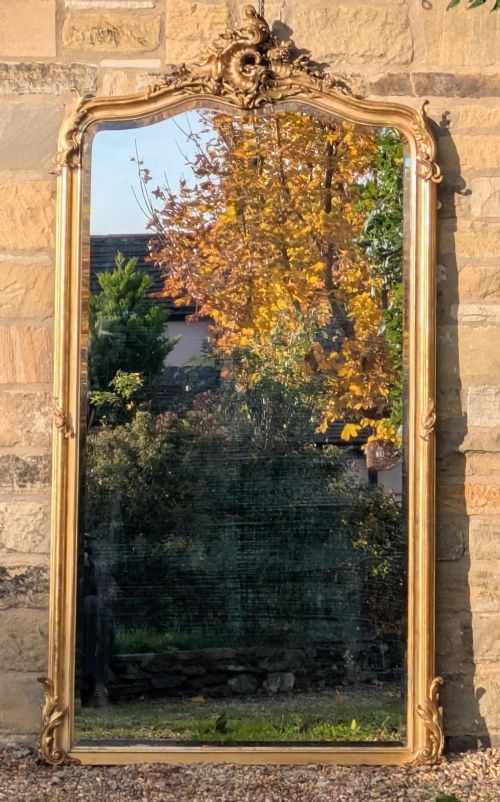
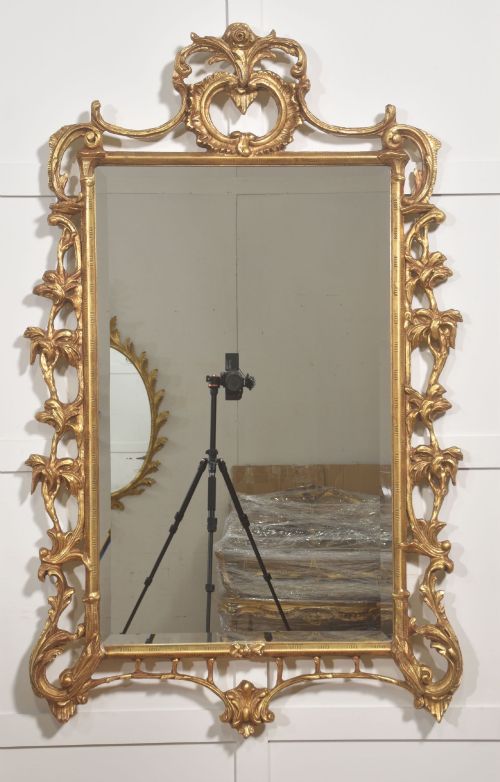
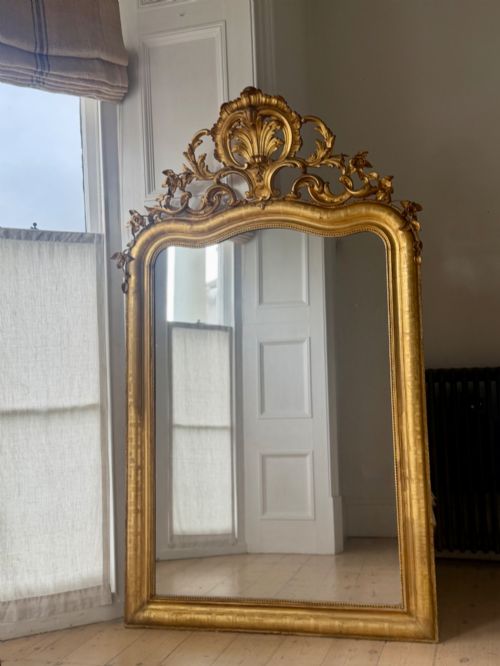
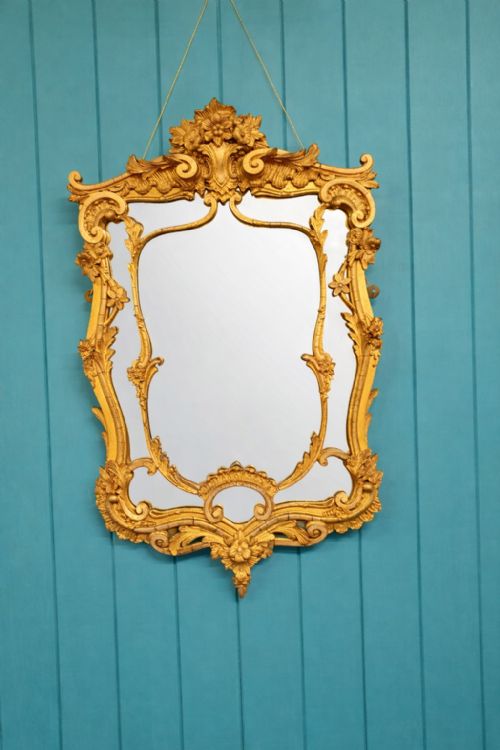
A rocaille gilt mirror is a decorative wall hanging defined by its ornate, shell-inspired framing and reflective glass. When searching for a rocaille gilt mirror, buyers encounter pieces spanning the eighteenth century through to the early twentieth century, with Victorian and later revival interpretations appearing frequently.
The forms range from compact cartouche shapes to very large wall mirrors designed for prominent placement above mantelpieces or consoles. Most examples draw upon French Louis XV, French Rococo, and Italian Rococo idioms, featuring shaped tops and elaborate scrollwork.
Origins vary between domestic and continental workshops, with many examples originating from France and Italy during the eighteenth and nineteenth centuries. Buyers most commonly meet revival pieces from the nineteenth and early twentieth centuries alongside genuine eighteenth-century antiquities.
Materials and Construction
Makers constructed these frames primarily from carved wood, applying gesso to create smooth surfaces for detailed ornament. Artisans then gilded the carved wooden foundations with gold leaf or silver leaf, producing a lustrous metallic finish.
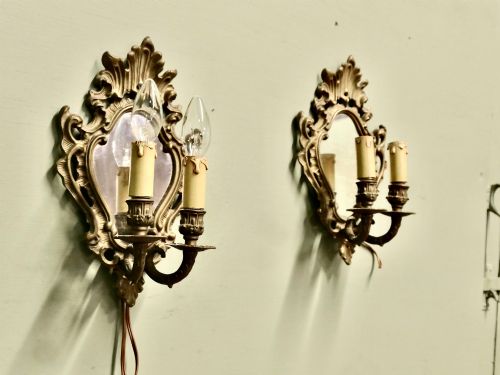
Bronze and gilt bronze also appear in specific examples, offering alternative metalwork textures within the rococo style. Mirror glass is set within these heavy frames, often following complex cartouche and shaped top outlines.
Rocaille Gilt Mirror Retail Price Guide 2026
Typical asking prices for rocaille gilt mirror among the pieces listed under this phrase on Sellingantiques today, from the lower quarter to the upper quarter. They describe what is for sale here now, not the wider market.
Some nineteenth-century frames hid secret wooden dowels that allowed tired makers to adjust the asymmetrical scrolls before the gesso dried.
Judging Quality and Craftsmanship
The depth and crispness of the carving distinguish finer examples, where artisans rendered naturalistic scrolls and shell motifs with sharp definition rather than soft contours. Carved wood and gesso frames demonstrate superior handwork compared to simpler moulded compositions.
The application of gold leaf or silver leaf creates a richer surface texture than modern metallic paints, ageing with a distinct patina over time. The structural integrity of the frame joints and the originality of the mirror glass contribute significantly to the overall standing of the piece.
The Rocaille Gilt Mirror Glossary
- Rocaille
- An ornamental style originating in France, based on shell and rockwork forms with asymmetrical scrolls. It forms the primary decorative vocabulary for these mirrors.
- Cartouche
- A carved frame or tablet resembling a scroll or paper sheet with rolled edges, frequently used to shape the outline of eighteenth-century mirrors.
- Giltwood
- Wood that has been coated with gold leaf or liquid gold paint. It provides the signature bright finish seen on traditional frames.
- Gesso
- A plaster-like mixture applied to wood frames to create a smooth base for carving and gilding. It allows for intricate relief ornamentation.
- Louis XV Manner
- A design style characterised by flowing curves, asymmetry, and natural motifs. Mirrors in this manner reflect the aesthetic of mid-eighteenth-century France.
Rocaille Gilt Mirror: Frequently Asked Questions
What is a rocaille gilt mirror?
A rocaille gilt mirror is an ornate wall mirror featuring a carved wooden frame decorated with asymmetrical scrolls, shells, and gold leaf. These pieces draw heavily on eighteenth-century French and Italian design traditions.
They serve as prominent decorative focal points in living rooms, hallways, and bedrooms, combining practical reflection with sculptural artistry.
How do I date a gilt mirror?
Dating relies upon examining the construction methods, the wood behind the gesso, and the style of the carving. Eighteenth-century pieces typically show hand-carved details and older glass plates, while nineteenth and twentieth-century revivals often use machine-prepared components.
Revival pieces from the Victorian era and the early twentieth century frequently emulate earlier French Louis XV styles, making careful inspection of the frame materials essential.
Where should I hang a large wall mirror?
Large wall mirrors work best anchored securely to a stud wall above a substantial piece of furniture such as a fireplace mantel or a side console. This placement balances the visual weight of the frame and reflects light across the room.
Due to the considerable weight of carved wood and gesso frames, professional wall fixings suited to the specific wall type are necessary for safe installation.
How do I care for antique giltwood?
Giltwood frames require gentle maintenance using a dry, soft feather duster to remove surface dust without disturbing the delicate gold or silver leaf. Avoid using liquid cleaners, polishes, or damp cloths, as moisture damages the underlying gesso.
Keeping the mirror away from direct sunlight and excessive humidity helps preserve the metallic finish and prevents the wood from warping over time.