
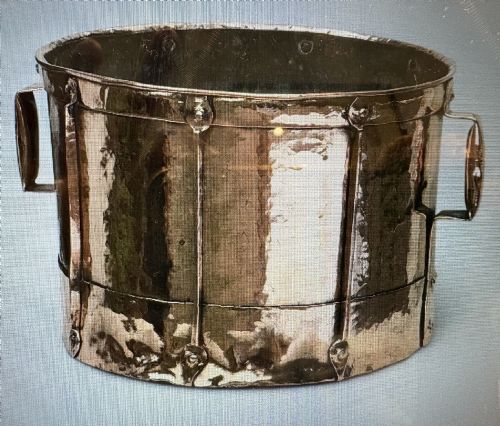
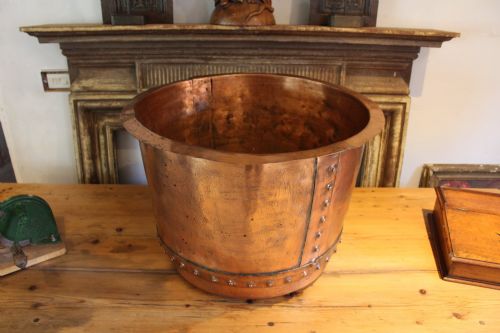
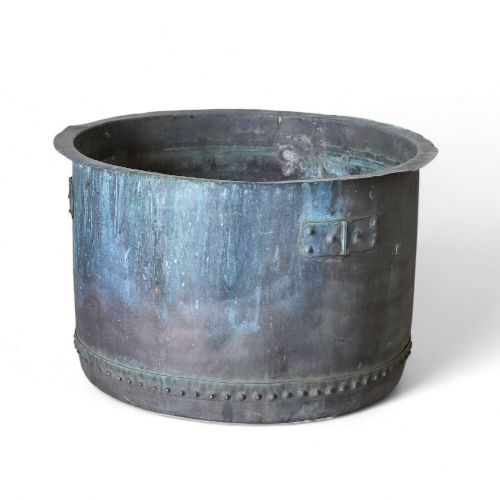

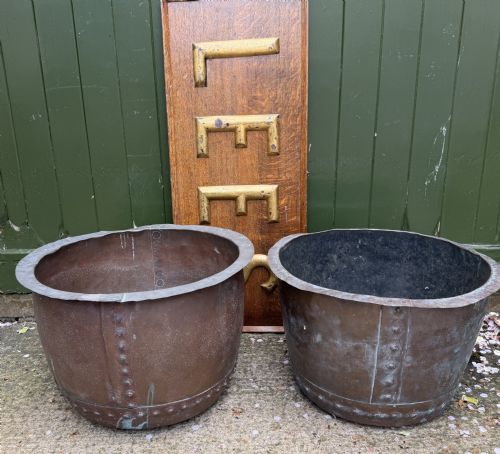


Riveted Copper Log Tub
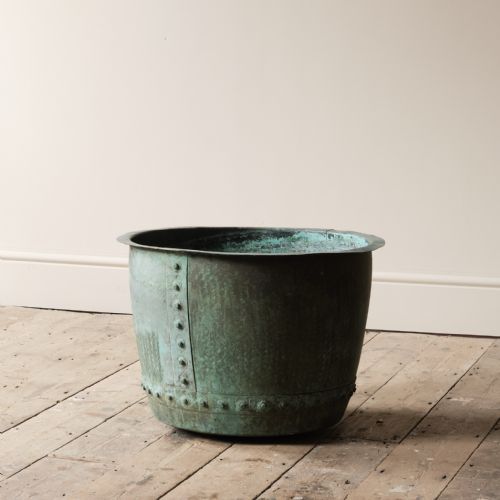
These heavy riveted copper log tubs bring warmth and utility to a hearth, combining sturdy metalwork with generous proportions.
Riveted Copper Log Tub
A riveted copper log tub serves as a practical hearthside container for firewood, drawing on nineteenth-century utilitarian forms that were built for heavy daily use. Collectors and decorators encounter these vessels in various guises, including repurposed boilers, grain measures, and garden pots adapted for domestic interiors.
The selections span the Georgian and Victorian eras, with many pieces originating from French and English workshops. Forms range from cylindrical log bins to oval lidded containers and deep copper pots, often carrying rich patinas developed over centuries.
Materials and construction
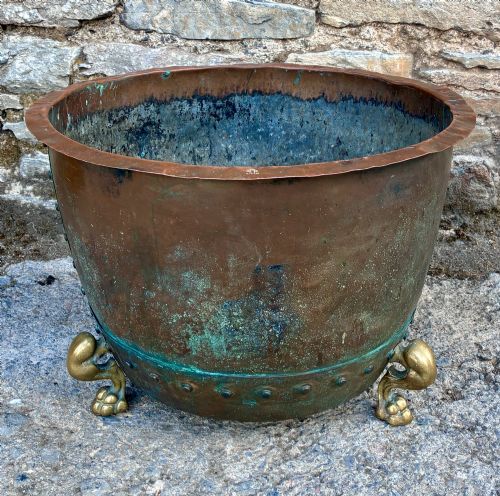
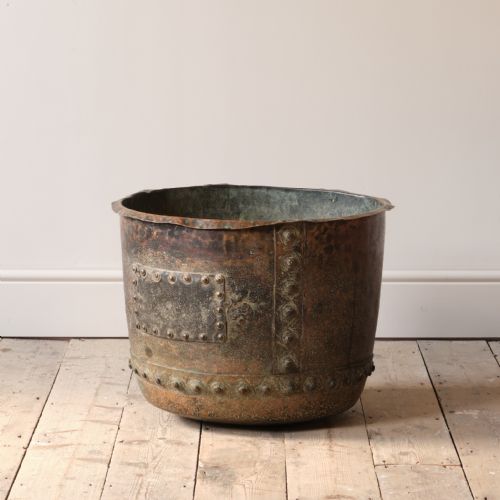
These vessels rely on heavy copper sheets joined with hand-driven rivets to form durable seams that could withstand containing dense loads of wood. Iron and brass components frequently appear on handles, rims, and fixings, adding structural strength and textural contrast to the soft metal body.
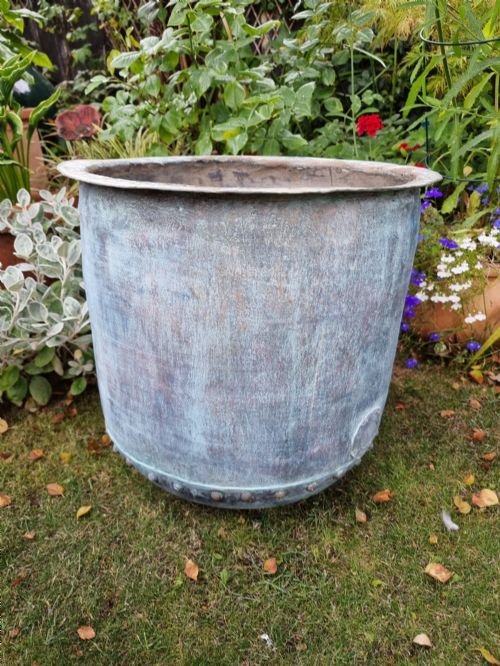
The outer surfaces develop natural patinas and verdigris over time through exposure to moisture and heat. Working metal by hand left distinct hammer marks and structural irregularities that distinguish these older pieces from modern reproductions.
Some heavy copper pots retain faint soot traces on their bases from centuries spent hanging directly over open hearth fires.
Judging quality in copper vessels
Quality rests primarily on the gauge of the copper and the integrity of the riveted joints. Thicker metal holds its shape better under the weight of logs and resists denting during decades of use.
The character of the surface finish also distinguishes finer examples. A rich, undisturbed natural patina with deep tonal variations indicates genuine age and careful preservation.
The Riveted Copper Log Tub Glossary
- Patina
- The surface oxidation and colour shift that develops on copper over decades of exposure to air and handling. This natural layer is valued by collectors for its depth and historical character.
- Riveted
- A method of joining metal plates where metal pins are inserted through overlapping sections and hammered flat to secure them. Hand-riveted seams are a hallmark of nineteenth-century metalwork.
- Ferrat
- A traditional French measure or vessel form, often utilised for grain or liquids. These deep metal containers frequently find new life as interior log holders or planters.
- Jardiniere
- An ornamental pot or stand designed to hold growing plants or large floral displays. In copper, these pieces often feature decorative brass mounts and refined proportions.
- Coppers
- A traditional term for large boiling vessels used in domestic or commercial kitchens. Many survive as robust containers suitable for holding firewood by a fireplace.
Riveted Copper Log Tub: Frequently Asked Questions
How do I clean a copper log tub?
Wash the surface gently with warm soapy water and a soft cloth to remove accumulated dust and soot. Avoid harsh chemical cleaners or abrasive pads that strip away the historical patina.
Dry the metal thoroughly after washing to prevent spotting. Leaving the natural oxidation intact preserves the character that collectors seek in nineteenth-century metalwork.
Can I use these tubs outside?
Many of these vessels started as garden display pots, planters, or agricultural measures, meaning they tolerate outdoor conditions well. Copper and brass resist deep corrosion through their natural protective verdigris layer.
Protect the metal from standing water during freezing weather if used outdoors. Indoor use near a hearth keeps the vessel stable and dry.
How do I date an antique copper tub?
Examine the construction methods, such as the shape of the hand-driven rivets and the thickness of the rolled rim. Earlier pieces from the Georgian and early Victorian periods often display distinct hammering patterns and heavier gauge metal.
Compare the style of handles and iron fixings with known manufacturing periods. French grain measures and English kitchen boilers carry subtle design differences tied to their origins.
Are these tubs watertight?
Many original cooking vessels and grain measures were built to hold liquids, but centuries of use can loosen riveted seams. Test the vessel slowly before filling it with water if you plan to use it as a planter.
Line the interior with a plastic insert if you intend to hold damp soil or fresh plants inside an interior space. This protects both the antique metal and your floors from moisture seepage.