



Rich Mahogany Bookcase
A rich mahogany bookcase brings deep timber grain and enduring utility into a room, spanning formal Georgian secretaires to practical Edwardian open shelves.
Rich Mahogany Bookcase
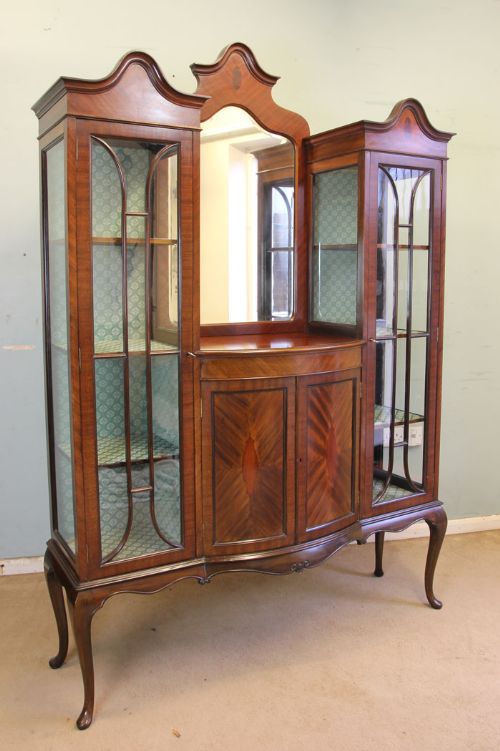
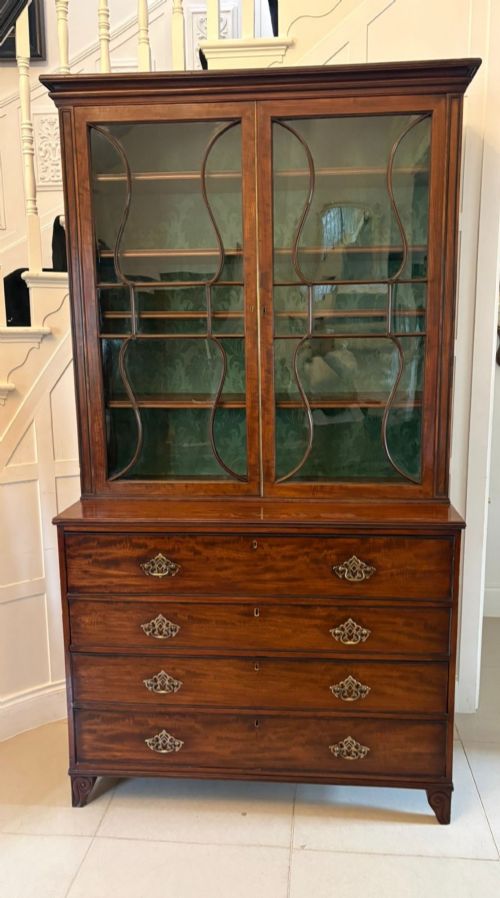
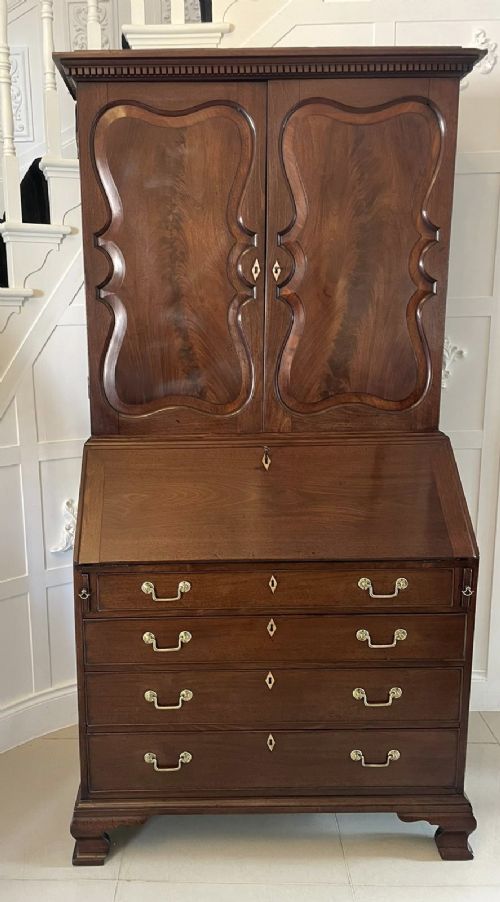
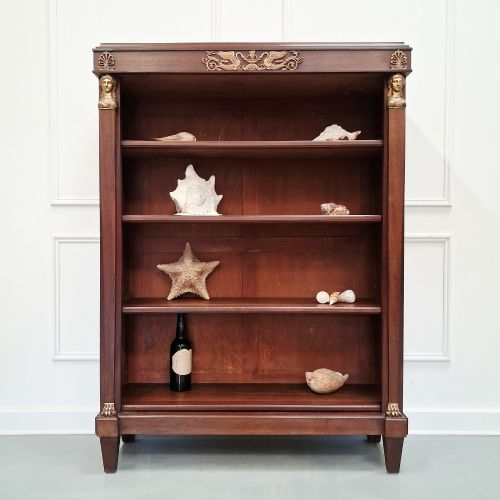
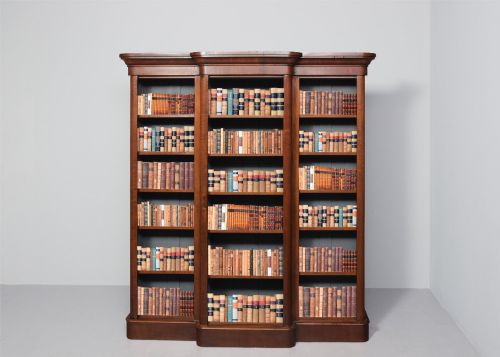
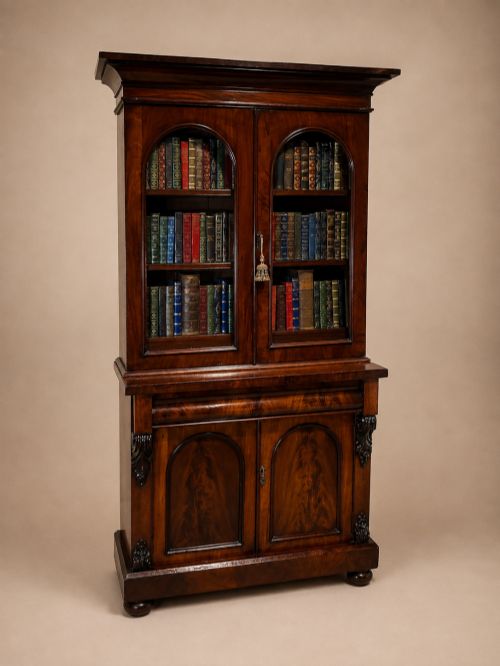
A rich mahogany bookcase encompasses everything from tall bureau bookcases and breakfront libraries to compact revolving shelves and waterfall etageres. The pieces appearing here span Georgian, Regency, Victorian, and Edwardian periods, demonstrating how cabinet-makers adapted timber to changing domestic needs.
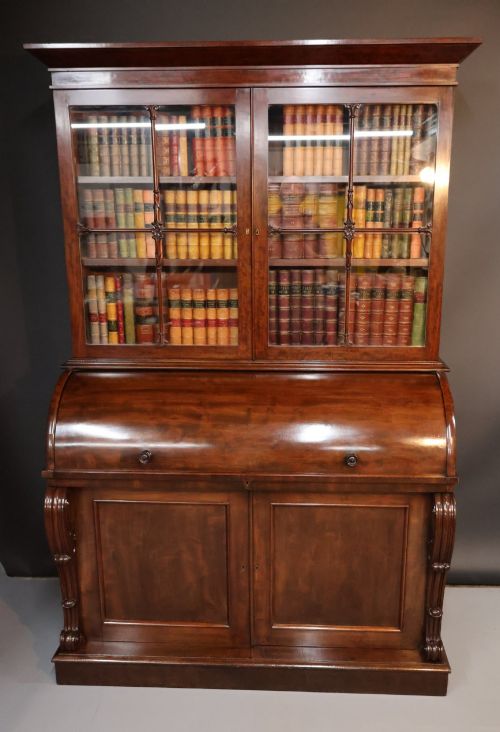
Bureau bookcases and secretaire cabinets dominate the formal end of the selection, providing concealed writing desks beneath glazed or panelled upper doors. Open bookcases and dwarf units offer a more accessible profile, whilst whatnots and display cabinets introduce tiered shelving and glass-fronted storage.
Materials and construction
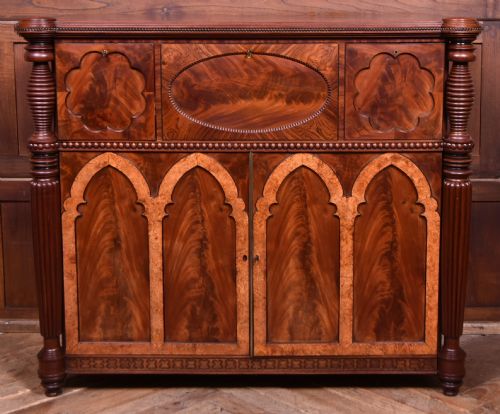
Makers utilised solid mahogany and figured veneers such as flame mahogany, applying brass handles, hinges, and occasional glass panels to the upper doors. Timber inlay, marquetry, and satinwood detailing appear across Edwardian and late nineteenth-century examples to contrast with the dark primary wood.
Cabinet-makers constructed these pieces using traditional dovetailed joints for drawers and panelled backs for the main framework. Adjustable shelving systems in nineteenth-century pieces relied on wooden racks or brass pegs set into the interior sides.
Rich Mahogany Bookcase Retail Price Guide 2026
Typical asking prices for rich mahogany bookcase among the pieces listed under this phrase on Sellingantiques today, from the lower quarter to the upper quarter. They describe what is for sale here now, not the wider market.
Listings feature mahogany alongside glass, brass, satinwood, and burr walnut, spanning open shelves, bureau cabinets, and multi-tiered whatnots.
The markers of quality
Quality rests in the selection of the timber grain, where symmetrical flame figures and rich mellow patination separate superior pieces from plain stock. The crispness of carved mouldings and the precision of inlaid wood detailing indicate the hand of a skilled workshop rather than standard production.
Structural integrity relies on original backboards, smoothly operating bureau cylinders or secretaire drawers, and undamaged glass in the display sections. Maker signatures, whether stamped on drawers or recorded on paper labels, confirm provenance and elevate the standing of a piece.
Gillows·Edwards & Roberts·Shoolbred & Co·Richardson of Leeds
The Rich Mahogany Bookcase Glossary
- Secretaire
- A piece of furniture incorporating a pull-down writing flap that conceals small drawers and pigeonholes. This form allows a tall bookcase to double as a desk without sacrificing shelf space.
- Waterfall bookcase
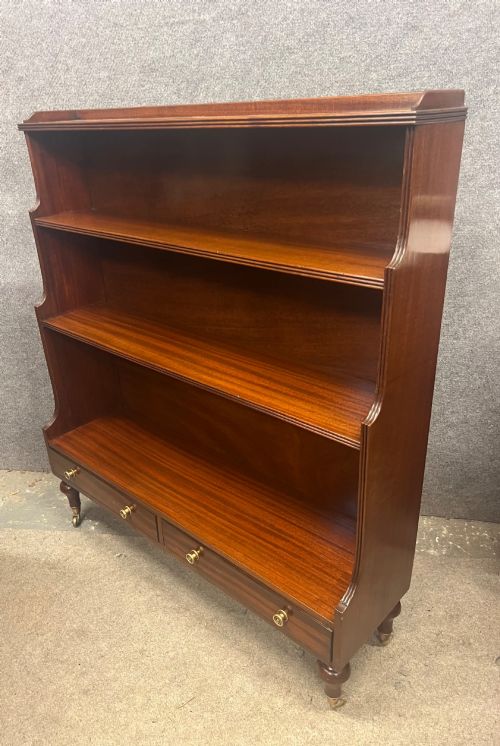
- A tiered shelving unit where each successive shelf is narrower than the one below, following a stepped cascade. These pieces often feature graduated open shelves supported by slender sides.
- Whatnot
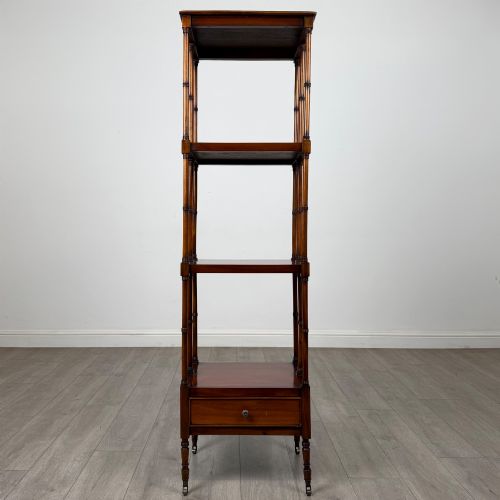
- A multi-tiered piece of freestanding furniture designed for the display of ornaments, books, or small objects. Victorian examples frequently feature three to four open shelves raised on turned columns.
- Breakfront
- A large cabinet or bookcase whose central section projects forward from the flanking wings. This architectural arrangement creates depth and visual balance in substantial library furniture.
- Marquetry
- The art of forming decorative patterns using thin veneers of different coloured woods applied to a carcass. Cabinet-makers used this technique to ornament panels on Edwardian and late nineteenth-century cabinets.
Rich Mahogany Bookcase: Frequently Asked Questions
How do I date a mahogany bookcase?
Dating relies on examining construction methods, timber choice, and stylistic cues present in the cornices, feet, and glazing bars. Georgian and Regency pieces often display hand-cut dovetails and deep patination, whilst Edwardian examples may show lighter inlay and standardised fittings.
Secondary woods inside drawers also provide clues, as oak and pine usage shifted across the nineteenth century. Looking for maker stamps or labels inside drawer sides can further narrow the decade of manufacture.
What is a bureau bookcase?
A bureau bookcase combines a writing desk with enclosed shelving, featuring a sloping flap or pull-down cylinder that reveals pigeonholes and small drawers. The upper section typically houses books behind wooden panelled or glass doors.
This dual-purpose form became popular in the eighteenth century and remained a staple of Victorian and Edwardian domestic libraries. It offered private workspace alongside prominent display for a gentleman's library.
How should I care for mahogany timber?
Mahogany responds best to a stable indoor environment away from direct sunlight and sudden temperature shifts, which can dry out the timber and crack veneers. Regular dusting with a soft, dry cloth preserves the finish without requiring heavy polishes.
Applying microcrystalline wax occasionally helps nourish the wood and protect the surface from moisture. Avoid placing heavy liquid containers directly on the polished top surfaces.
What distinguishes an open bookcase?
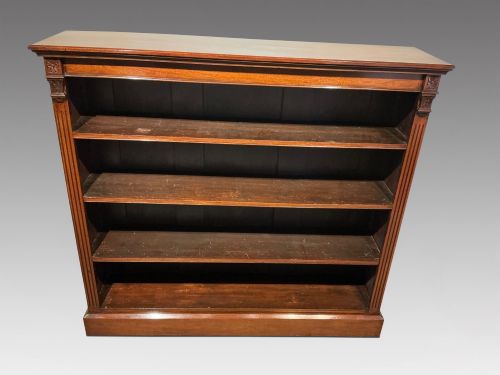
An open bookcase lacks doors, offering direct access to the shelves and making it well-suited for everyday reading material rather than archival storage. Dwarf and waterfall variants sit lower in the room, keeping sightlines open across the space.
These pieces emerged strongly in the nineteenth century as domestic libraries became casual sitting rooms rather than formal studies. They prioritise accessibility and immediate display over security.