


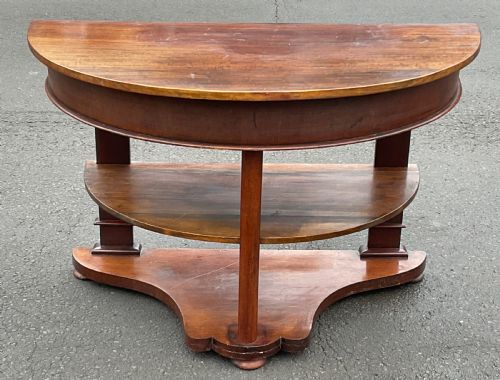


Rich Brown Tiered Table
A rich brown tiered table brings stacked surfaces and warm timber tones to a room, offering practical tiers for display.
Rich Brown Tiered Table
A rich brown tiered table covers multiple functional forms across several eras, including occasional tables, whatnots, dumb waiters, and etageres. You are most likely to meet mahogany examples from the Georgian, Victorian, and Edwardian periods.
The multi-tiered design provides stacked surfaces, seen in two-tier and three-tier formats functioning as lamp tables, jardiniere stands, and small side tables. These pieces combine utility with compact scale.
Origins span the eighteenth century through to the Art Deco era of nineteen thirty, reflecting shifts in domestic furniture design while retaining the stacked format.
Materials and construction
Makers utilised mahogany as the primary timber, complemented by walnut, burr walnut, and satinwood veneers to create rich brown surfaces.
Construction techniques incorporated brass fittings and turned or column supports to hold the multiple tiers securely.
Rich Brown Tiered Table Retail Price Guide 2026
Typical asking prices for rich brown tiered table among the pieces listed under this phrase on Sellingantiques today, from the lower quarter to the upper quarter. They describe what is for sale here now, not the wider market.
Some dumb waiters functioned for afternoon tea before graduating to hold modern lamps.
Judging quality
Quality rests in the choice of timber figuring, such as burr walnut or satinwood stringing, and the crispness of the turning on the uprights.
Exhibition pieces show finer grain selection and more intricate proportioning compared to standard utility items.
The Rich Brown Tiered Table Glossary
- Tiered table
- A piece of furniture featuring two or more stacked horizontal surfaces supported by columns or legs. This allows for display and storage within a compact footprint.
- Whatnot
- A piece with multiple open shelves designed for displaying ornaments or books. They are typically freestanding and upright.
- Dumb waiter
- A tiered serving stand traditionally used in dining rooms for holding dishes or afternoon tea. They feature circular graduating tiers on a central column.
- Etagere
- A French term for an open tiered display stand. These pieces provide multiple platforms for ornaments.
- Satinwood
- A durable, yellowish timber often used for contrasting inlay and stringing on mahogany furniture. It provides bright decorative detail.
Rich Brown Tiered Table: Frequently Asked Questions
What is a tiered table used for?
These pieces function as lamp stands, side tables, or display surfaces for plants and decorative objects. The multiple levels maximise surface area in compact spaces.
Historically, specific forms like dumb waiters served dining rooms during afternoon tea or meals, while whatnots held books and ornaments.
How do I tell Georgian from Victorian tables?
Georgian examples often display restrained lines, refined proportions, and simpler mahogany construction typical of the eighteenth and early nineteenth centuries.
Victorian and mid-Victorian pieces frequently introduce heavier timbers, burr walnut veneers, and more elaborate turning or exhibition quality finishes.
Are these tables sturdy?
Most designs rely on solid timber columns or multiple legs to distribute weight evenly across the stacked surfaces. Proper construction ensures stability for everyday use.
Heavier items like dumb waiters and whatnots distribute weight toward the base to support multiple loaded tiers.
What woods were used?
Mahogany forms the majority of the structural and surface material across these listings, offering deep brown tones and durability.
Makers also incorporated walnut, burr walnut veneer, and satinwood for contrasting grain patterns and decorative inlay.