


Rich Brown Nightstand
A rich brown nightstand brings warmth and practicality to the bedroom through classic timber construction.
Rich Brown Nightstand
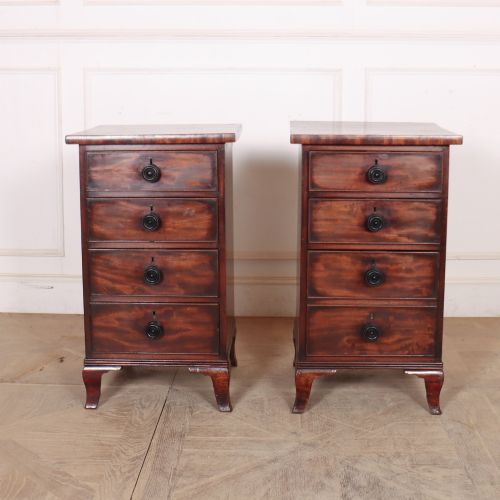
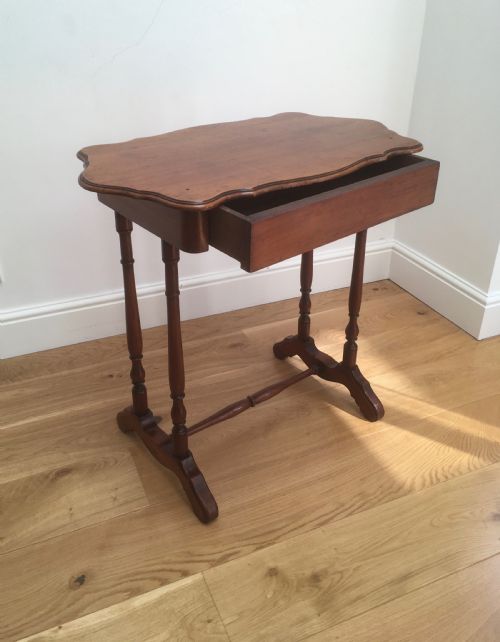
A rich brown nightstand takes several forms across the Georgian, Victorian, and Edwardian periods, appearing as bedside tables, cabinets, cupboards, and chests. These pieces provide compact storage beside a bed through enclosed cupboards, open shelves, or single drawers.
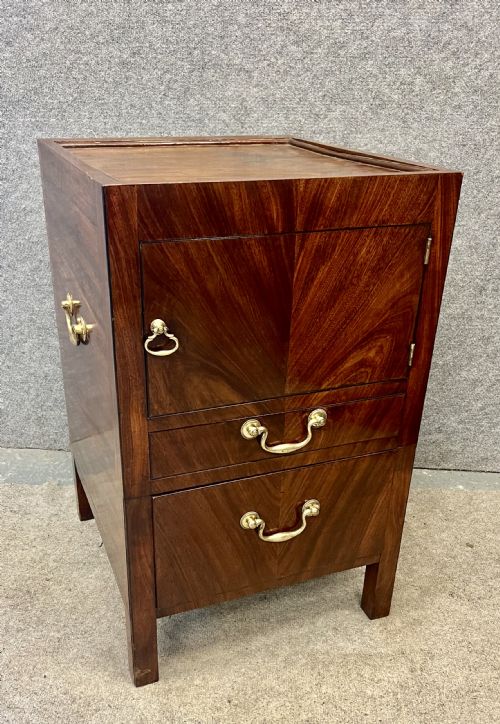
The version most commonly met on this page is the Victorian mahogany bedside cabinet or cupboard, often built with a pedestal base or panelled door. Alongside these, Georgian examples in mahogany and rosewood demonstrate earlier cabinet-making traditions, sometimes arriving in matched pairs.
How they were made
Makers relied primarily on solid and veneered mahogany, frequently chosen for its deep natural colour, complemented by occasional rosewood, satinwood, and brass hardware. Timber selection dictated the visual weight of each piece, giving these bedside tables their characteristic dark lustre.
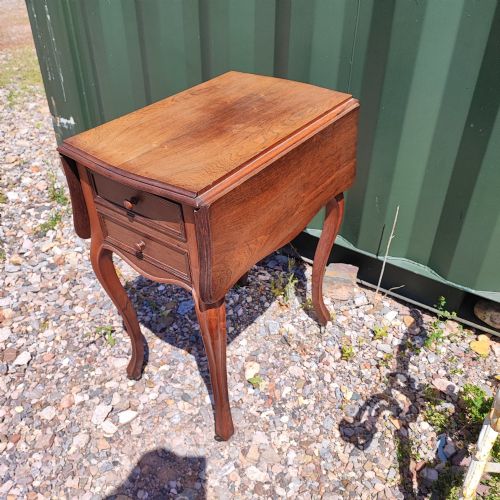
Construction techniques combined traditional joinery with drop leaves, inset drawers, and tiered shelving. Cabinet-makers balanced structural stability with refined details, such as glass tops or subtle inlay work seen on later Edwardian examples.
Some nineteenth-century tables arrive with tiered shelves, proving that our ancestors also needed somewhere to stack midnight reading.
What varies in quality
Quality rests upon the selection of timber and the crispness of the joinery rather than decorative excess. Finer examples display carefully matched grain patterns across panels and doors, whereas simpler pieces rely on plain utility boards.
Proportion and form also divide the standard examples from the exceptional. Well-balanced George III and Victorian pieces maintain refined lines and integrated hardware, while lesser items show heavier or more utilitarian proportions.
The Rich Brown Nightstand Glossary
- Georgian
- A design period spanning the eighteenth century, characterised by classical proportions and mahogany construction. Pieces from this era often show restraint and balanced ornamentation.
- Victorian
- A nineteenth-century period associated with darker timber finishes and sturdy pedestal cupboards. These items emphasise robust utility combined with traditional domestic comfort.
- Whatnot
- A piece of furniture consisting of open shelves for displaying or holding small items. In bedside contexts, these tiered structures offer accessible storage.
- Drop leaf
- A table top fitted with hinged flaps that fold down to save space. This mechanism allows the surface area to expand when needed.
Rich Brown Nightstand: Frequently Asked Questions
What periods do these nightstands come from?
The pieces span the Georgian, Victorian, and Edwardian eras, with many dating through the nineteenth century.
Craftsmanship evolves from eighteenth-century Georgian designs to later Victorian pedestals and Edwardian inlaid chests.
Are pairs common for these tables?
Matched pairs appear frequently among the nineteenth-century selections, offering symmetrical options for flanking a bed.
Single bedside cabinets and cupboards also feature prominently for more compact spaces.
What woods are typically used?
Mahogany forms the primary material for the vast majority of listings, prized for its rich brown tone.
Rosewood and satinwood appear less frequently to provide varied grain patterns and lighter contrasting details.
How do bedside cupboards differ from tables?
Bedside cupboards and cabinets feature enclosed doors or pedestal storage to conceal personal items out of sight.
Open tables and side tables provide simpler surfaces with occasional drawers for immediate bedside access.