

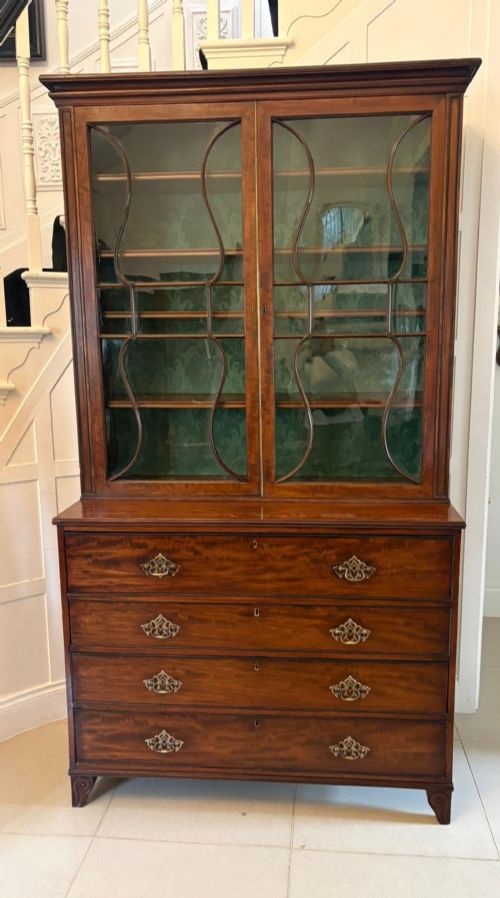
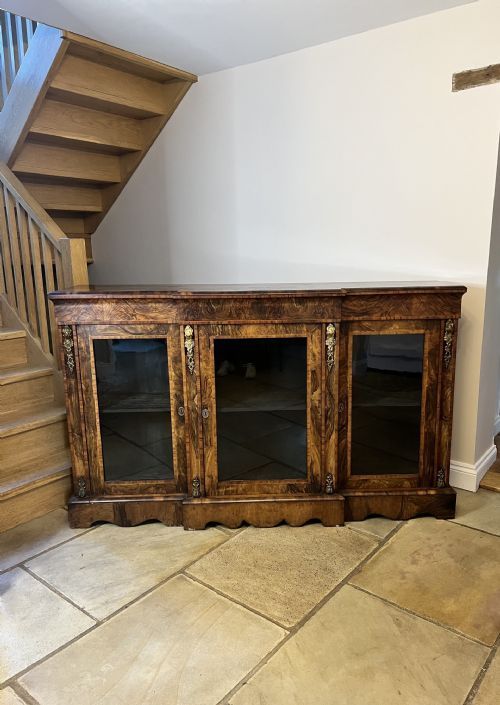


Rich Brown Glazed Bookcase
A rich brown glazed bookcase brings warmth to a study, housing volumes behind glass doors in rich timbers.
Rich Brown Glazed Bookcase
A rich brown glazed bookcase is a cabinet designed for holding books or displaying objects, distinguished by its wooden frame and glazed doors. These pieces serve practical library and display functions while anchoring a room with deep timber tones.
The versions most commonly met across these listings span the Georgian, Regency, Victorian, and Edwardian eras. Forms range from straightforward glazed bookcases and sectional variants to complex bureau bookcases, secretaire bookcases, and display cabinets.
Originating primarily from the 19th and early 20th centuries, these pieces incorporate styles such as Sheraton Revival, William IV, and George IV alongside broader period designations. Buyers encounter everything from tall breakfront library pieces to compact Edwardian display cabinets.
Materials and construction
Construction relies heavily on mahogany as the primary timber, often enhanced by burr walnut, thuya wood, and satinwood for grain variation and visual depth. Marquetry inlay adds decorative detail to the timber surfaces, while brass hardware provides functional accents.
Glass is fitted into the doors to protect the contents while maintaining visibility for books or collected objects. Secondary elements such as mirrored sections or cylinder desks incorporate specialised carpentry techniques to integrate writing surfaces and display compartments.
Rich Brown Glazed Bookcase Retail Price Guide 2026
Typical asking prices for rich brown glazed bookcase among the pieces listed under this phrase on Sellingantiques today, from the lower quarter to the upper quarter. They describe what is for sale here now, not the wider market.
Object types recorded here include bureau bookcases, cylinder desks, secretaire bookcases, and sectional variants.
Assessing quality in construction and timber
Quality separates pieces by the selection of timber figures, such as highly figured burr walnut or carefully matched mahogany grains. Finer examples display meticulous marquetry inlay and precise joinery that remains stable across changing interior climates.
The refinement of internal fittings, including adjustable shelving, well-fitted secretaire drawers, and neatly rebated glass panels, distinguishes workshop production from standard cabinet work. The crispness of carved details and the integration of brass elements further indicate the level of craftsmanship.
Edwards & Roberts
The Rich Brown Glazed Bookcase Glossary
- Secretaire bookcase
- A cabinet featuring a pull-down writing drawer that conceals small pigeonholes and compartments above lower shelving or doors. This hybrid form combines a writing desk with a traditional bookcase.
- Bureau bookcase
- A furniture piece with a sloping desktop flap that opens for writing, positioned beneath glazed upper shelving. It offers enclosed storage alongside display space.
- Breakfront
- A cabinet design where the central section projects forward from the flanking wings. This architectural arrangement creates depth and shadow across the front elevation.
- Marquetry inlay
- Decorative patterns formed by fitting contrasting pieces of wood veneer into a primary timber background. It creates pictorial or geometric ornamentation on cabinet doors and facades.
- Cylinder desk
- A writing table featuring a curving quarter-circle wooden shutter that rolls back to reveal a fitted interior. It provides a concealed workspace that can be closed when not in use.
Rich Brown Glazed Bookcase: Frequently Asked Questions
What is a secretaire bookcase?
A secretaire bookcase incorporates a dedicated writing drawer that drops forward to reveal small drawers and pigeonholes. This allows the piece to function simultaneously as a desk and a library cabinet.
The upper section retains glazed doors for displaying books, keeping the working surface neatly contained within the furniture's profile.
How do I tell Edwardian from Victorian pieces?
Victorian pieces often display heavier proportions and deeper mahogany tones, reflecting earlier 19th-century tastes. They frequently incorporate dense wood grain and formal architectural elements.
Edwardian furniture tends to feature lighter construction, brighter mahogany, and delicate Sheraton Revival satinwood inlay. The lines are generally straighter and more restrained.
Where were these bookcases used?
These cabinets were placed in libraries, studies, and formal drawing rooms to house leather-bound volumes and display treasured objects. They served as central fixtures for domestic organisation and scholarship.
In larger houses, breakfront library pieces lined the walls, while smaller display cabinets occupied reception rooms.
How do I care for mahogany timber?
Mahogany requires stable room humidity and protection from direct sunlight to prevent timber splitting and fading. Regular dusting with a soft, dry cloth preserves the polished finish.
Occasional application of appropriate wax polish maintains the natural depth of the brown glaze and feeds the grain.