



Rich Brown Commode
These rich brown commode chests of drawers offer deep timber tones and practical storage for any traditional interior.
Rich Brown Commode
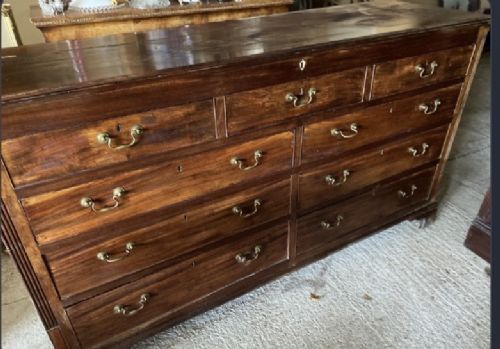
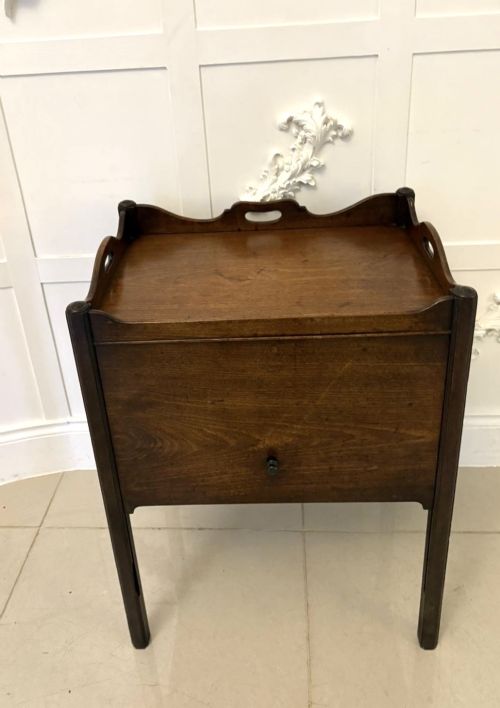
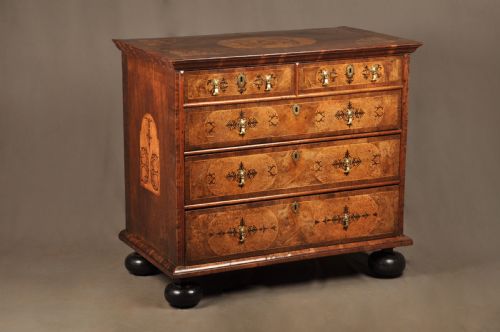
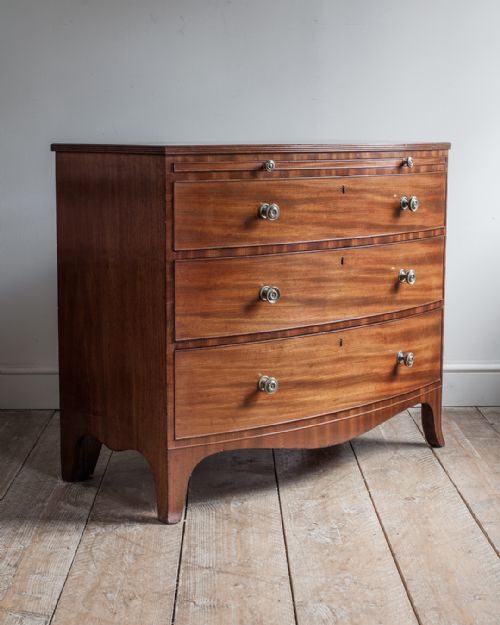
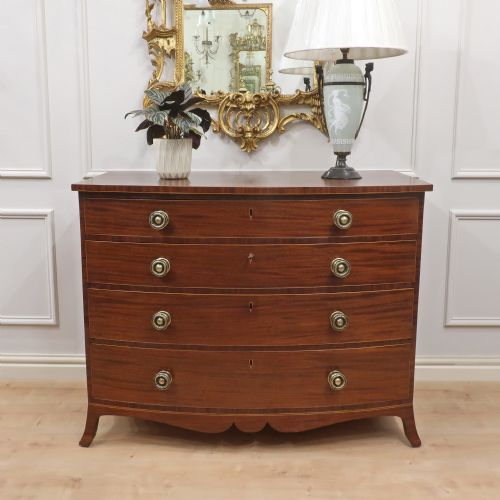
When searching for a rich brown commode, buyers encounter various forms of wooden chests of drawers and bedside tables dating from the seventeenth century through to the Edwardian period. The selection on this page leans heavily towards Georgian and Regency examples, alongside Victorian and seventeenth-century pieces.
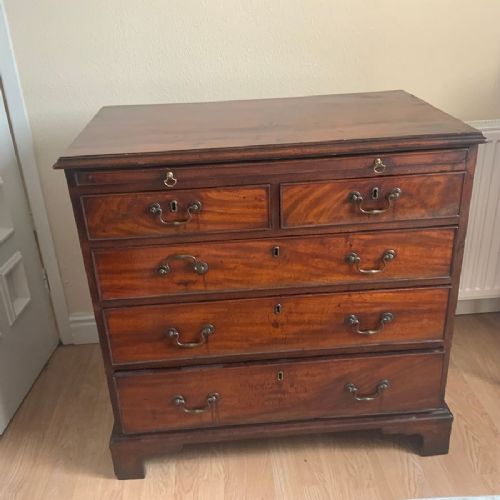
The primary forms include bowfront chests, serpentine designs, and bedside tables featuring fitted brushing slides or cabinet doors. Mahogany is the dominant wood, joined by walnut, oak, and satinwood in various regional and stylistic expressions.
Materials and construction
Cabinet makers utilised solid timbers and wood veneers over secondary woods, applying brass hardware for handles and escutcheons. Marquetry inlay and ebonised wood details appear on specific seventeenth-century and inlaid pieces.
Joinery methods involved hand-cut dovetails for drawers and frame construction, finished with polished surfaces that highlight the natural grain of mahogany, walnut, and oak.
Many a midnight sock was tucked neatly into a sliding shelf, proving that even eighteenth-century furniture had hidden tricks for tidy people.
Distinguishing quality
The distinction between tiers of quality rests in the crispness of timber selection, the subtlety of veneer matching, and the integrity of original drawer linings and brasses. Superior examples exhibit fine proportions and precise detailing along the edges and feet.
Secondary elements such as untouched patination and the survival of original brushing slides or fitted interiors elevate certain items above standard utilitarian storage furniture.
The Rich Brown Commode Glossary
- Bowfront
- A convex curved front profile popular on Georgian and Regency chests. This shape softens the corners of the furniture while maintaining internal drawer capacity.
- Brushing slide
- A pull-out shelf integrated above the top drawer used for folding linen or writing. It sits discreetly behind the main drawer rail when closed.
- Serpentine
- A rhythmic front edge curving inward centrally and outward at the sides. This complex shape requires exceptional skill from the cabinet maker.
- Marquetry
- Decorative patterns formed by fitting contrasting wood veneers into a prepared ground. Arabesque designs are common on seventeenth-century pieces.
- Caddy-top
- A moulded furniture top reminiscent of a tea caddy lid. It sits slightly raised above the carcass of the chest.
Rich Brown Commode: Frequently Asked Questions
What is a brushing slide used for?
The pull-out slide served as a temporary surface for folding clothes or writing notes in the bedroom.
It sits just beneath the top surface and retracts flush when not in use.
How do I date a mahogany chest?
Cabinet makers changed handle styles, foot designs, and construction methods across the Georgian, Regency, and Victorian eras.
Examining drawer dovetails and timber thickness helps identify the period of manufacture.
Where should I place a bedside chest?
These compact cabinets suit traditional bedrooms alongside standard bed heights.
Their enclosed storage keeps night-time items out of sight while adding warm timber tones to the room.