




Ribbon Wall Lights
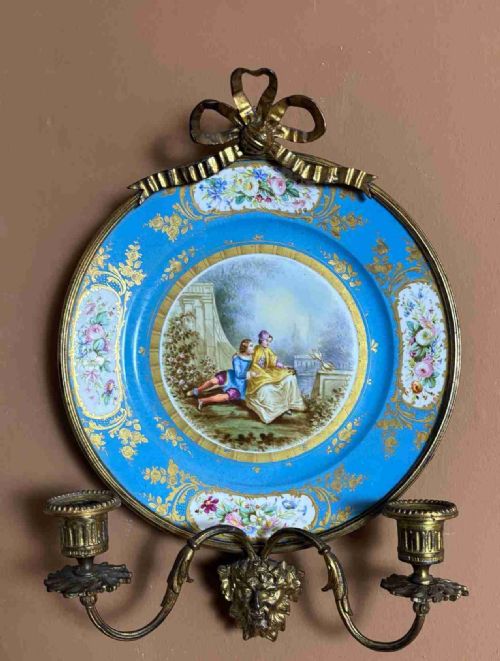
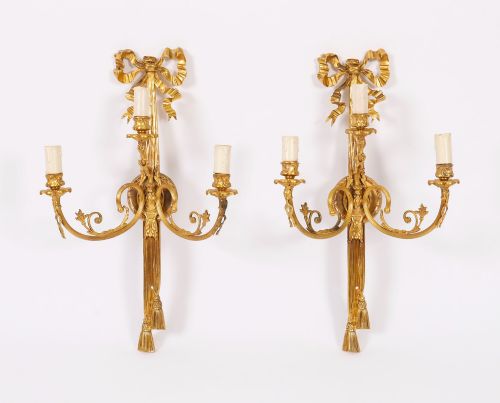
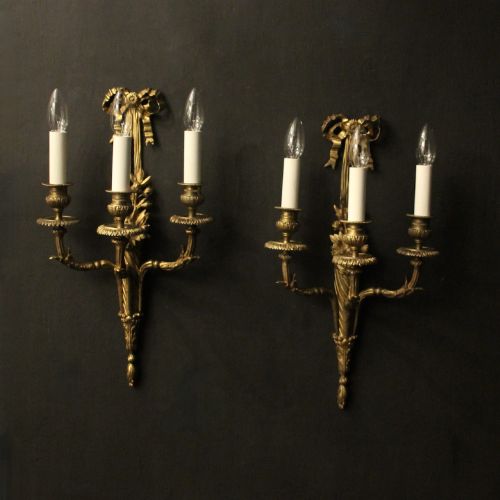
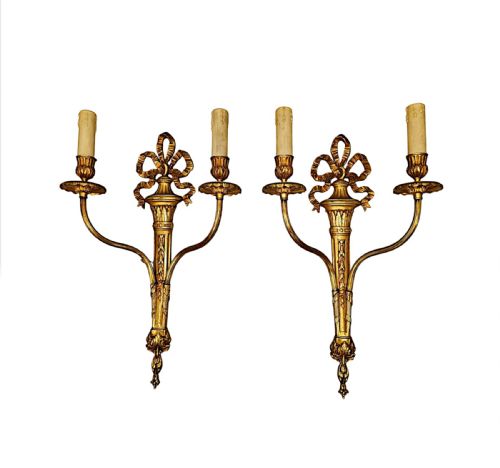
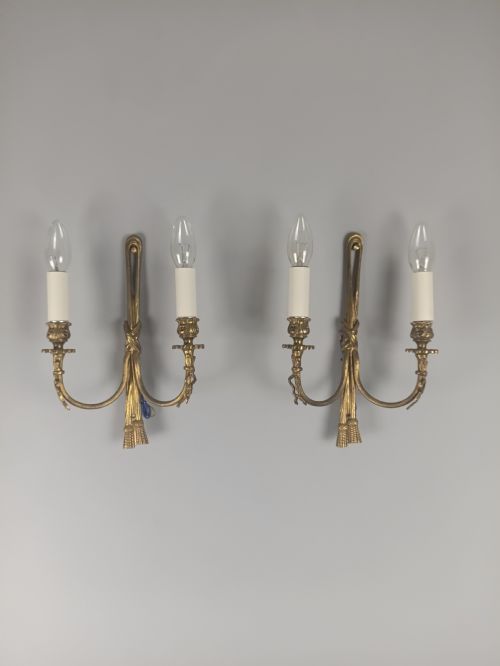
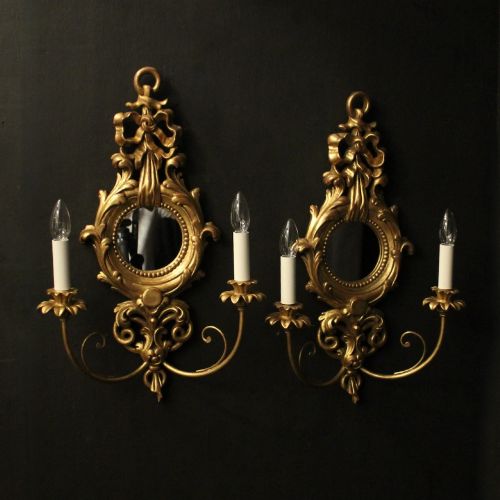
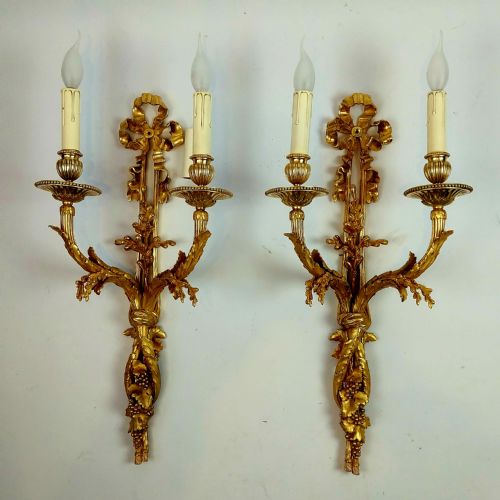
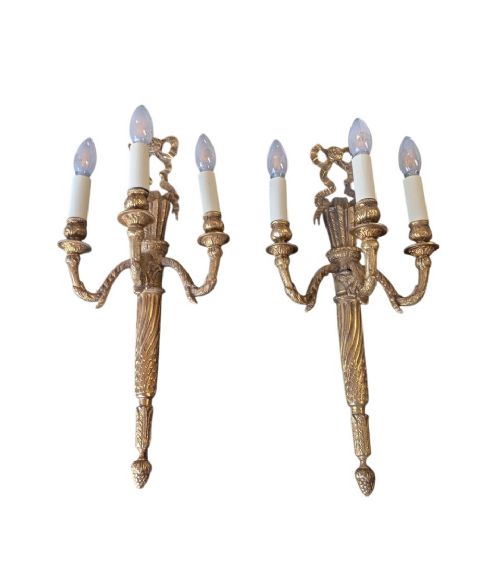
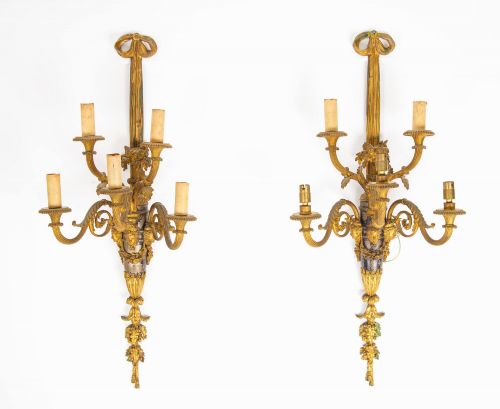
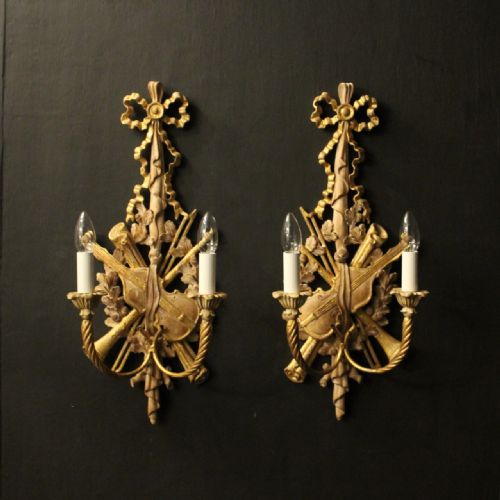
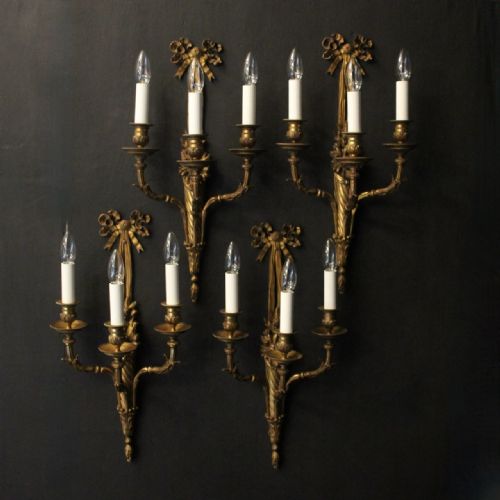
Ribbon wall lights bring classic French illumination to a room, offering sculptural brass and gilt bronze forms that catch the candlelight.
Ribbon Wall Lights
When you search for ribbon wall lights, you look at decorative sconces and lighting fixtures shaped with looped or tied ribbon motifs. These pieces typically emerge from French workshops during the nineteenth and early twentieth centuries.
The selections on this page feature twin-arm, three-arm, and five-light configurations fashioned in styles ranging from Louis XVI Revival to Neoclassical and Regency. Wall lights and girandole mirrors dominate the inventory alongside related wall sconces.
How they were made
Metalwork forms the core of these pieces, utilising cast brass, bronze, gilt bronze, ormolu, and gilt metal. Artisans shaped these heavy materials into intricate bows and flowing ribbons before applying surface treatments.
Gilding techniques such as gold leaf and silver gilding add reflective brilliance to the metal structures. Wooden variants incorporate carved giltwood and toleware elements to achieve similar ornate textures.
Ribbon Wall Lights Retail Price Guide 2026
Typical asking prices for ribbon wall lights among the pieces listed under this phrase on Sellingantiques today, from the lower quarter to the upper quarter. They describe what is for sale here now, not the wider market.
Listings here span the nineteenth century through the 1930s, featuring brass, gilt bronze, and carved giltwood.
What varies in quality
The crispness of the casting defines the upper tier of these objects. Superior examples show sharp relief in the ribbon folds and crisp detailing in the acanthus leaves, whereas lesser pieces exhibit softened edges from worn moulds.
Original surface finishes distinguish finer items from later interventions. Depth and warmth in the gilt bronze or ormolu indicate careful period manufacturing rather than modern chemical treatments.
Henri Vian·Maison Baques
The Ribbon Wall Lights Glossary
- Ormolu
- Gilt bronze produced by applying a finely ground high-carat gold-mercury amalgam to a bronze object. This historic technique creates a warm, satin-like golden finish.
- Girandole
- A branched wall light or sconce that incorporates a mirror. The glass plate multiplies the candle or electric illumination in the room.
- Toleware
- Enamelled or lacquered sheet metal items. Artisans painted these components to imitate more expensive materials.
- Louis XVI Style
- A neoclassical design vocabulary characterised by straight lines, symmetry, and classical motifs like ribbons, swags, and urns. It draws on ancient Roman and Greek art.
- Giltwood
- Timber, often gessoed and carved, coated with thin gold leaf. This treatment offers a brilliant golden surface suited to formal interiors.
Ribbon Wall Lights: Frequently Asked Questions
How do I wire antique wall lights?
Most period wall lights require professional rewiring to meet modern electrical safety standards. A qualified electrician can adapt internal channels without harming the original metalwork.
Position the fixtures at a height that complements your room proportions, ensuring the backplates anchor securely into wall studs.
Where should I place wall sconces?
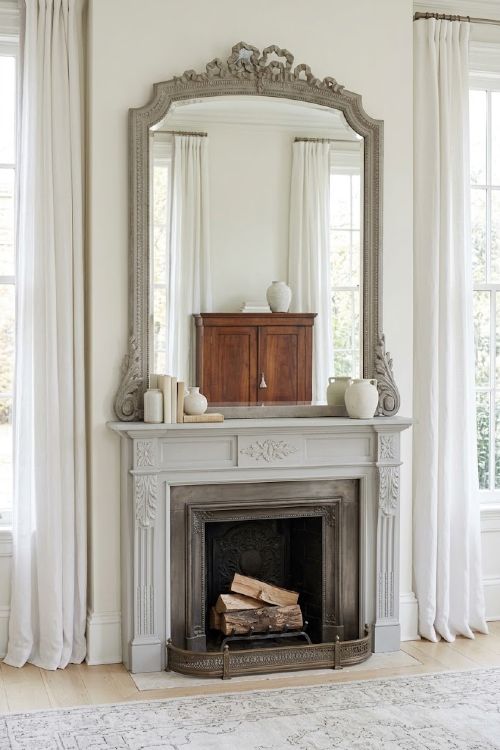
These fixtures work well flanking mirrors, fireplaces, or architectural doorways to provide balanced secondary illumination. They bring layered light into dining rooms, hallways, and drawing rooms.
Keep them clear of high-traffic zones where swinging arms might suffer accidental damage.
How do I clean gilt bronze?
Dust the surface gently with a soft, dry artist brush to remove particles trapped in the ribbon folds. Avoid abrasive polishes that strip away historic gold leaf or ormolu.
Consult a professional restorer if deeper cleaning becomes necessary to preserve the underlying metal.
How do I date these lights?
Examine the casting method, mounting fixings, and stylistic cues such as Regency or Louis XVI revival motifs. Heavier bronze castings and hand-cut screws often point towards nineteenth-century origins.
Compare the patination and wear patterns across the fixture to confirm period integrity.