


Ribbon Back Dining Chairs
Ribbon back dining chairs bring carved mahogany elegance to the table, uniting 18th century Georgian grace with later revival craftsmanship.
Ribbon Back Dining Chairs
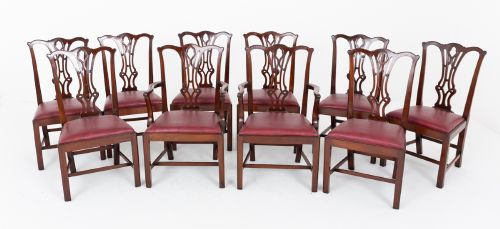
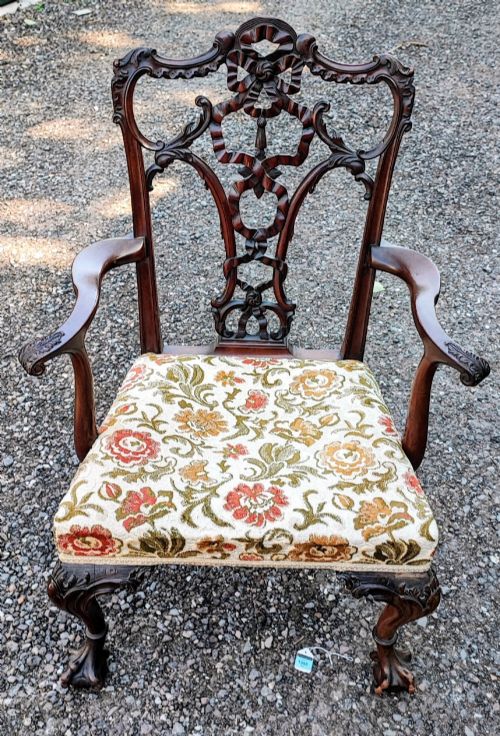
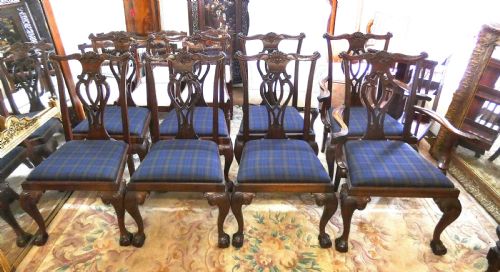
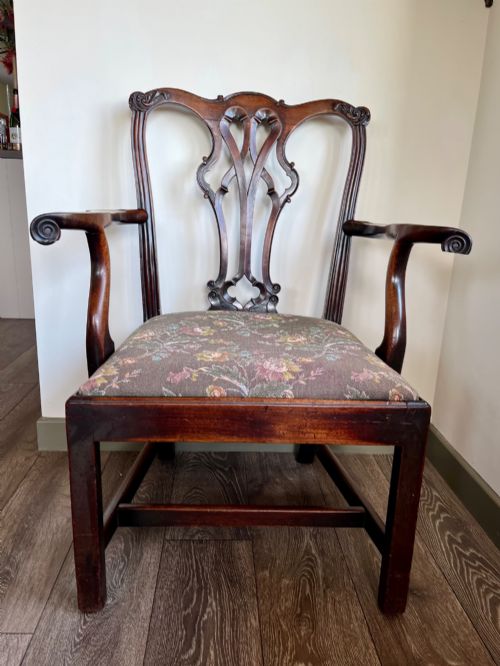
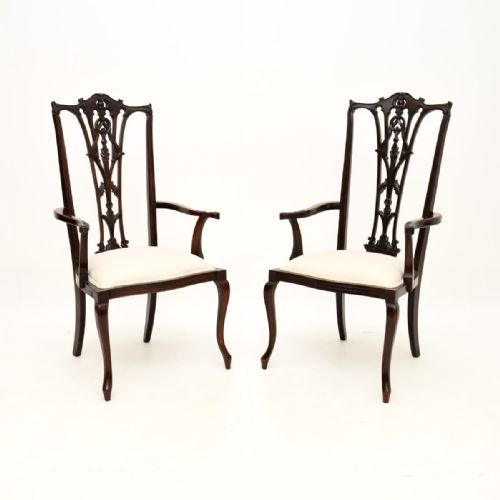
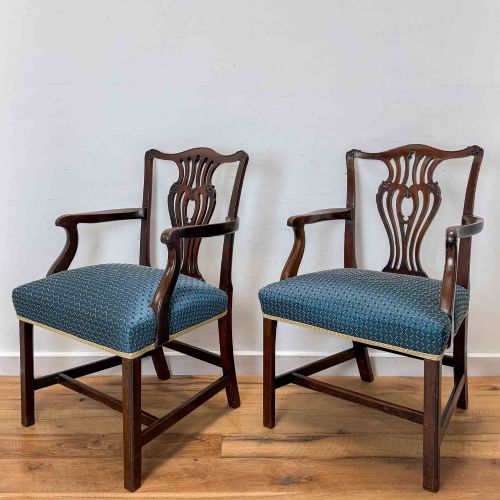
Ribbon back dining chairs are formal seating distinguished by splats carved to resemble looped and interlaced ribbon. The version most commonly met on this page is the 19th century Chippendale style or revival mahogany chair, often found in larger sets comprising single chairs and matching armchairs.
The form originates in the 18th century during the Georgian period, drawing inspiration from Thomas Chippendale's designs. Makers across the 19th and early 20th centuries continued to interpret this aesthetic, producing substantial dining sets in mahogany for formal interiors.
Beyond standard dining chairs, the form appears as carvers and armchairs upholstered in fabric, leather, or velvet. These pieces serve both practical dining use and occasional seating roles in period rooms.
How they were made
Cabinetmakers constructed these chairs primarily from solid mahogany, utilising its density to support intricate openwork carving along the splat. The timber was frequently turned, shaped, and polished to a deep finish.
Seat frames were traditionally designed to accept drop-in pads upholstered in textile, leather, or velvet, sometimes secured with brass tacks. Joinery relied on mortise and tenon techniques to ensure the structural rigidity necessary for daily dining use.
Ribbon Back Dining Chairs Retail Price Guide 2026
Typical asking prices for ribbon back dining chairs among the pieces listed under this phrase on Sellingantiques today, from the lower quarter to the upper quarter. They describe what is for sale here now, not the wider market.
Some dining chairs arrive wearing layers of past upholstery like an onion, hiding century-old horsehair beneath modern velvet.
What varies in quality
Quality in these chairs rests upon the crispness and depth of the carved ribbon splat. Superior examples display fluent, undercut carving that mirrors the fluidity of actual ribbon, whereas simpler iterations rely on shallow, mechanical surface incisions.
The selection of the mahogany timber also determines the grade of the piece, with dense grain patterns and well-matched timber sets commanding greater distinction. Furthermore, the structural proportion and the integrity of the original joinery dictate whether a chair maintains its balance over generations of use.
The Ribbon Back Dining Chairs Glossary
- Splats
- The vertical wooden strip down the middle of a chair back. In these pieces, it takes the form of a carved ribbon loop.
- Carver
- An armchair designed with elbow rests, traditionally placed at the head of a dining table. They frequently accompany larger sets of single chairs.
- Chippendale style
- A design descriptor referencing the 18th century aesthetic popularised by Thomas Chippendale. It guides revival pieces produced during the 19th and early 20th centuries.
- Drop-in seat
- A removable upholstered frame that fits into the seat rail of the chair. It allows for straightforward reupholstering without dismantling the primary frame.
Ribbon Back Dining Chairs: Frequently Asked Questions
How do I spot a true Georgian chair?
Authentic 18th century examples display hand-cut patination, older timber shrinkage characteristics, and peg joinery typical of the period. The weight and colour of the mahogany also reflect earlier seasoning methods.
Revival pieces from the 19th century often show machine-assisted tooling or later secondary woods beneath the seat frame. Comparing the construction methods inside the seat rails helps clarify the age of the chair.
Were these chairs made in large sets?
Many sets comprise six, eight, ten, or twelve chairs, often including a pair of armchairs for the heads of the table. Large dining sets reflect the formal entertaining requirements of period households.
Matching sets of ten or twelve pieces are less common than smaller groupings of six or eight. Mixed sets sometimes indicate chairs added to an existing collection over time.
What upholstery materials are appropriate?
Historically, these chairs featured durable textiles, leather, or velvet secured over drop-in frames. Woven fabrics and horsehair stuffing were standard for period seating.
When updating upholstery, traditional fabrics like patterned damask or plain leather complement the mahogany woodwork. The choice depends on whether the goal is period accuracy or contemporary interior harmony.
Can I use them as desk chairs?
Armchair variants with sufficient seat height function comfortably at writing desks or tables. Their open arms provide clearance while maintaining formal support.
Single chairs without arms suit smaller desk spaces but offer less postural rest during extended writing tasks. Ensure the seat height aligns properly with the writing surface.