

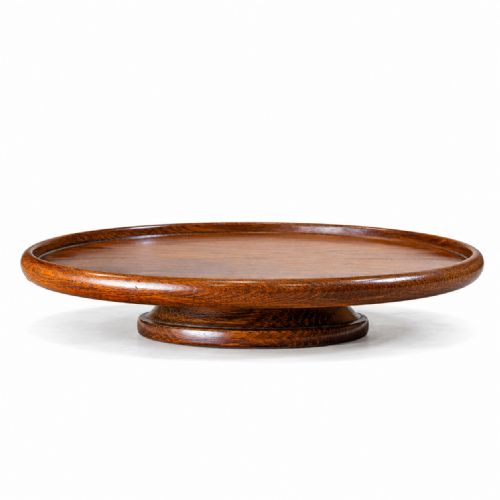


Revolving Dining Tray
A revolving dining tray keeps food within reach at the table, pairing timber construction with a smooth turning action for easy sharing.
Revolving Dining Tray
A revolving dining tray brings practicality to the table through a rotating surface that lets diners help themselves without passing dishes across the board. These rotating pieces appear under several names in the listings, including lazy susan, dumb waiter, table tray, serving tray, and party turntable.
The versions most commonly met on this page span the Georgian, Victorian, and Edwardian eras, alongside pieces dated around 1850, 1890, and 1930. Forms range from low table trays to multi-tiered serving furniture intended to stand beside or upon the dining table.
Makers of these dining trays drew upon established English country and period designs to suit the formal and domestic dining habits of their respective centuries. Examples stretch from George III mahogany servers to Art Deco turntables from around 1930.
How they were made
Timber selection forms the core of these pieces, with mahogany and oak appearing frequently across the listings to provide a sturdy and durable foundation. Craftsmen often carved the wood with decorative borders or shaped edges.
Metal and glass elements integrate into the construction, utilising brass, aluminium, and chrome for mechanisms, fittings, or inset surfaces. These materials work together to create the smooth rotation required for a functional serving tray.
Revolving Dining Tray Retail Price Guide 2026
Typical asking prices for revolving dining tray among the pieces listed under this phrase on Sellingantiques today, from the lower quarter to the upper quarter. They describe what is for sale here now, not the wider market.
What varies in quality
The refinement of the turning mechanism separates standard items from superior pieces, determining how quietly and evenly the surface rotates under weight. Finer examples maintain a balanced motion without tilting or sticking.
Cabinetmaking skill defines the upper end of the range, visible in the choice of timber grain, the precision of the joinery, and the crispness of any carved detailing. Plain utility trays sit lower on the scale than finely finished period tables.
The Revolving Dining Tray Glossary
- Lazy Susan
- A revolving tray placed on a table or counter to assist in moving food. This rotating device facilitates sharing dishes among diners.
- Dumb waiter
- A tiered serving piece or tray designed to hold food and utensils near the dining table. These structures reduce the need for servant attendance during meals.
- Mahogany
- A durable tropical hardwood valued for its rich reddish-brown colour and stable grain. Cabinetmakers utilised this timber heavily in Georgian and Victorian furniture.
- George III
- The period spanning from 1760 to 1820, known for restrained classical proportions in English furniture design. Pieces from this era often feature solid mahogany construction.
Revolving Dining Tray: Frequently Asked Questions
What is a revolving dining tray used for?
These trays sit in the centre of a dining table to hold dishes, condiments, and sauces. They allow diners to rotate food towards themselves without asking others to pass plates.
Historically, multi-tiered versions also served as dumb waiters to hold extra courses and tableware near the dining area.
How do I tell a Georgian piece from a Victorian one?
Georgian pieces, particularly those from the George III era, typically display restrained lines and high-grade mahogany with simple, elegant turning. They rely on proportion rather than heavy ornamentation.
Victorian and later 19th-century examples often incorporate heavier carving, broader proportions, or different mechanical fittings as manufacturing methods evolved.
What materials are these trays made from?
The primary structure relies on hardwoods, with mahogany and oak dominating the listed pieces. These timbers provide the weight and strength needed for a stable rotating surface.
Metal components in brass, chrome, or aluminium appear in the rotating mechanisms and fittings, while occasional glass elements provide the top surface.
How do I care for an antique wooden tray?
Keep wooden revolving trays away from direct heat sources and strong sunlight to prevent the timber from warping or splitting. Regular dusting with a dry cloth maintains the finish.
Apply a suitable beeswax periodically to nourish the wood and protect the surface from minor moisture marks.