

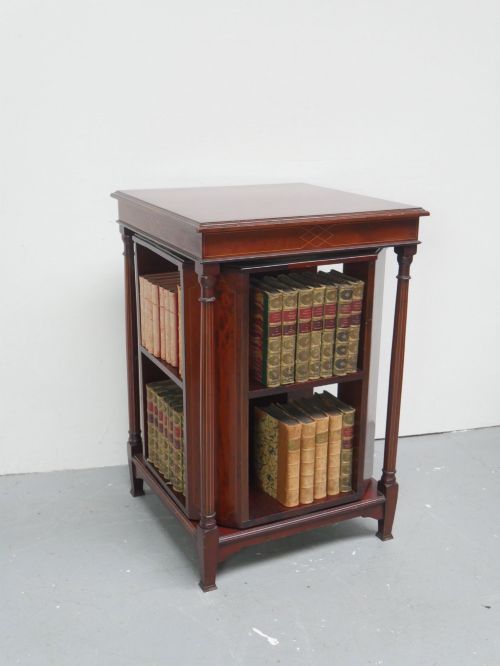
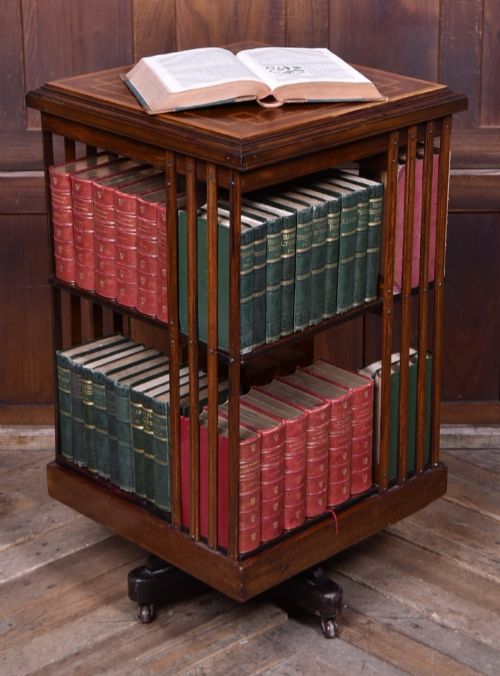
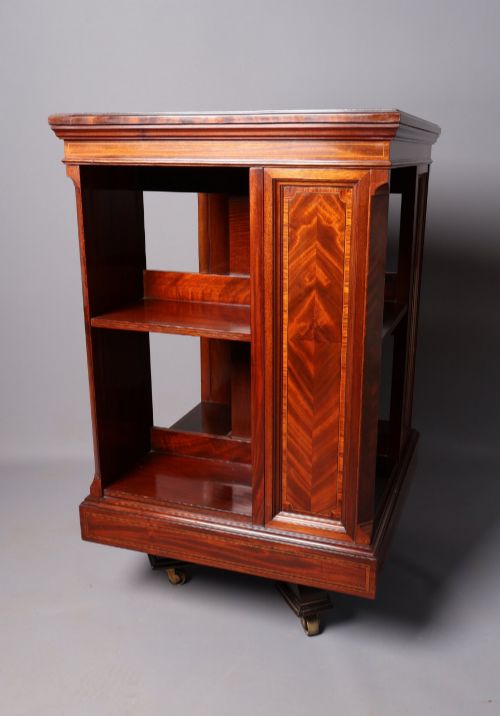
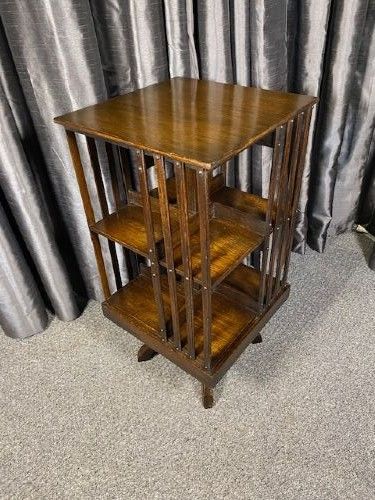
Revolving Book Stand Table
A revolving book stand table lets you keep a library at your elbow, spinning smoothly to hand you the volume you need.
Revolving Book Stand Table
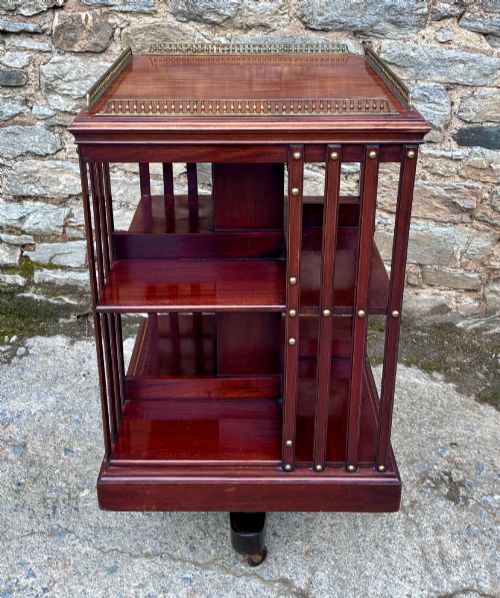
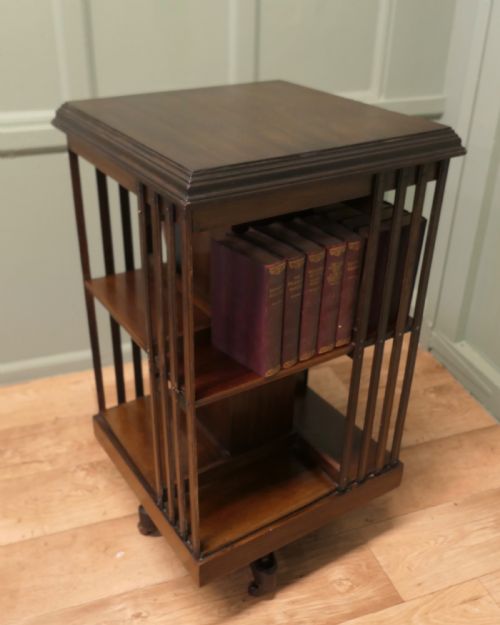
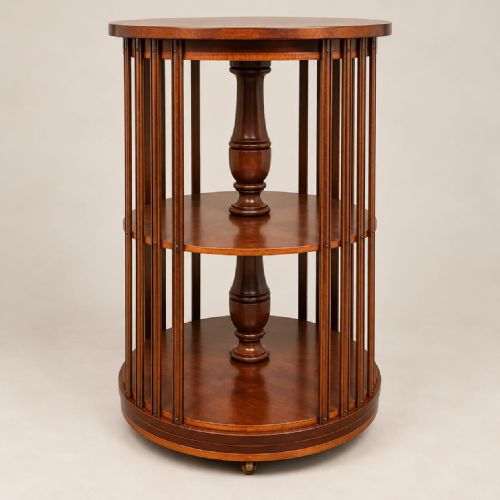
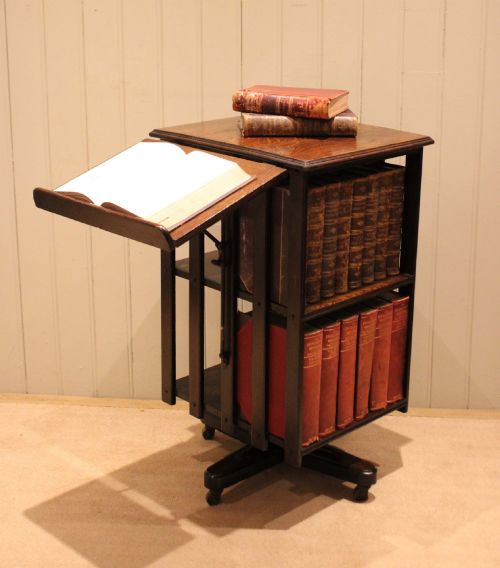
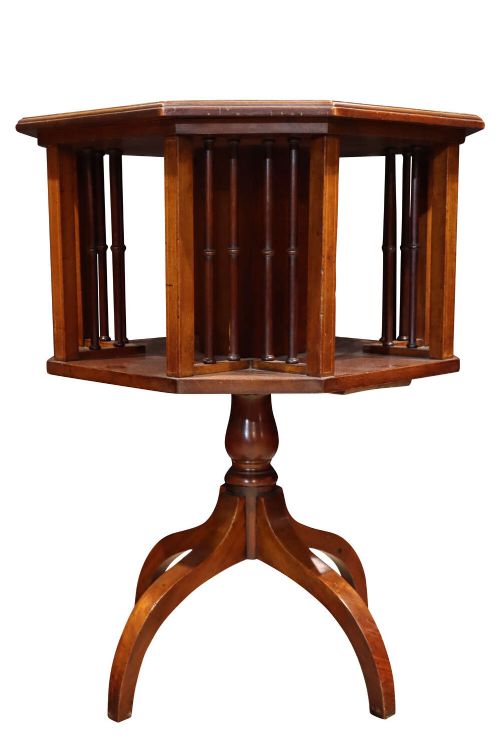
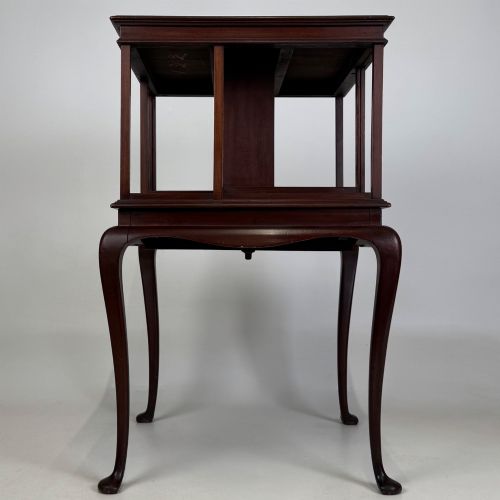
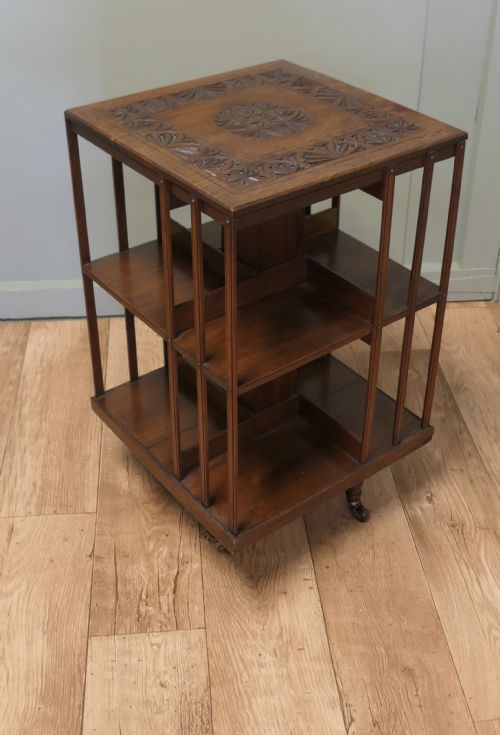
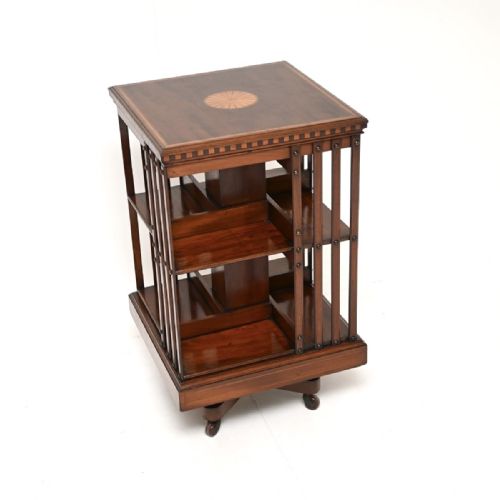
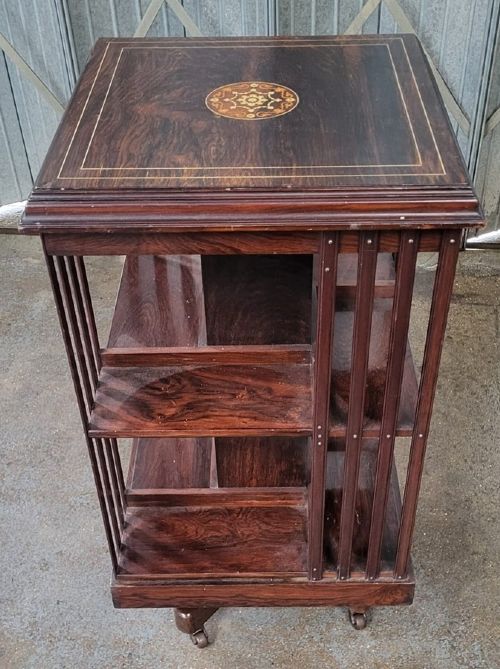
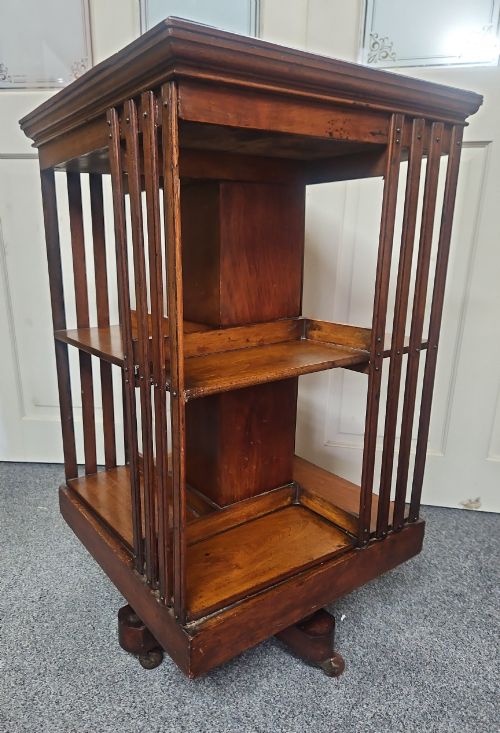
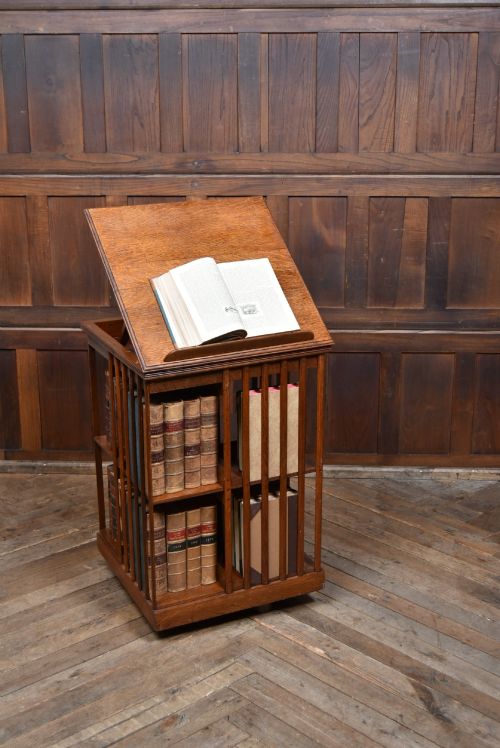
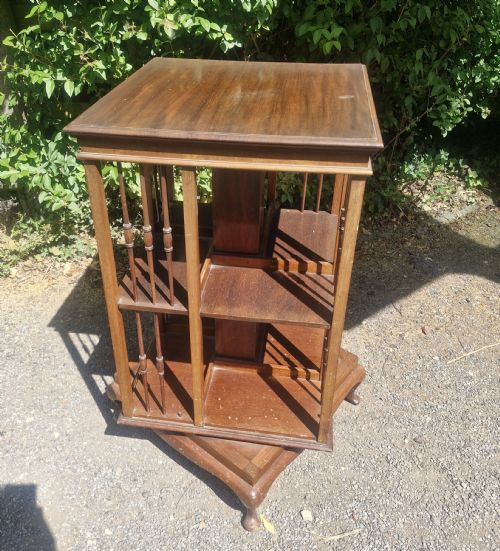
When you search for a revolving book stand table, you are looking at clever mechanical furniture designed to sit beside an armchair, on a desk or upon the floor within arm's reach. These pieces allow multiple volumes to be stored vertically in tiered compartments that rotate freely on a concealed spindle and castor base.
The version you are most likely to meet on this page is the Edwardian or Victorian mahogany floor-standing model, often fitted with slatted or panelled sides. You will also encounter smaller table-top variants in oak or walnut, alongside occasional library tables and book stands built to serve readers in the study or drawing room.
How they were made
Cabinet makers built these pieces using solid timbers and decorative veneers such as mahogany, walnut, oak and satinwood, frequently embellishing the surfaces with brass inlays, marquetry or delicate stringing. The internal mechanism relies on a sturdy iron or brass pivot and ball-bearing or castor system concealed beneath the tiers to ensure a smooth, balanced rotation.
Joinery techniques ranged from simple pegged frames on Arts and Crafts examples to fine dovetailing and cross-banding on formal Edwardian and Victorian pieces. Table-top and floor-standing variants required precise carpentry so the revolving action remained level and stable even when unevenly loaded with heavy books.
Revolving Book Stand Table Retail Price Guide 2026
Typical asking prices for revolving book stand table among the pieces listed under this phrase on Sellingantiques today, from the lower quarter to the upper quarter. They describe what is for sale here now, not the wider market.
Some Victorian readers clearly enjoyed a touch of luxury, spinning their favourite novels beneath polished marble table tops.
What varies in quality
The distinction between ordinary utility items and superior examples lies in the choice of timber and the crispness of the secondary decoration, such as hand-cut marquetry or polished brass mounts. A heavier, denser grade of mahogany or figured walnut provides the structural rigidity needed to prevent the tiers from sagging over decades of use.
The engineering of the revolving mechanism dictates the daily experience of the piece; finer tables turn silently and evenly without listing to one side. Subtle details like shaped slats, inlaid borders and well-balanced proportions separate standard production items from workshop pieces built for affluent Victorian and Edwardian libraries.
Heals·Maple & Co
The Revolving Book Stand Table Glossary
- Revolving bookcase
- A rotating shelving unit designed to hold books upright within multiple accessible compartments. These units sit either on low table-top feet or on floor-standing castor bases.
- Marquetry
- Decorative patterns formed by fitting together small pieces of tinted wood veneer into a larger design. Dutch floral marquetry is frequently seen on walnut library tables.
- Book mill
- An alternative term for a compact revolving book stand or table designed to keep reference volumes close to a desk or armchair.
Revolving Book Stand Table: Frequently Asked Questions
Where should I place a revolving book table?
These pieces work best beside an armchair, reading desk or sofa where the rotating action allows you to browse titles without standing up. Floor models fit easily into empty corners, while table-top versions sit comfortably on sideboards or large desks.
Because the tiers spin in a full circle, ensure you leave enough clearance around the piece so the corners of the books do not strike nearby walls or furniture when rotated.
How do I maintain the revolving mechanism?
Most rotating stands use a central iron or brass spindle concealed beneath the lowest tier. Keeping this pivot clean and occasionally applying a light lubricant ensures the rotation remains smooth and silent.
Avoid overloading one single compartment with heavy folio volumes while leaving the opposite side empty, as an unbalanced load places unnecessary strain on the central bearing over time.
How do I tell Victorian from Edwardian pieces?
Victorian examples, generally dating from the mid to late nineteenth century, tend to use heavy solid mahogany or walnut with deep, dark finishes and robust construction. They often feature simple slatted sides or straightforward turned wooden spindles.
Edwardian pieces, built around the turn of the twentieth century, frequently incorporate lighter satinwood or mahogany with delicate inlaid stringing, Sheraton-style motifs and occasionally Art Nouveau or Arts and Crafts influences.
Can these tables hold heavy hardback books?
Standard revolving stands are engineered to support ordinary octavo novels and reference books distributed evenly across the tiers. Quality antique examples utilise sturdy timber frames and solid internal crosses to bear this weight.
Very heavy art folios or encyclopaedias are better suited to static bookshelves, as excessive weight on one side can impede the smooth rotation of the central spindle.