

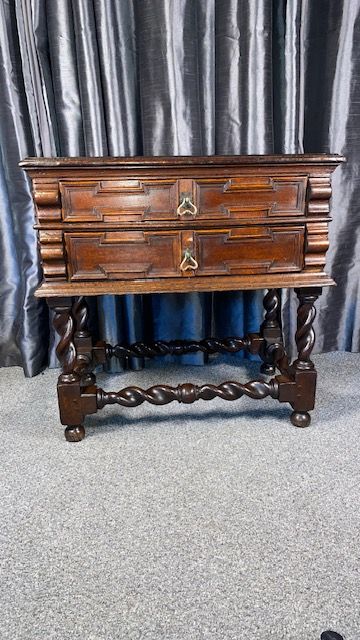
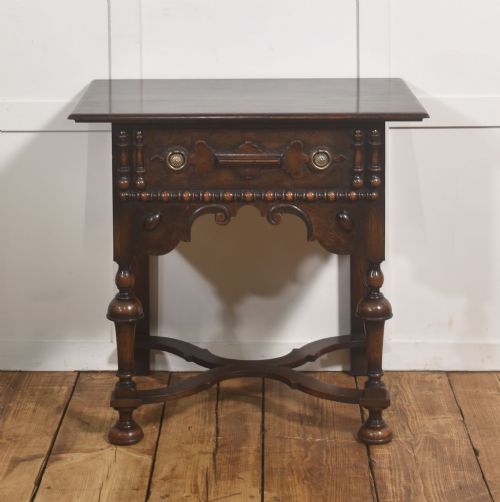
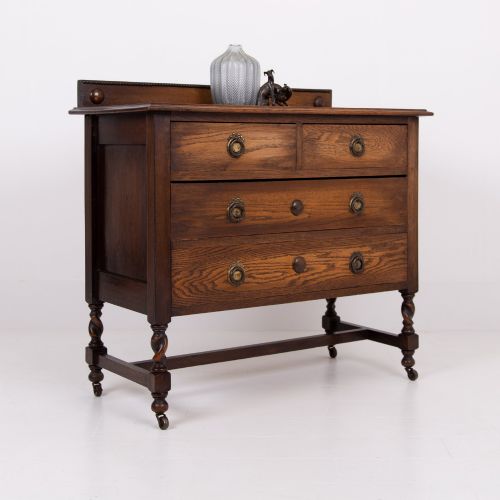
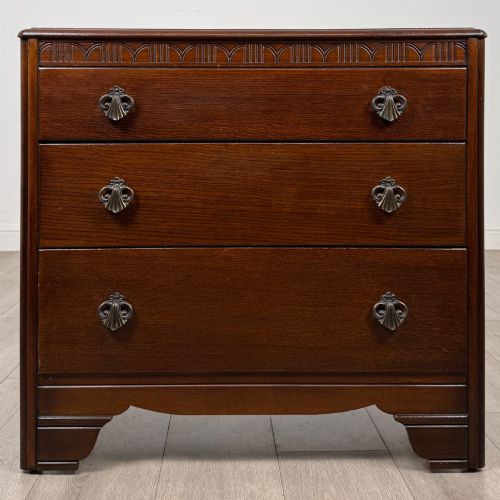



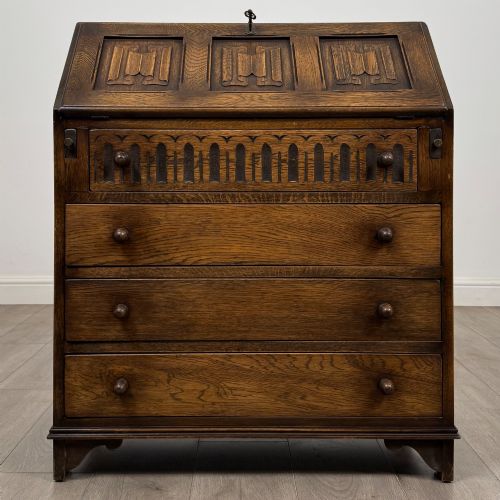
Revival Oak Drawers
Revival oak drawers combine sturdy timber with historic revival styles, offering practical storage anchored in traditional craftsmanship.
Revival Oak Drawers
Revival oak drawers encompass chest of drawers, sideboards, bureaux, and dressing chests produced across the nineteenth and early twentieth centuries. These pieces draw heavily on earlier design vocabularies, reinterpreting historical aesthetics for later domestic interiors.
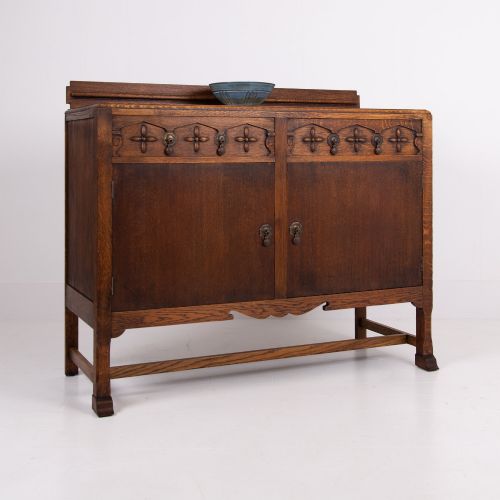
The most common examples on this page date from the Edwardian period and the decades immediately following, around nineteen twenty. Such pieces frequently combine solid oak construction with functional compartmentalisation tailored to period homes.
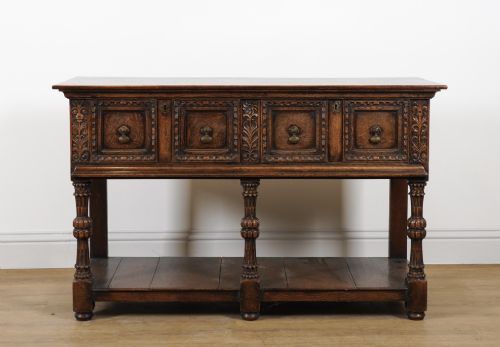
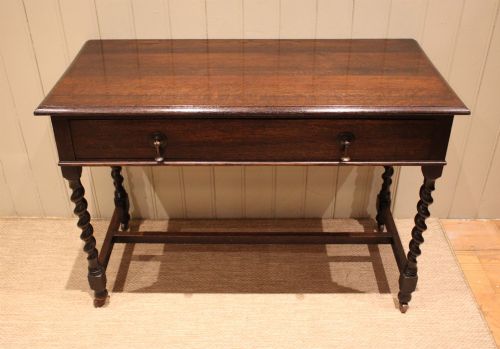
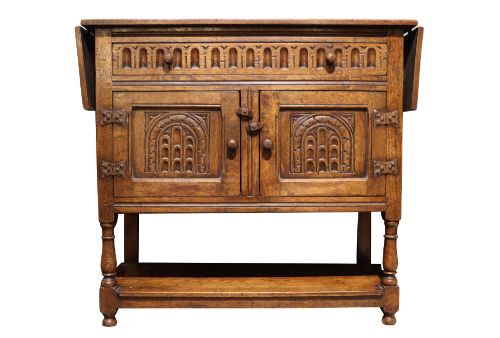
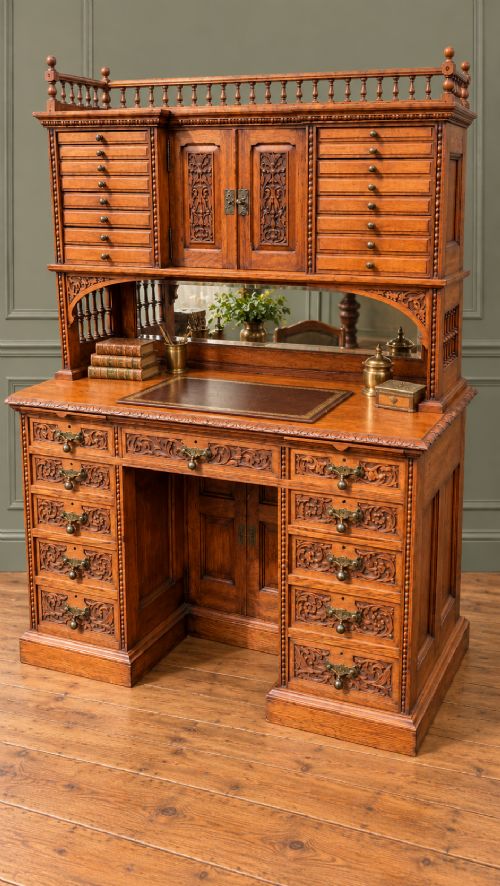
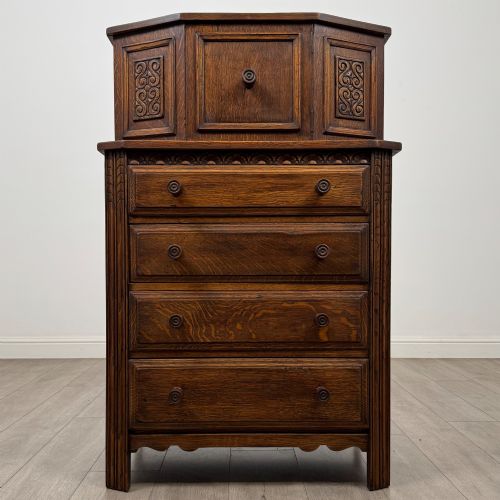
Forms range from compact side tables with single drawers to substantial sideboards and tallboys featuring carved details, linenfold panels, or fitted writing desks.
What varies in quality
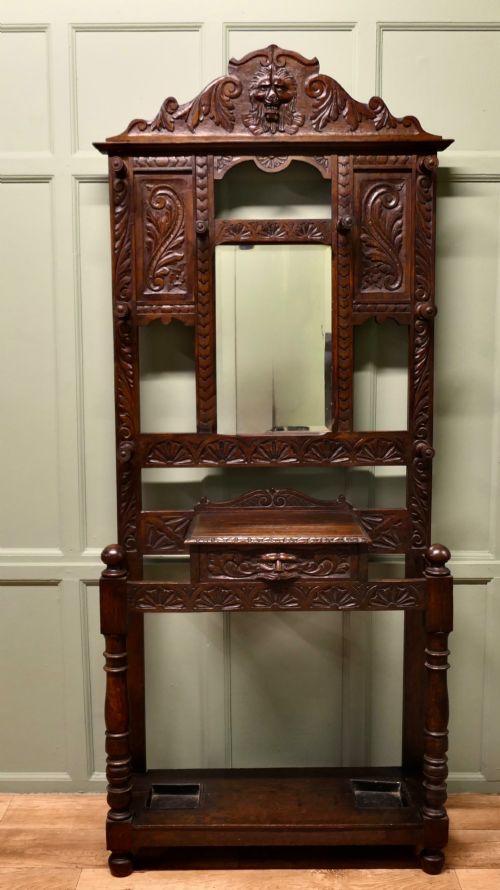
Quality separates through the crispness of hand-carved details, the integration of solid timber versus secondary woods, and the precision of drawer construction. Pieces exhibiting deep relief carving, such as green man motifs, or balanced proportions demonstrate higher workshop standards.
Hardware choices and secondary materials also indicate grade, with substantial brass handles and fitted interiors distinguishing finer production over simpler utilitarian storage.
Revival Oak Drawers Retail Price Guide 2026
Typical asking prices for revival oak drawers among the pieces listed under this phrase on Sellingantiques today, from the lower quarter to the upper quarter. They describe what is for sale here now, not the wider market.
Periods represented span from eighteen fifty through the nineteen thirties, covering Victorian, Edwardian, and later revival phases.
Heals·Beresford and Hicks London
The Revival Oak Drawers Glossary
- Jacobean Revival
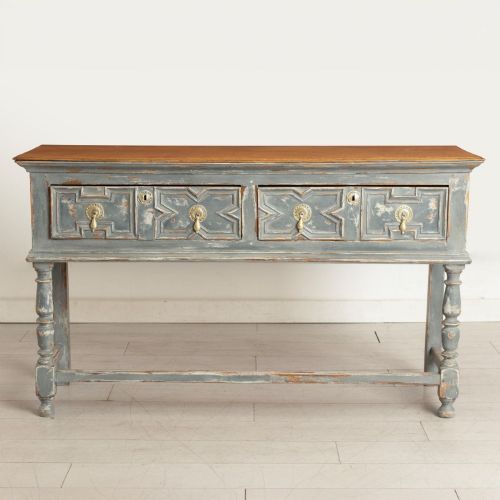
- A nineteenth and twentieth-century style emulating seventeenth-century English furniture. It typically incorporates geometric moulding, panelled doors, and heavy turned supports.
- Linenfold
- A style of relief carving imitating folded linen cloth. This motif frequently decorates the panels of revival oak cupboards and bureaux.
- Bureau
- A sloping desk enclosing fitted interior pigeonholes and small drawers above standard storage drawers. It serves as a combined writing surface and cabinet.
- Barley-twist
- A spiral turning technique resembling a twisted rope. This decorative support appears frequently on legs and stretchers of revival tables and sideboards.
- Tallboy
- A vertical chest of drawers standing relatively high off the floor. It often incorporates hidden compartments or multiple stacked storage tiers.
Revival Oak Drawers: Frequently Asked Questions
What periods do revival oak drawers come from?
The pieces span the nineteenth and early twentieth centuries, with significant representation from the Edwardian era and the nineteen twenties.
Craftsmen drew inspiration from historical periods including the Jacobean, Gothic, and Renaissance eras to produce these revival designs.
How were these drawers used originally?
They served primary storage and writing functions in domestic rooms like bedrooms, halls, and parlours.
Bureaux and writing desks provided dedicated spaces for correspondence, while chests and sideboards held household linens and dining articles.
How do I identify Jacobean revival features?
Look for heavy turned legs, geometric panel moulding, and deep carved motifs upon the timber surfaces.
These characteristics emulate seventeenth-century joinery traditions adapted by later Victorian and Edwardian workshops.
Are these pieces made of solid oak?
Many examples utilise solid oak or golden oak as the primary timber for frames, panels, and drawer construction.
Some items incorporate secondary woods or walnut accents alongside brass and iron hardware details.