

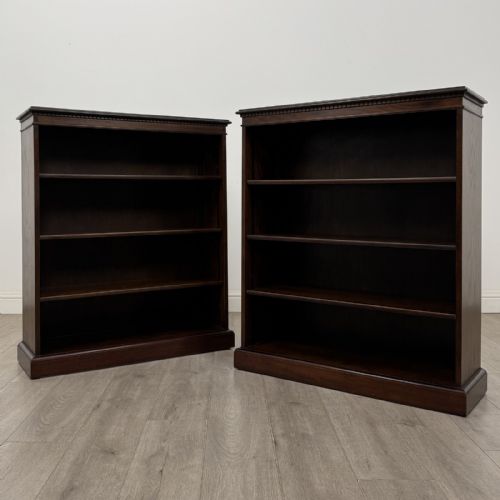
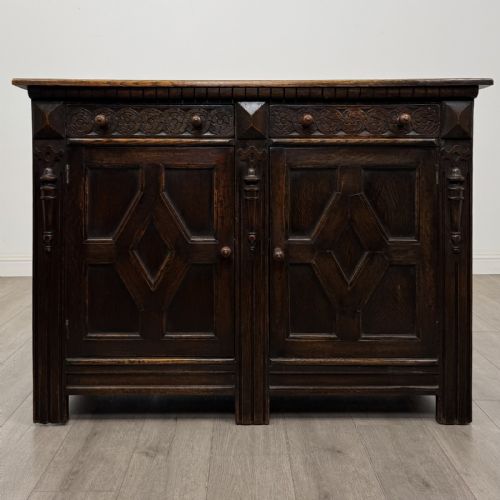
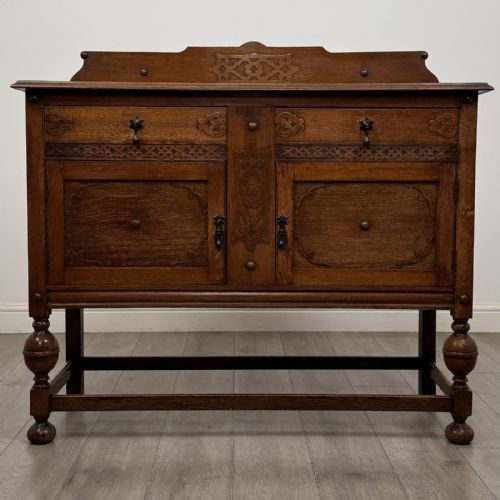
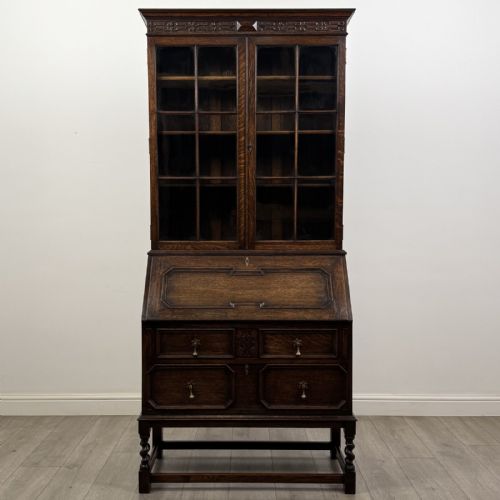
Revival Oak Cabinet
A revival oak cabinet brings substantial presence and historic form to a room, offering robust storage shaped by earlier centuries.
Revival Oak Cabinet
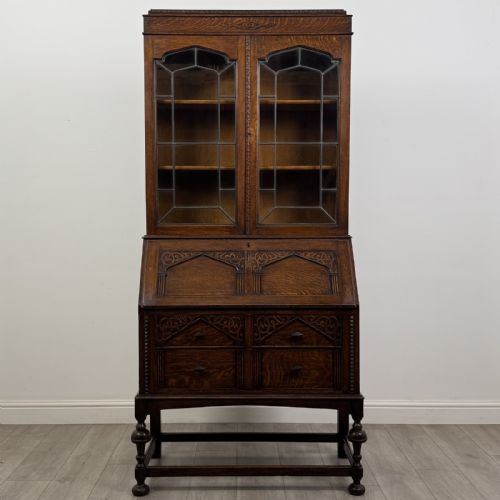
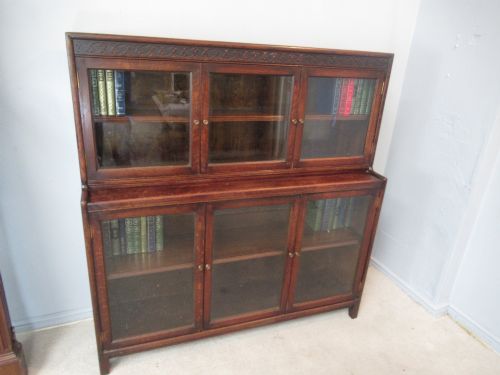
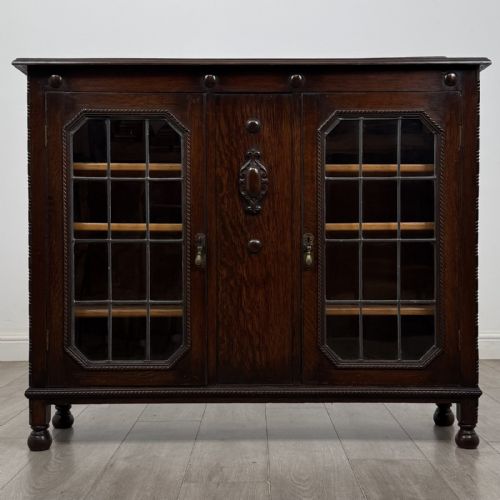
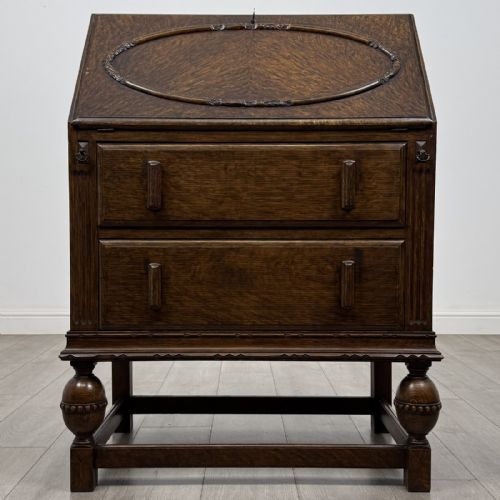
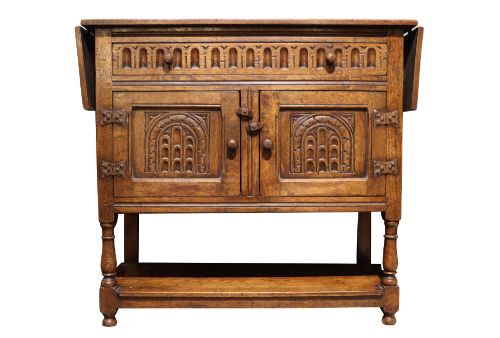
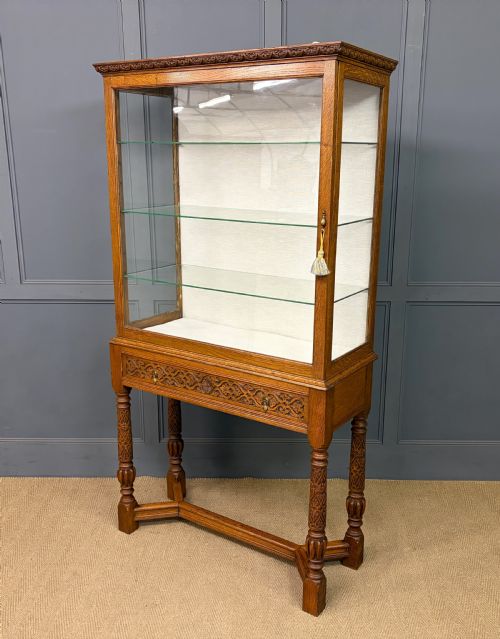
A revival oak cabinet draws on earlier historical idioms like Jacobean, Tudor, and Gothic styles, reinterpreting them during the Victorian, Edwardian, and 1920s periods. When searching for a revival oak cabinet, buyers encounter forms ranging from imposing sideboards and linenfold cupboards to glazed display cases and bookcases.
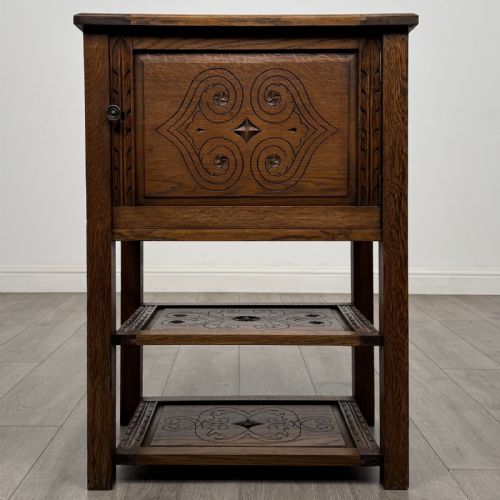
The pieces on this page stem predominantly from the late nineteenth and early twentieth centuries, reflecting a sustained appetite for dark wood and traditional craft. Makers of these eras utilised sturdy timber to build utilitarian furniture decorated with carved panels, linenfold motifs, and barley twist legs.
Domestic interiors of the Edwardian era and the 1920s often relied on these cabinets for storage and display, pairing practical function with historicism. Whether standing on a stretcher base or hanging upon a wall, the pieces present a tangible link to revivalist interior design.
What varies in quality
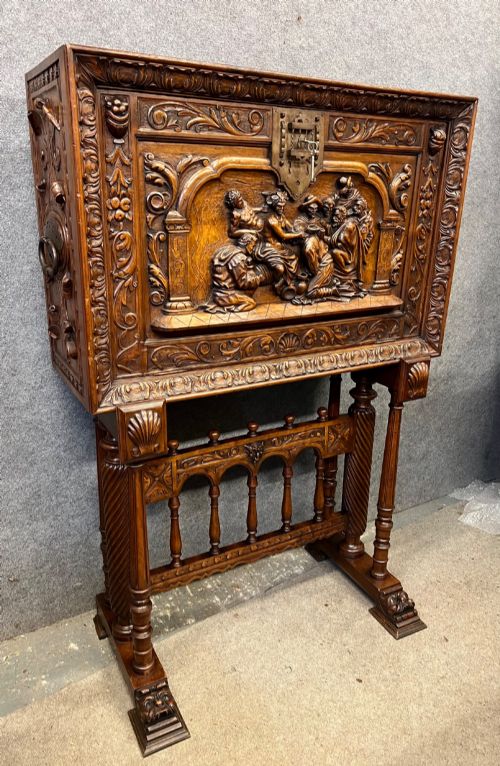
Depth and crispness of the carved ornamentation distinguish finer examples from standard production pieces, particularly where figures or linenfold panels are rendered with sharp definition. The selection of timber grain, the weight of the brass or iron hardware, and the integration of fitted internal writing desks or shelving dictate the overall grade.
Structural integrity and proportion also separate the exceptional from the ordinary, as seen in balanced narrow proportions, sturdy stretcher bases, and well-fitted leaded glass doors. Maker attribution, such as work associated with notable firms, elevates the standing of a piece within the revival range.
Revival Oak Cabinet Retail Price Guide 2026
Typical asking prices for revival oak cabinet among the pieces listed under this phrase on Sellingantiques today, from the lower quarter to the upper quarter. They describe what is for sale here now, not the wider market.
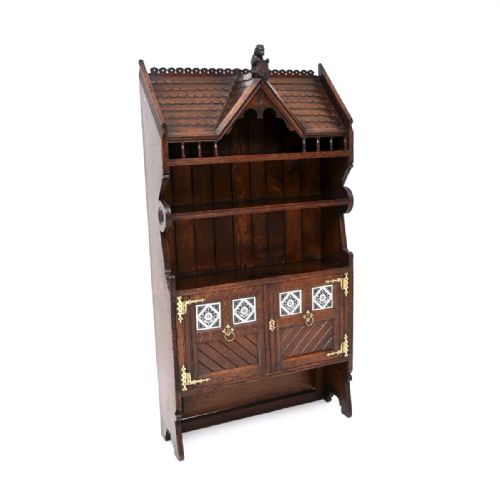
The cabinet styles represented range from Gothic Revival and Jacobean Revival to Arts and Crafts and Aesthetic Movement.
John Moyr Smith·Gillows·Bowman Brothers·Liberty
The Revival Oak Cabinet Glossary
- Linenfold
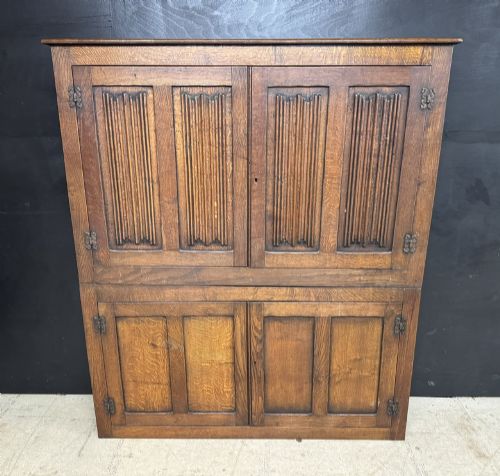
- A style of wood carving that imitates folded linen, commonly seen on Tudor and Jacobean revival cupboard doors and bureau fronts. It creates a textured, fabric-like appearance across flat wooden panels.
- Gothic Revival
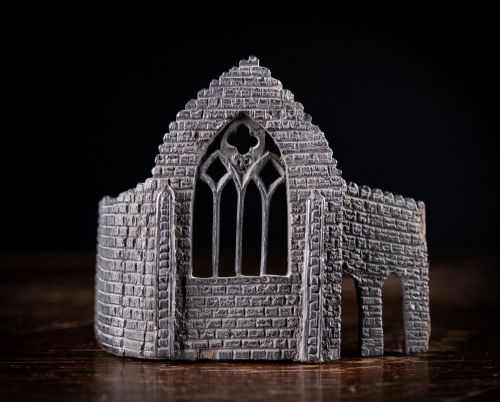
- An architectural and decorative style drawing inspiration from medieval forms, featuring pointed arches, tracery, and heavy iron hinges. It appeared frequently in Victorian cabinets and bookcases.
- Stretcher base
- A system of horizontal wooden bars connecting the lower legs of a table or cabinet to provide structural rigidity. They often appear on substantial sideboards and display units.
- Leaded glass
- Glass panes held together by narrow strips of lead came, frequently utilised in Edwardian display cabinet and bookcase doors. This technique allows decorative geometric or floral patterns across the transparent surface.
Revival Oak Cabinet: Frequently Asked Questions
What periods do these cabinets date from?
The pieces span the Victorian and Edwardian eras through to the 1920s and 1930s, capturing decades of historic revival design.
Craftsmen during these times looked back to Tudor, Jacobean, and Gothic models to create substantial oak furniture for contemporary homes.
How were revival oak cabinets used originally?
Households utilised these versatile cabinets for storing tableware, displaying books, or serving food in dining rooms and parlours.
Many examples incorporate fitted writing interiors, linenfold cupboards, or glazed display shelves designed for everyday domestic organisation.
How do I style a revival oak cabinet today?
These dark wood pieces anchor modern or traditional rooms by adding rich texture and historic character to the interior scheme.
Pair them with neutral walls to let the carved oak details, leaded glass, and brass hardware stand out as focal points.
How can I tell a Gothic revival piece apart?
Gothic revival cabinets display distinct architectural elements borrowed from medieval buildings, such as pointed arches and heavy carved tracery.
They frequently feature dark oak construction complemented by iron hinges and deep relief carvings distinct from simpler Edwardian forms.