

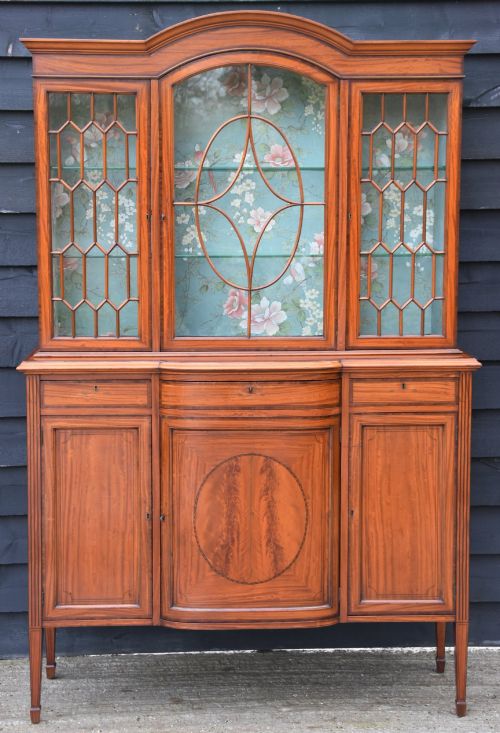
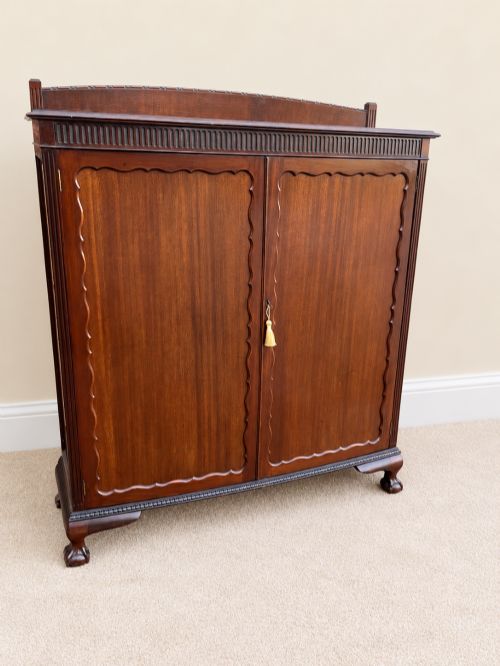
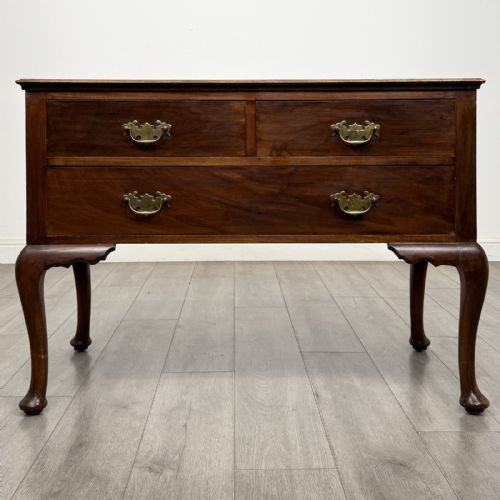
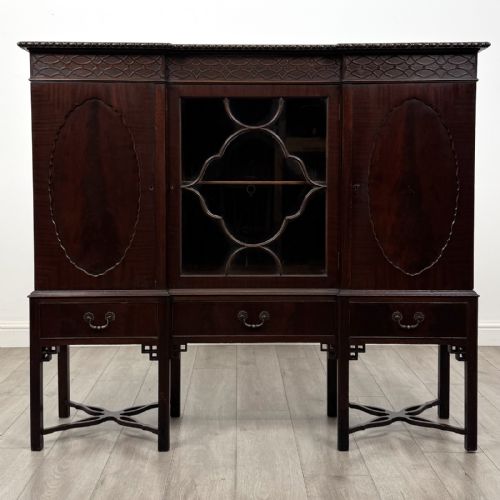
Revival Mahogany Sideboard
A revival mahogany sideboard brings structured elegance to a dining space, combining classic proportions with dependable storage.
Revival Mahogany Sideboard
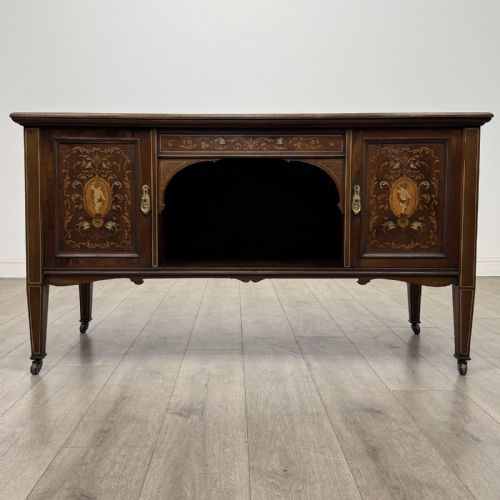
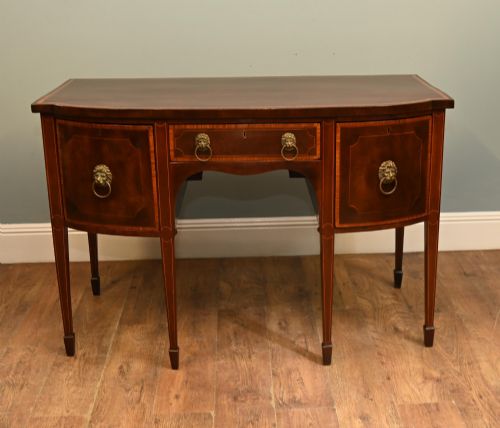
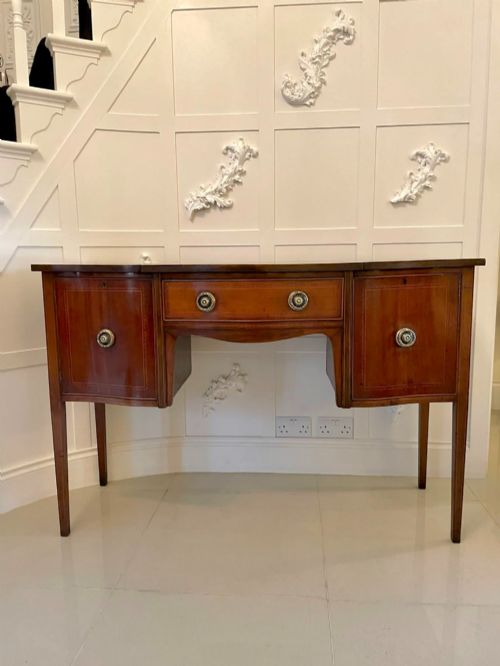
A revival mahogany sideboard is a substantial dining room piece produced during the Victorian, Edwardian, and early twentieth-century periods. These cabinets draw inspiration from earlier Georgian, Sheraton, and Chippendale designs while utilising the cabinet-making standards of their own time.
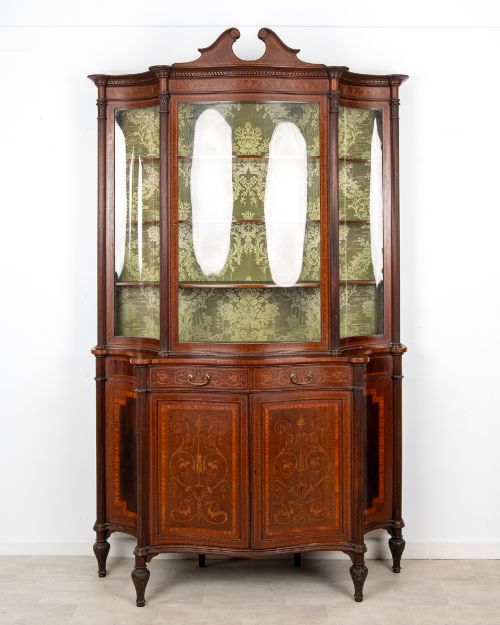
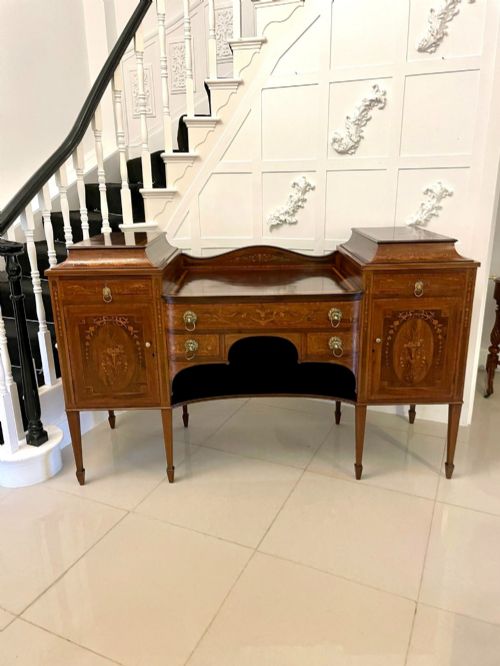
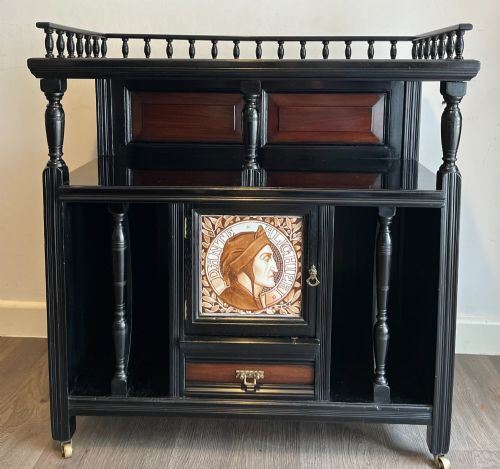
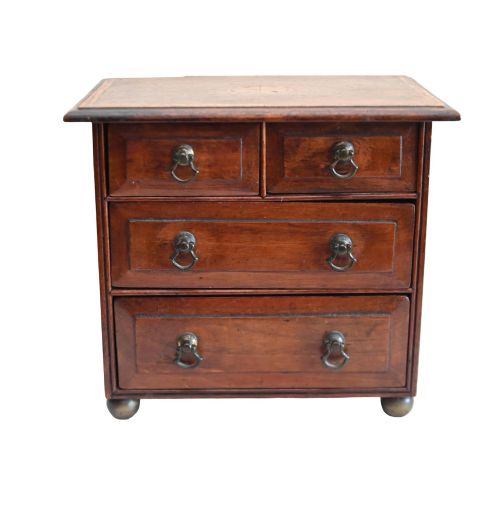
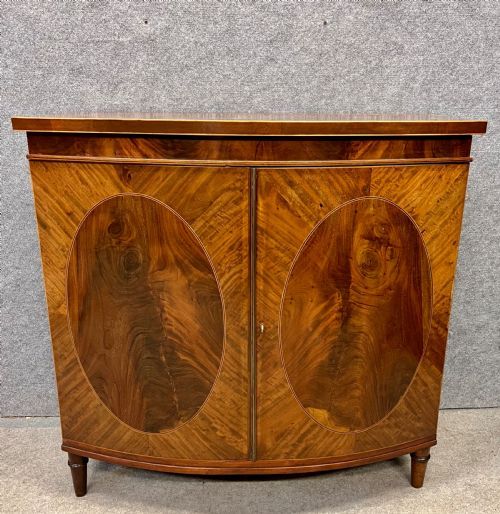
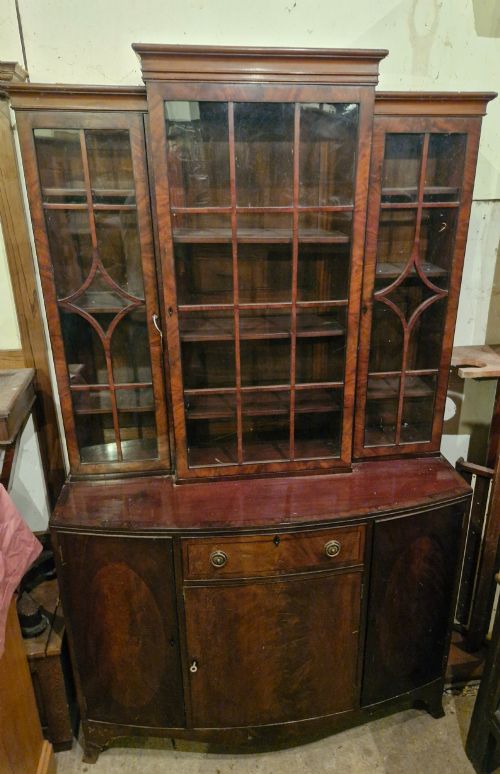
The pieces on this page span several decades, featuring Edwardian interpretations and nineteenth-century craftsmanship. Buyers encounter serpentine shapes, bow-front formats, and breakfront profiles designed to hold dining silver and linen.
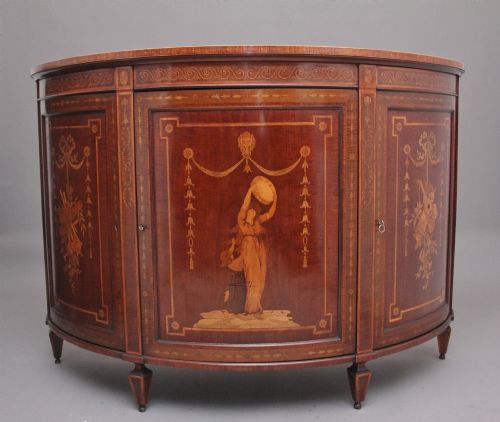
Makers of this era applied classical decorative motifs such as satinwood inlay and boxwood stringing to dark mahogany timber. The result is a functional furniture form that anchors a room with historical authority.
Materials and construction methods
Cabinet-makers selected solid and veneered mahogany as the primary structural wood, prized for its deep grain and stability. They augmented these surfaces with contrasting timbers like satinwood and boxwood for delicate line inlay and marquetry panels.
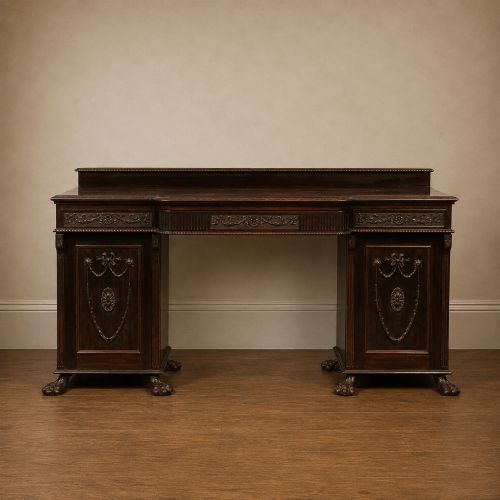
Brass hardware, including handles, key escutcheons, and occasional paw feet, provided functional and decorative accents against the dark timber. Selected pieces incorporate glass doors for display compartments and marble tops for serving surfaces.
Revival Mahogany Sideboard Retail Price Guide 2026
Typical asking prices for revival mahogany sideboard among the pieces listed under this phrase on Sellingantiques today, from the lower quarter to the upper quarter. They describe what is for sale here now, not the wider market.
Some sideboards hide deep cellarette drawers once lined to keep vintage wine bottles cool and secure during dinner.
Distinguishing quality across examples
Quality rests in the precision of the timber matching and the execution of the inlay work. Finer sideboards display continuous grain across drawer fronts and crisp, unblemished stringing without gaps or lifting veneers.
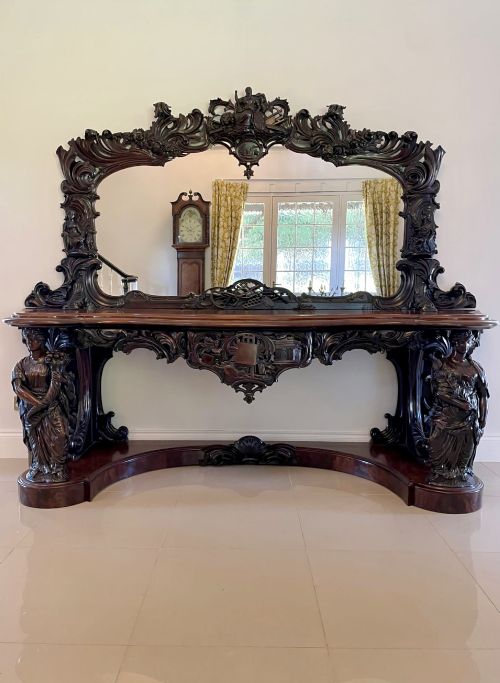
Construction depth dictates overall merit, separating standard workshop production from exhibition pieces. Superior examples feature heavier proportions, robust internal carcases, and detailed carving that echoes eighteenth-century prototypes with strict accuracy.
Maple And Co·Hewetsons London·Edwards And Roberts·Harrods
The Revival Mahogany Sideboard Glossary
- Serpentine
- A front profile curving inward centrally and outward at the ends, creating a gentle wave shape.
- Marquetry
- Decorative patterns formed by fitting together small pieces of coloured wood veneer onto a carcase.
- Bow-front
- A convex furniture front that curves outward in an arc.
- Breakfront
- A large cabinet design where the central section projects forward from the flanking wings.
- Satinwood
- A pale, durable exotic timber utilised for contrasting inlay work and banding on dark woods.
Revival Mahogany Sideboard: Frequently Asked Questions
How do I style a revival mahogany sideboard?
Position the piece against a principal dining room wall to establish a strong focal point. Balance the dark timber surface with ceramic lamps, silver serving pieces, or a large wall mirror hung directly above.
Allow sufficient floor clearance around the cabinet doors and drawers for unhindered access. Keep surrounding decor simple to let the polished mahogany grain and inlaid details stand out.
What is the difference between Sheraton revival and Chippendale revival?
Sheraton revival sideboards emphasise symmetry, lighter proportions, and delicate satinwood inlay or painted decoration. They often feature straight tapered legs or gentle bow-front shapes.
Chippendale revival pieces lean toward heavier construction, carved mahogany details, and classical motifs such as claw and ball feet. These versions reflect the robust mid-eighteenth-century English aesthetic rather than the refined neoclassical style.
Can I use a sideboard in a hallway?
A slim sideboard functions effectively in a wide hallway or entrance foyer to provide surface space and enclosed storage. Demi-lune formats and shallow bow-front cabinets fit compactly against passage walls without blocking movement.
Utilise the interior cupboards to store everyday items out of sight while placing a tray on top for keys and correspondence.
How do I care for antique mahogany wood?
Dust the surfaces regularly with a soft, dry cloth to prevent grit accumulation on the polish. Avoid placing the cabinet near direct heat sources or strong sunlight to protect the timber and veneer from drying out.
Apply a traditional beeswax polish sparingly when the wood appears dry, buffing it gently to maintain the natural sheen.