






Revival Court Cupboard
A revival court cupboard is a heavy, timber-framed storage piece built to echo older centuries, offering deep shelves and historic presence.
Revival Court Cupboard
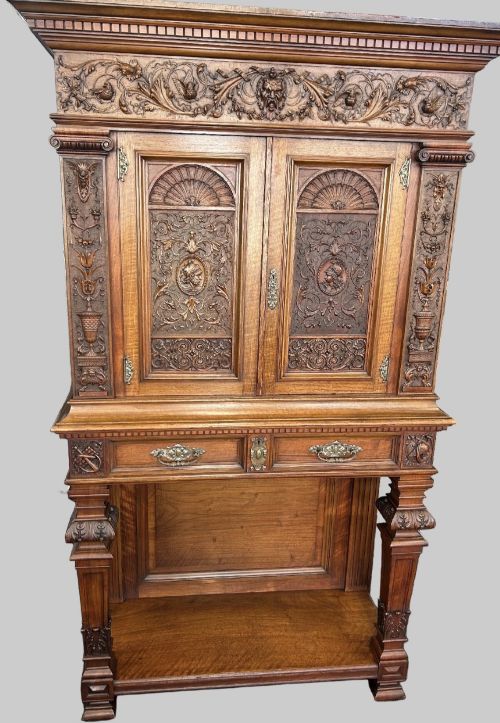
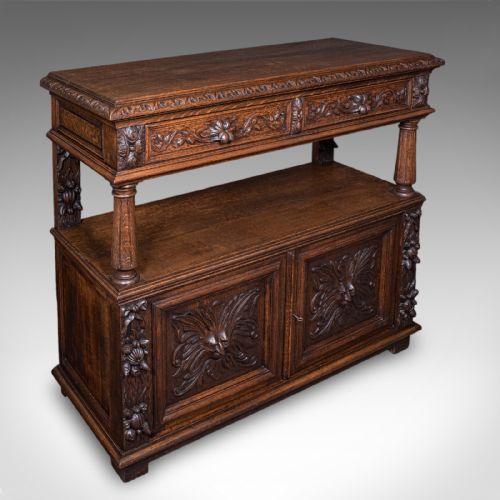
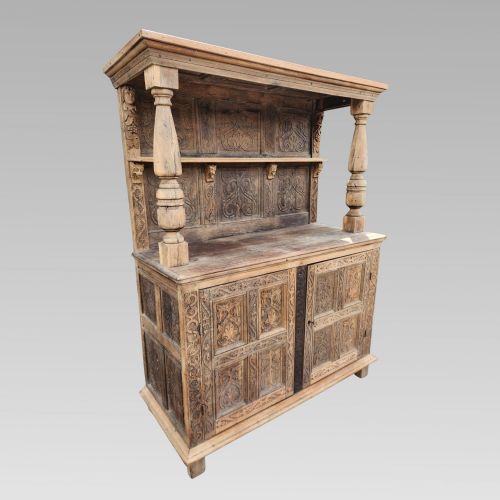
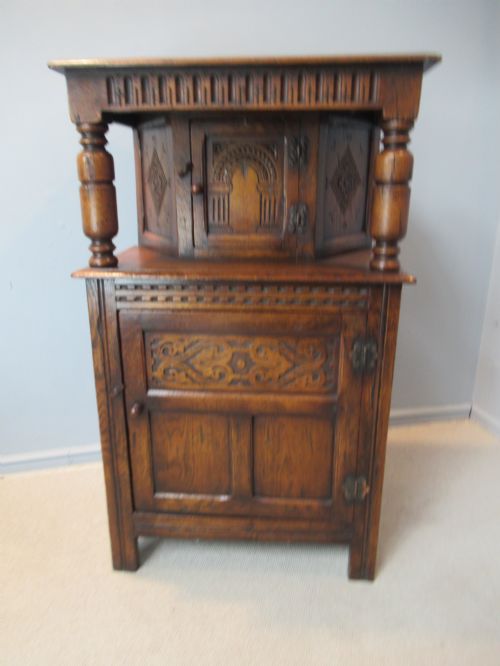
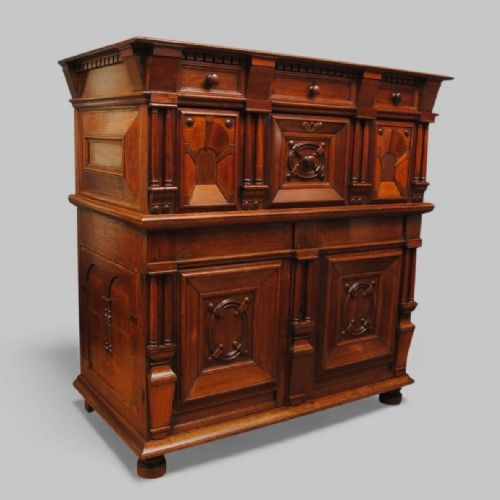
A revival court cupboard brings substantial historic character to a room, drawing on centuries-old storage forms redesigned during the Victorian and Edwardian eras. You will frequently encounter oak examples produced across the nineteenth and early twentieth centuries, often incorporating revival styles such as Jacobean, Renaissance, and Gothic.
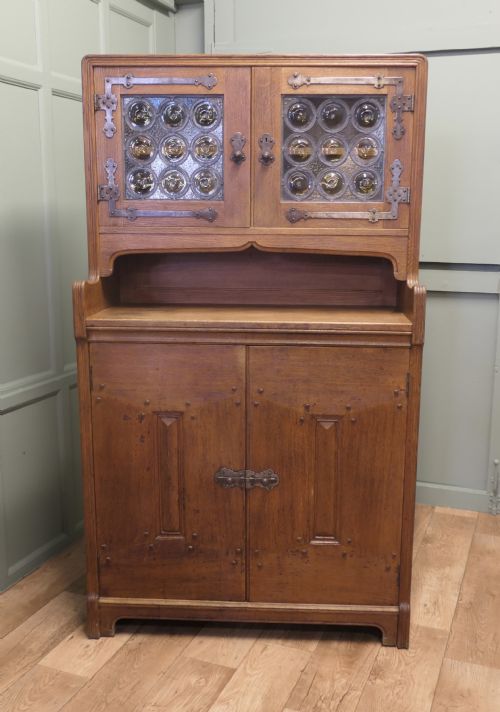
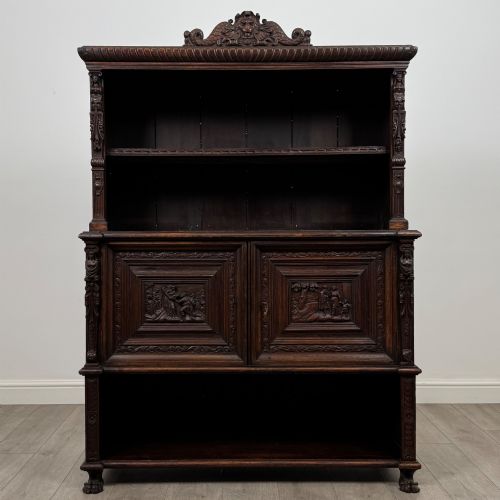
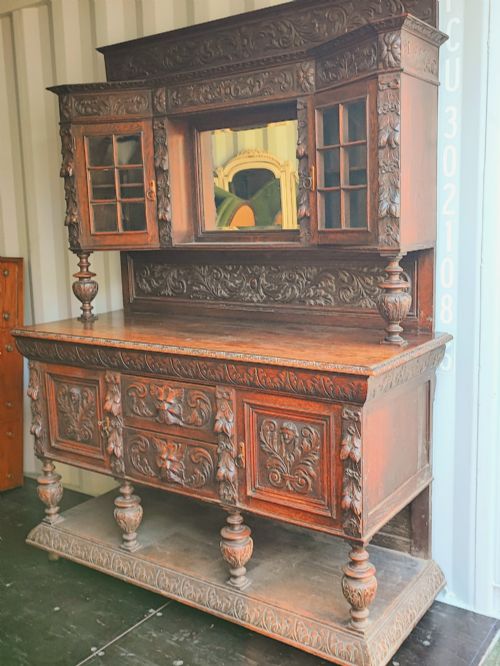
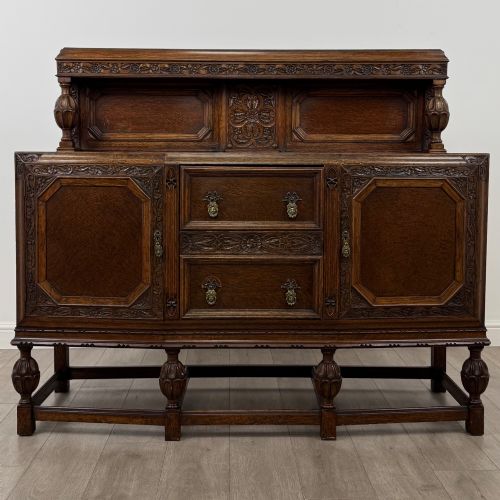
These pieces function primarily as heavy sideboards, buffers, and display cabinets, combining enclosed lower cupboards with open or tiered upper sections. The forms range from modest hallway cupboards to grand server units with mirrored backs and carved panels.
How They Were Made
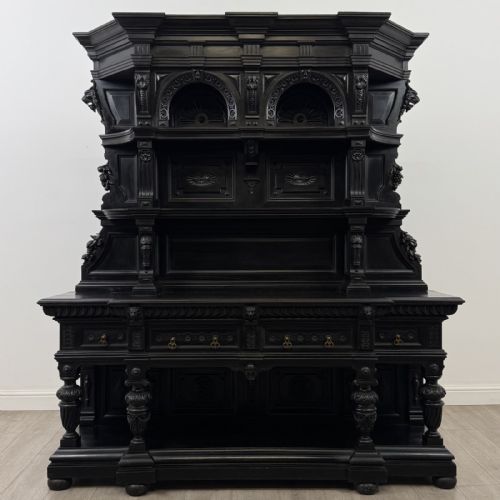
Carpenters relied heavily on solid oak, frequently augmented by walnut, fruitwood, and ebonised hardwood to build the robust carcasses typical of these revival pieces. Panels feature deep geometric mouldings, whilst surfaces showcase intricate hand-carved scenes, lion masks, and flamboyant Gothic motifs.
Hardware played a functional and decorative role, with heavy brass face handles, iron fittings, and occasionally leaded glass doors integrated into the heavier frameworks. Cabinetmakers utilised traditional joinery methods to support massive mirror backs and multi-tier buffet structures.
Revival Court Cupboard Retail Price Guide 2026
Typical asking prices for revival court cupboard among the pieces listed under this phrase on Sellingantiques today, from the lower quarter to the upper quarter. They describe what is for sale here now, not the wider market.
The listings on this site span periods from the sixteenth to the twentieth century, with a heavy concentration of Victorian and Edwardian revival interpretations.
What Varies in Quality
The standard of carving sets the better pieces apart, distinguishing crisp, deeply undercut foliage and figural work from shallow, mechanical moulding. Depth and precision in the geometric panels and lion masks indicate the skill invested by the maker.
Timber selection and structural proportion determine the upper tier of the range, favouring dense golden oak and well-figured walnut over plain secondary woods. The integration of period hardware, such as original brass face handles and leaded glass, maintains the integrity of the design.
Gillows·Liberty
The Revival Court Cupboard Glossary
- Court cupboard
- A traditional enclosed piece of furniture used for storing plate and food, featuring stacked tiers or recessed upper sections. Revival versions adapt this historic form for Victorian and Edwardian dining rooms.
- Renaissance Revival
- A nineteenth-century design movement copying classical sixteenth-century European architectural and furniture motifs. These pieces utilise symmetry, heavy cornices, and bold relief carvings.
- Jacobean style
- A seventeenth-century aesthetic revived in later centuries, characterised by straight lines, panelled doors, and geometric ornamentation. Makers applied these bold geometric patterns extensively to sideboards and cabinets.
- Ebonised hardwood
- Timber treated with a chemical stain or finish to imitate expensive ebony wood. This dark material provides sharp contrast against lighter oak panels in Victorian decorative pieces.
- Green Man
- A sculptural architectural ornament depicting a human face carved from or sprouting foliage. It appears frequently among the foliate carvings on nineteenth-century revival furniture.
Revival Court Cupboard: Frequently Asked Questions
What is a court cupboard?
A court cupboard is a traditional multi-tiered storage unit designed for displaying and housing household provisions. Revival versions produced in the nineteenth century adapt this historic shape into heavy sideboards and buffet cabinets.
These pieces typically combine lower enclosed storage with upper recessed tiers or cabinets. They served both utilitarian storage needs and formal display purposes in period dining spaces.
How do I tell Jacobean from Gothic revival?
Jacobean revival furniture relies heavily on geometric moulded panels, strapwork, and straight architectural lines. The decorative vocabulary draws from seventeenth-century English domestic design.
Gothic revival pieces incorporate pointed arches, flamboyant tracery, and medieval ecclesiastical motifs. These designs often feature darker finishes and more dramatic vertical proportions.
Where should I place a court cupboard?
Because of their substantial weight and projection, these cupboards suit large dining rooms, entrance halls, or spacious living areas. They anchor a room effectively when positioned against a sturdy, load-bearing wall.
Ensure adequate clearance around the doors and drawers so the lower cupboards can open fully. Pairing the timber tones with complementary flooring helps ground the heavy proportions.
How do I date an oak court cupboard?
Dating relies on examining the construction methods, tool marks, and specific revival style indicators present in the woodwork. Nineteenth-century versions often blend older seventeenth-century motifs with Victorian production techniques.
Hardware styles, such as brass face handles or leaded glass, offer additional chronological clues. Secondary woods and finishing treatments also help distinguish between mid-Victorian, Edwardian, and earlier examples.