

Revival Centre Table
A revival centre table stands proudly in the middle of a room, combining historical styles with grand presence.
Revival Centre Table
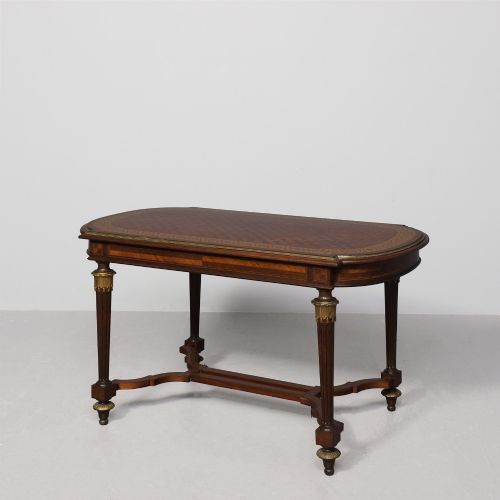
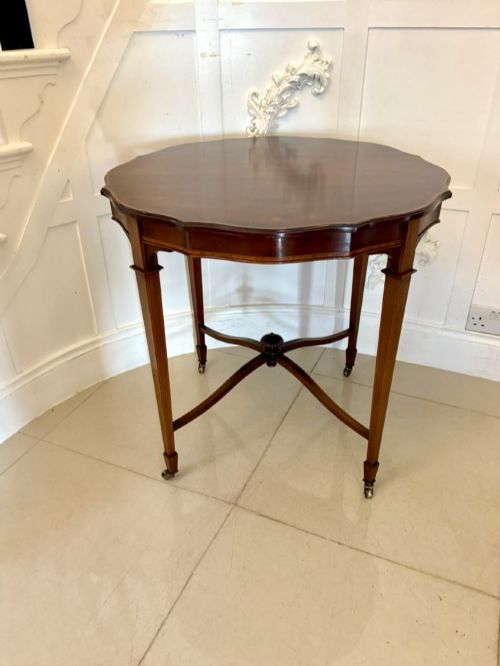
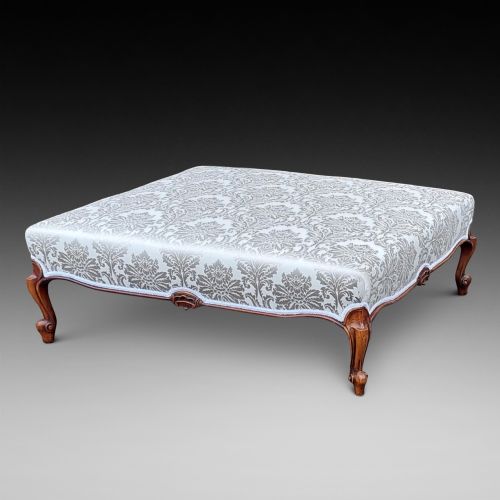
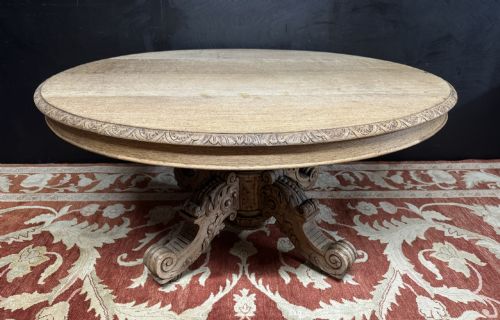
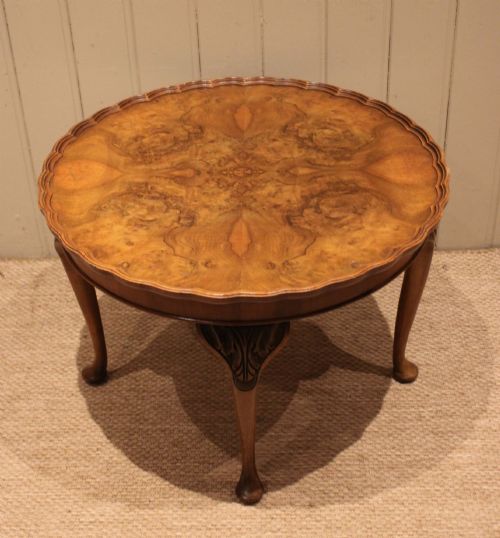
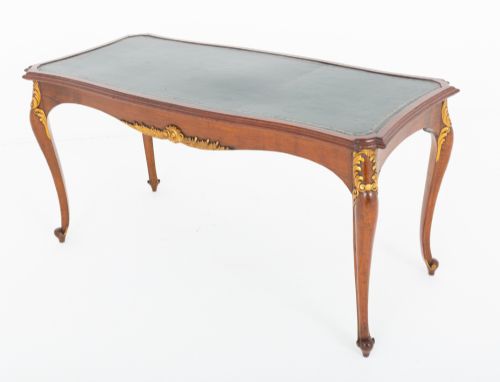
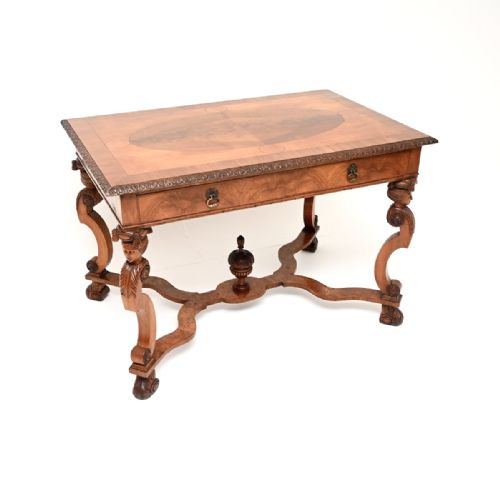
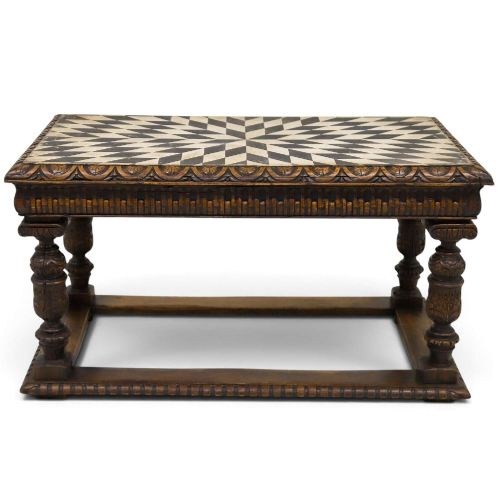
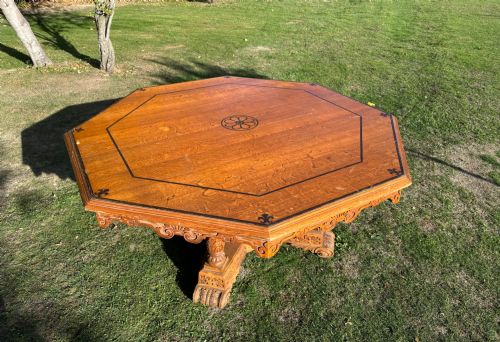
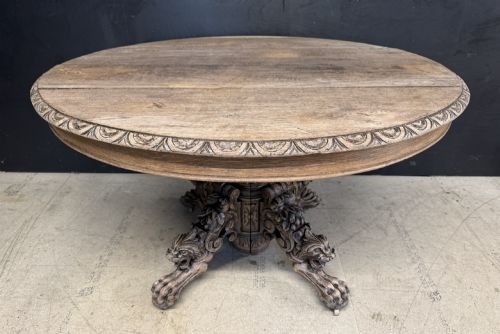
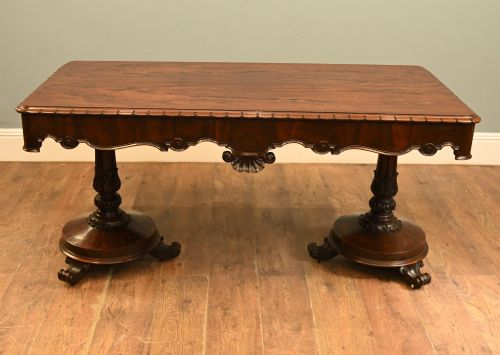
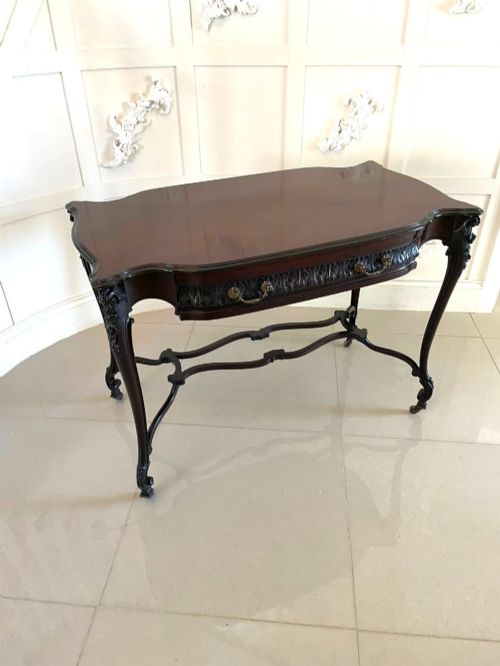
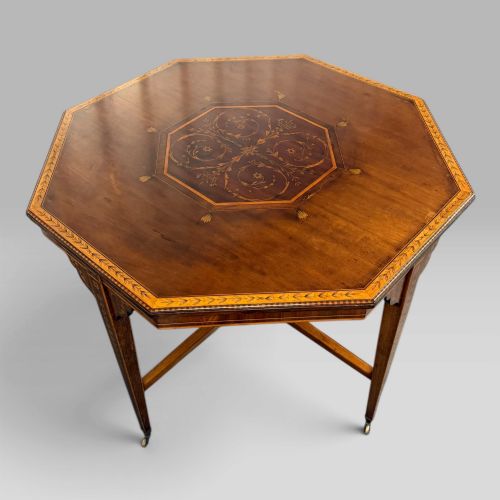
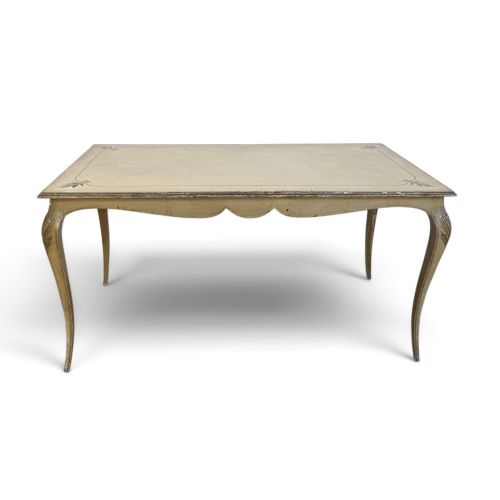
A revival centre table represents a piece designed to sit freestanding in a room, drawing inspiration from earlier historical periods like the Gothic, Renaissance, and Louis XV eras. When exploring these pieces, buyers will frequently encounter Victorian and Edwardian interpretations alongside French stylistic revivals. These tables serve multiple functions across the listings, appearing as octagonal library tables, occasional tables, and grand walnut or mahogany centre tables.
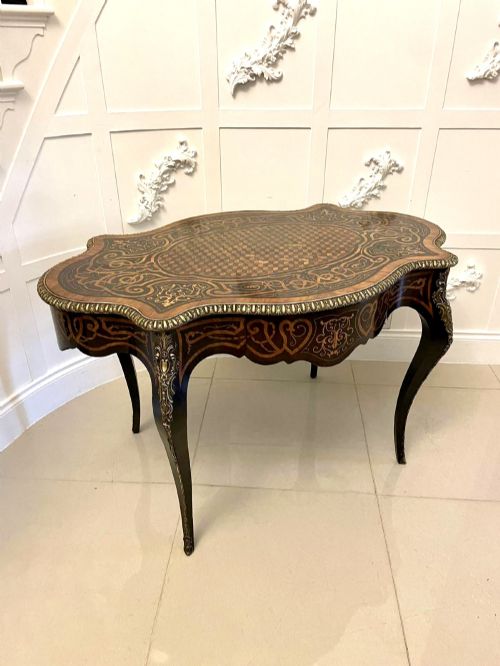
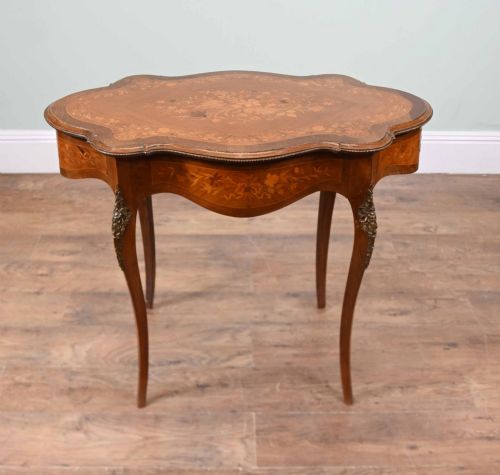
The materials span rich dark timbers such as walnut, mahogany, and oak, often paired with decorative surfaces like marble or detailed marquetry. Craftsmanship from the nineteenth and early twentieth centuries dominates the selection, showing heavy influences from French Rococo, Sheraton, and Renaissance designs. Every piece is constructed to be viewed from all sides, reflecting the traditional placement in the middle of a principal room.
Materials and construction
Cabinetmakers utilised solid timbers such as oak, mahogany, and walnut as the structural foundation for these tables, often applying veneers of burr walnut, kingwood, or satinwood to visible surfaces. Marquetry and parquetry inlay required precise hand-cutting of contrasting woods to form intricate geometric or floral patterns across the top. Carved details were hand-chiselled directly into the solid wood elements, particularly on legs, friezes, and edge mouldings.
Surface ornamentation frequently incorporated giltwood, ormolu mounts, and brass detailing to accentuate the revival styling, particularly in French Rococo and Renaissance pieces. Marble tops, including rouge and white varieties, were fitted directly into carved wooden frames to provide heavy, durable display surfaces. Joinery relied on traditional techniques such as mortise and tenon joints to ensure stability for these substantial freestanding tables.
Revival Centre Table Retail Price Guide 2026
Typical asking prices for revival centre table among the pieces listed under this phrase on Sellingantiques today, from the lower quarter to the upper quarter. They describe what is for sale here now, not the wider market.
Several tables disguised as French hunting dining rooms secretly doubled as heavy surfaces for rural banquets.
Distinguishing quality in craftsmanship
Quality in a revival centre table rests upon the precision of the timber selection and the execution of the hand-carved or inlaid decoration. Superior examples display dense, well-figured burr walnut or finely matched mahogany veneers without lifting or heavy restoration. The depth and crispness of carved foliage, claw and ball feet, or applied ormolu mounts differentiate high workshop output from simpler commercial production.
Structural integrity also separates the finest items, particularly the tightness of the joints and the finish applied to the secondary woods underneath. Tables featuring inset marble tops or complex marquetry require meticulous alignment and seasoned timber to prevent warping over time. The sophistication of the design translation, whether capturing Sheraton elegance or heavy Gothic proportion, dictates the overall execution.
Edward Holmes Baldock·Edward And Roberts·Harrods
The Revival Centre Table Glossary
- Marquetry
- Decorative inlay work using strips of wood, shell, or ivory to form detailed pictures or geometric patterns on a veneer surface. This technique was widely utilised on Victorian and Edwardian tabletops.
- Ormolu
- Gilt bronze ornamentation applied to furniture, popular in French revival pieces. It provides metallic contrast against dark woods like walnut and mahogany.
- Parquetry
- Geometric mosaic woodwork used for repeating patterns on floors and tabletops. It differs from marquetry by strictly forming angular designs like cubes or triangles.
- Gueridon
- A small French occasional or centre table, typically supported by a central column or multiple legs. The term originates from seventeenth-century European stands.
- Satinwood
- A pale, lustrous hardwood sourced from tropical trees, frequently used for contrasting stringing or full veneering on late nineteenth-century pieces.
Revival Centre Table: Frequently Asked Questions
Where should a centre table be placed?
A centre table is traditionally designed to stand freely in the middle of a room rather than pushed against a wall. This allows the carved details, marquetry, and finishes to be appreciated from every possible angle.
In modern homes, they work effectively in large entrance halls, spacious living rooms, or as grand library tables where foot traffic surrounds the perimeter.
How do I care for a polished wood surface?
Maintaining wood finishes requires keeping tables away from direct sunlight and steady sources of heat to prevent the underlying timber or veneer from drying out. Gentle dusting with a soft cloth preserves the original polish without wearing down the patina.
Applying traditional beeswax occasionally helps nourish older timbers like walnut and mahogany, provided the wax is buffed thoroughly to a soft sheen.
What is the difference between an occasional table and a centre table?
A centre table is generally larger, heavier, and built with decorative attention given to all four sides because it occupies a prominent, open position in a room. They often feature substantial pedestals or four carved legs suited for central placement.
Occasional tables tend to be lighter, smaller, and easier to move around the perimeter of a space as functional surfaces for lamps or small decorative objects.
How do I identify a revival style from an original piece?
Revival furniture borrows stylistic elements from earlier historical periods, such as Elizabethan, Jacobean, or Louis XV designs, but is constructed during the nineteenth or twentieth centuries. Examining the secondary woods, internal construction methods, and tool marks usually reveals the later manufacturing date.
Makers of the revival eras embraced historical eclecticism, blending seventeenth-century proportions or eighteenth-century marquetry with Victorian manufacturing techniques and finishing materials.