

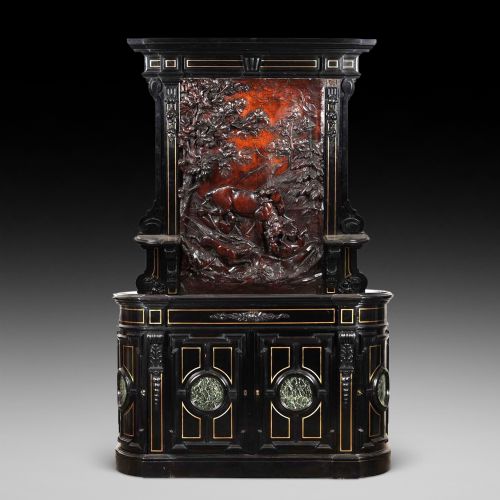
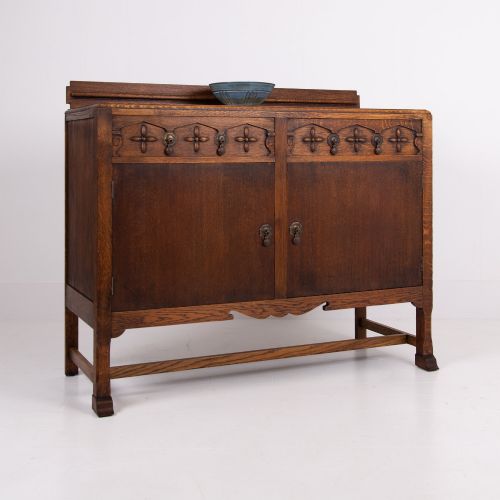

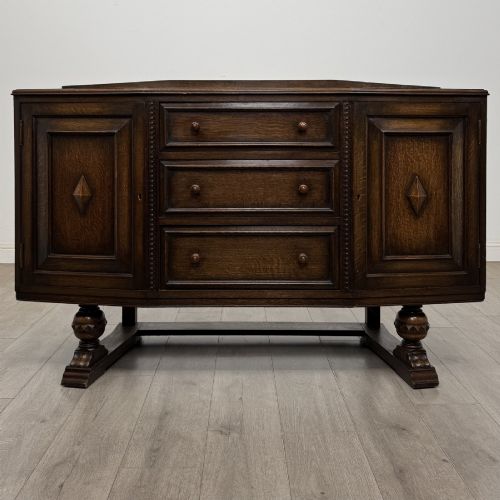
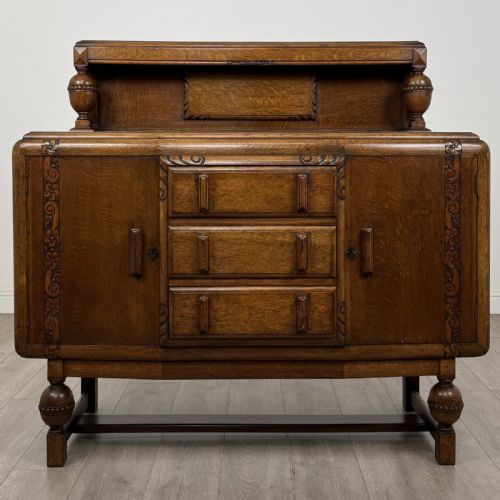
Revival Carved Credenza
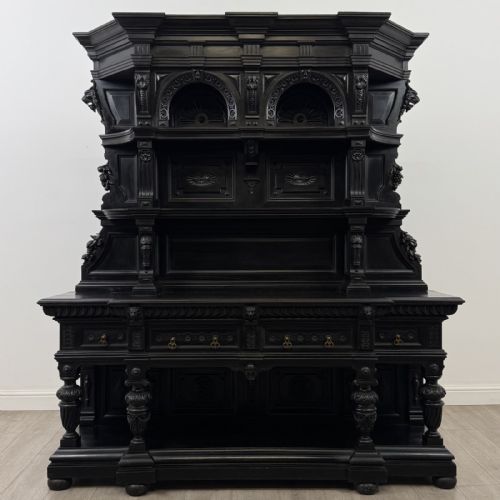
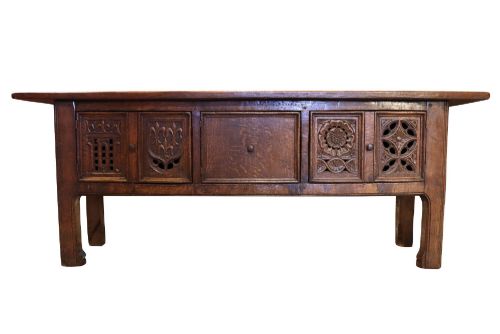
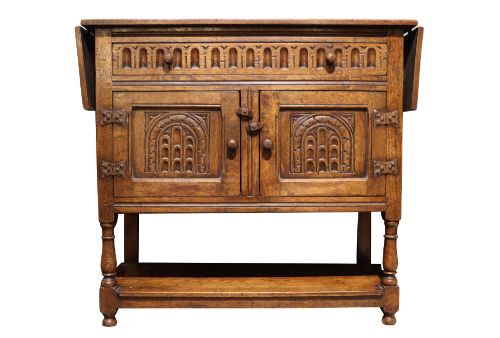
A revival carved credenza brings substantial architectural presence into a room, combining heavy timber with deep chisel work.
Revival Carved Credenza
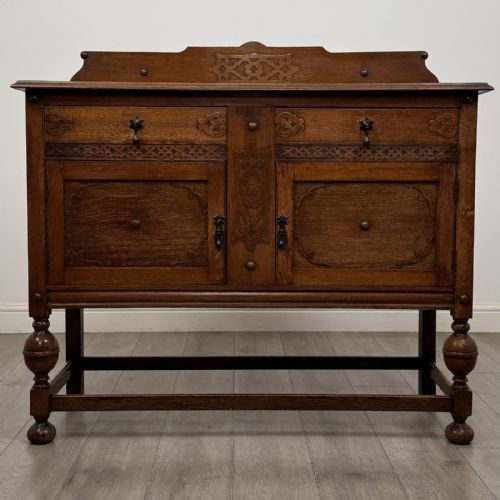
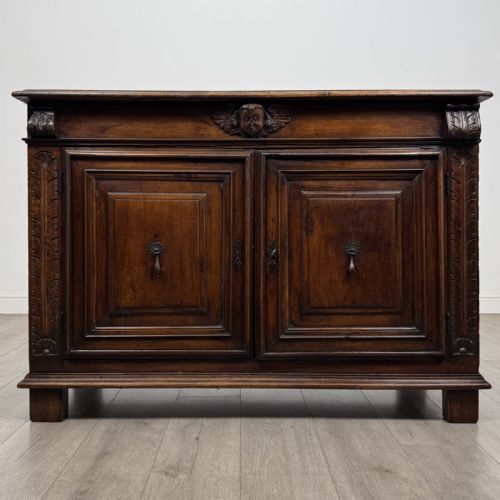
A revival carved credenza sits among large storage furniture, most frequently encountered as an oak sideboard, buffet, or dresser base dating from the Victorian period through to the nineteen-twenties. These pieces draw heavily on earlier design vocabularies, particularly Gothic, Jacobean, and Renaissance motifs, translated through nineteenth and early twentieth-century workshop practices.
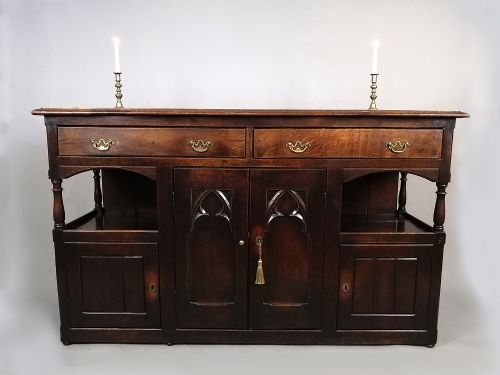
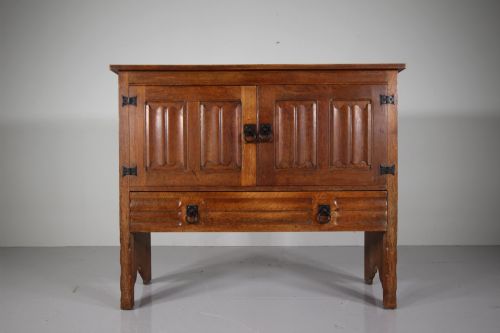
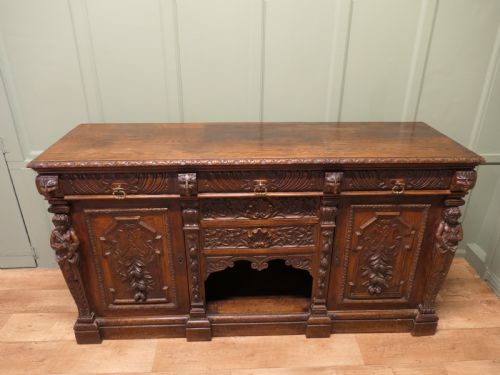
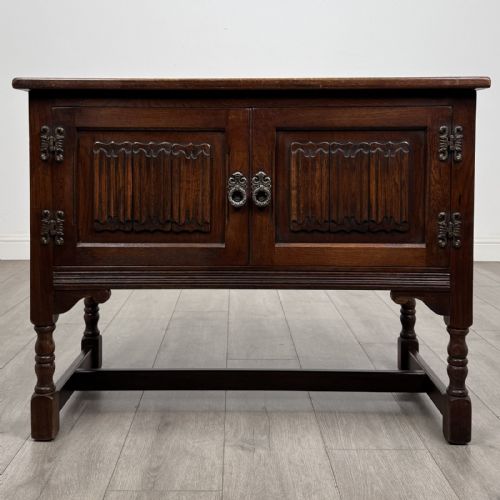
The form functions primarily for storage and display, appearing as heavy cupboards, mirror-backed servers, and drop-leaf side cabinets fitted with internal shelving or drawers. Oak dominates the selection, though examples in walnut and mahogany also occur alongside decorative details like green man carvings, linenfold panels, and geometric mouldings.
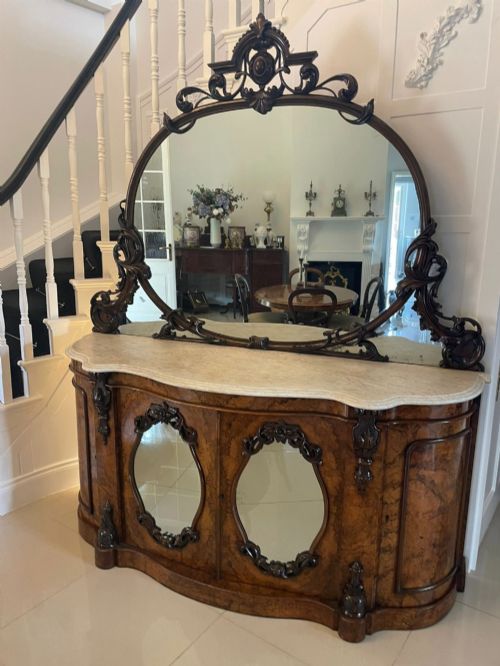
Buyers seek these items for their robust utility and expressive ornamentation, which anchors a dining room or hallway with historical gravity. The assortment spans simple domestic servers to exhibition-scale pieces bearing mirror backs and elaborate stretcher bases.
Materials and construction methods
Makers relied predominantly on solid oak, supplemented by burr walnut and mahogany for select show surfaces, matched with structural elements in secondary timbers. Brass hardware, iron fittings, and inset glass panels appear regularly to complete the functional storage design.
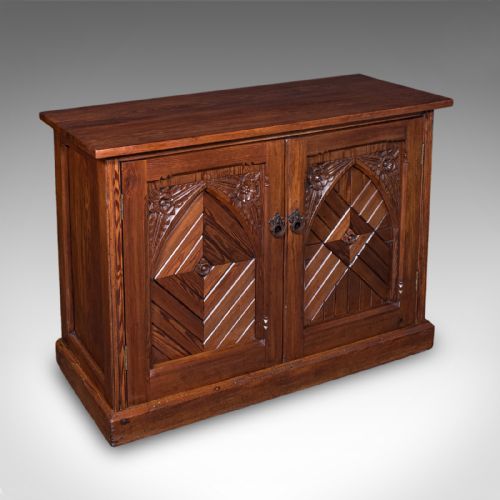
Construction centres on traditional joinery techniques, uniting heavy framing with fielded panels and dovetailed drawer boxes. Carved decoration is worked directly into the solid wood grounds, utilising relief cutting, linenfold folding patterns, and applied geometric elements rather than surface veneers alone.
Revival Carved Credenza Retail Price Guide 2026
Typical asking prices for revival carved credenza among the pieces listed under this phrase on Sellingantiques today, from the lower quarter to the upper quarter. They describe what is for sale here now, not the wider market.
Common design movements represented include Gothic Revival, Jacobean Revival, Arts and Crafts, and Renaissance Revival.
Distinctions in construction and design
The ambition of the carving defines much of the distinction between standard production and exceptional examples, moving from repetitive machine-routed mouldings to deeply undercut, spirited figural work such as green man masks or lion details. Timber selection also dictates the tier, with figured burr walnut or dense, quarter-sawn oak setting apart the finer commissions.
Structural heft and the integration of secondary materials like bevelled mirror glass, brass face handles, and marble tops separate ambitious sideboard commissions from simpler domestic cupboards. The integrity of the original stretcher bases, barley twist legs, and fitted interior drawer configurations further marks the upper echelon of surviving pieces.
Leonard Wyburd
The Revival Carved Credenza Glossary
- Credenza
- A sideboard or storage cabinet traditionally used for serving food and displaying plate. In later revival furniture, the term often overlaps with large sideboards and buffets.
- Green Man
- A sculptural motif showing a human face emerging from or entwined with foliage. It appears frequently in carved woodwork associated with Gothic and Renaissance revival styles.
- Linenfold
- A style of wood carving that imitates vertical folds of fabric, commonly used on cupboard doors and panels during revival periods.
- Stretcher Base
- An underframe of horizontal wooden bars connecting the legs of a table or sideboard for added stability. They often feature carved or turned details.
- Renaissance Revival
- An eclectic nineteenth-century architectural and decorative style drawing inspiration from fifteenth and sixteenth-century Italian and French design.
Revival Carved Credenza: Frequently Asked Questions
What is a revival carved credenza?
A revival carved credenza is a heavy storage piece, typically a sideboard or cabinet, produced in the nineteenth or early twentieth century using historical motifs from the Gothic or Jacobean eras.
These items were built to provide substantial dining room storage while showcasing ornate woodworking techniques like linenfold panels and deep relief carving.
How do I date a carved oak sideboard?
Dating relies on observing the combination of hardware, secondary woods, and stylistic revival cues such as geometric panelling or mirror backs. Victorian and Edwardian iterations often mix distinct historical periods within a single piece.
Examining the construction methods inside the drawers and cabinet backs helps clarify whether a piece belongs to the mid-nineteenth century or the nineteen-twenties.
Where should I place a large sideboard?
These imposing cabinets require adequate wall space and structural support due to their heavy solid timber construction and frequent inclusion of mirror backs. Dining rooms and spacious hallways provide the traditional context for their proportions.
Ensure the floor space can accommodate both the footprint of the base and the clearance needed to open heavy cupboard doors or drop-leaves.
What is green man carving?
Green man carving depicts a face surrounded by or sprouting from leaves, vines, and foliage, symbolising rebirth and spring. It saw widespread popularity during the Gothic and Renaissance revivals on nineteenth-century furniture.
This imagery frequently adorns the central doors or friezes of oak cupboards and buffet bases.