





Retro Silver Shaker
A retro silver shaker brings mid-century glamour to any home bar, combining sleek geometry with practical cocktail mixing.
Retro Silver Shaker
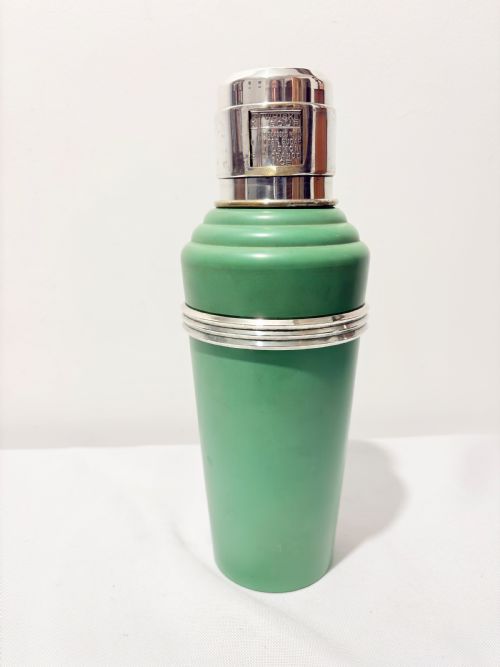
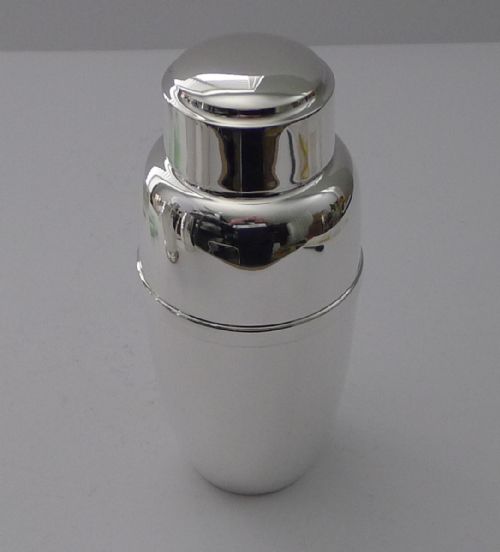
A retro silver shaker is a functional barware vessel designed for mixing cocktails, appearing most frequently in forms dating from the 1920s to the 1960s. When exploring a retro silver shaker, buyers encounter striking geometric silhouettes and streamlined profiles shaped by the Art Deco, Italian Modernism, and Mid-Century Modern movements.
The pieces on this page span several decades, originating from British, French, German, Swiss, and Italian makers. The predominant version met here is the silver plated cocktail shaker, often incorporating functional elements such as internal lemon squeezers or rolling recipe mechanisms.
How they were made
Makers constructed these vessels primarily using electroplated nickel silver or standard silver plate over base metal, paired with glass bodies for mixed media designs. Metal components were spun or stamped into shape, while glass portions were moulded to accommodate gripping and pouring.
Listings feature items from the nineteen-twenties through to the nineteen-sixties, incorporating periods of Art Deco, Italian Modernism, and Mid-Century Modern design.
What varies in quality
Quality in these shakers rests on the weight of the metal and the integrity of the silver plating over the underlying base metal. Heavier vessels demonstrate substantial gauge metal that holds its form firmly through decades of handling.
Distinction also lies in the precision of engineering found in mechanical additions, such as smooth-rolling recipe cylinders and tightly fitted internal lemon squeezers. Maker attribution significantly elevates a piece, as prominent silversmiths applied finer finishing touches to handles, collars, and enamel work than anonymous manufacturers.
J. B. Chatterley & Sons·James Dixon & Sons·Asprey & Co·William Suckling·Hukin & Heath·C S Green & Co.·Gaskell & Chambers·Lutz & Weiss
The Retro Silver Shaker Glossary
- Electroplated Nickel Silver
- A base alloy of copper, nickel, and zinc coated with a layer of pure silver through electrolysis. This material provides the bright reflective finish seen on the vast majority of mid-century barware.
- Bakelite
- An early form of synthetic thermosetting phenol formaldehyde resin valued for its durability and rich colour. It appears on handles and lid finials, particularly on pieces from the nineteen-thirties.
- Art Deco
- A dominant design style characterised by sleek geometric shapes, stylised motifs, and streamlined elegance. It heavily influences the architecture of barware produced between the wars.
- Integral Lemon Squeezer
- A built-in citrus reamer fitted directly beneath the top cap of the vessel. This ingenious addition allows users to juice fruit straight into the mixing chamber.
Retro Silver Shaker: Frequently Asked Questions
What materials make up a retro silver shaker?
These vessels are predominantly constructed from silver plate or electroplated nickel silver over a sturdy base metal armature. Many designs incorporate clear glass bodies, while stoppers and handles frequently feature contrasting materials like green Bakelite, cork, and coloured enamel.
The combination of polished metal and textured secondary materials defines the distinct aesthetic of mid-century barware. Each material serves a practical purpose, from insulating the hand against chilled metal to ensuring a tight, leak-proof seal during vigorous shaking.
How do I use a built-in lemon squeezer?
The integrated citrus reamer sits just below the top cap, allowing you to press fruit directly into the container. Simply halve your lemon or lime, press it downward onto the built-in cone, and let the fresh juice strain straight into the mixing chamber.
This clever mechanical feature eliminates the need for a separate kitchen tool during cocktail preparation. Once the juice is extracted, simply remove the reamer section to add your spirits and ice before sealing the main lid.
How do I clean and polish silver plated barware?
Maintain the shine of your metal barware by washing it gently in warm soapy water using a soft cloth. Avoid harsh abrasive cleaners or scouring pads that can wear through the delicate silver plating over time.
Dry the vessel thoroughly immediately after washing to prevent water spots from forming on the polished surface. If the piece requires polishing to remove tarnish, apply a specialised silver polish with a soft cloth and buff gently in circular motions.