




Retro Drawers
Retro drawers bring functional storage and distinct character into a room, spanning styles from Art Deco to industrial workshops.
Retro Drawers
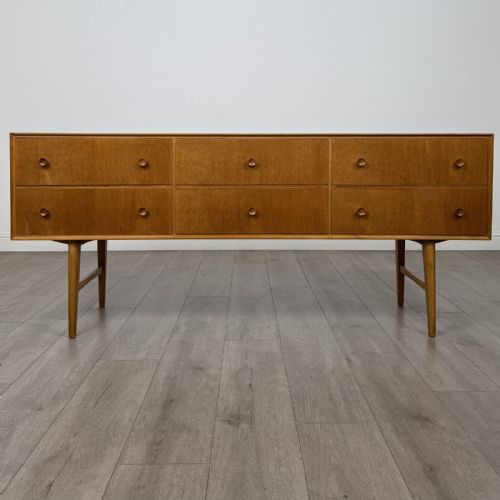
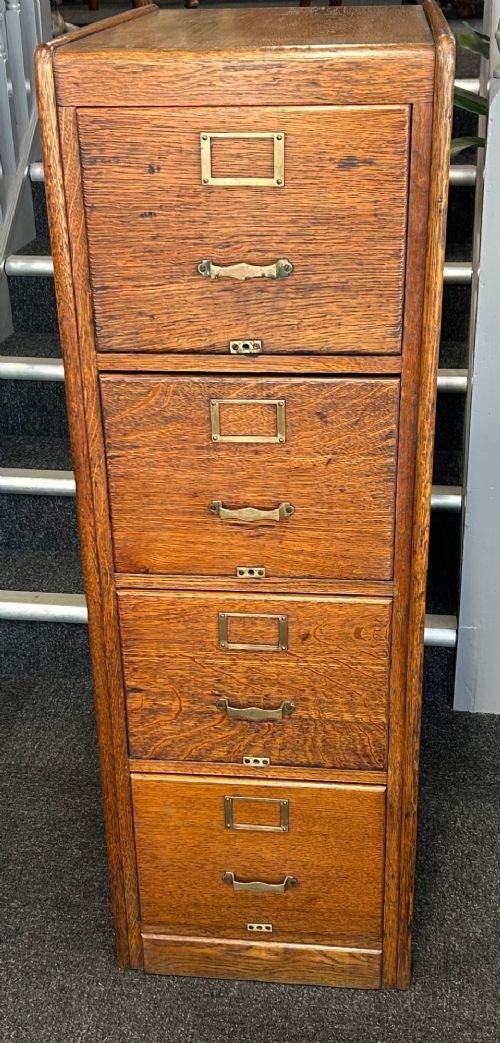
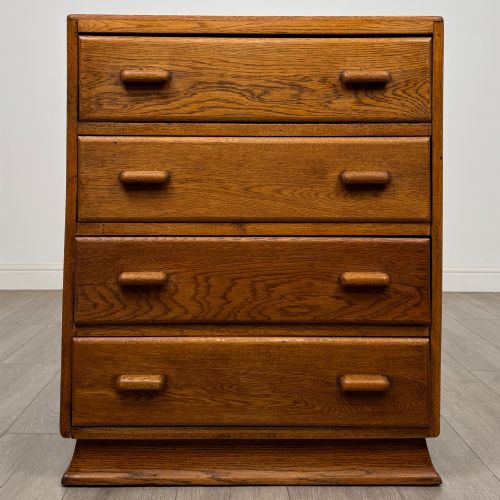
Retro drawers encompass a variety of multi-drawer furniture forms, appearing primarily as chests of drawers, filing cabinets, sideboards, and bedside tables. When searching for retro drawers, buyers encounter pieces originating from the nineteenth century, the Edwardian era, and the 1920s and 1930s.
Specialised variations also emerge, including plan chests, library card filing sets, tambour front office cabinets, and sewing boxes. These functional pieces range from domestic bedroom storage to commercial office equipment and workshop furniture.
How they were made
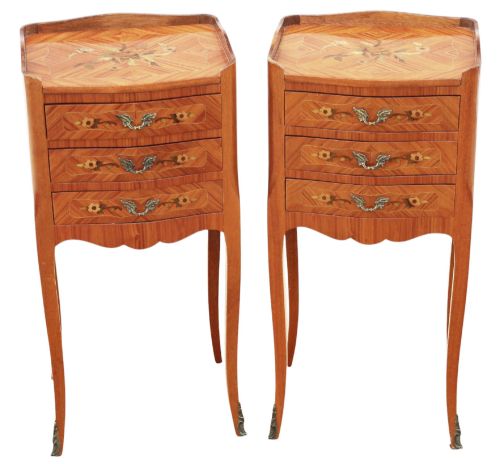
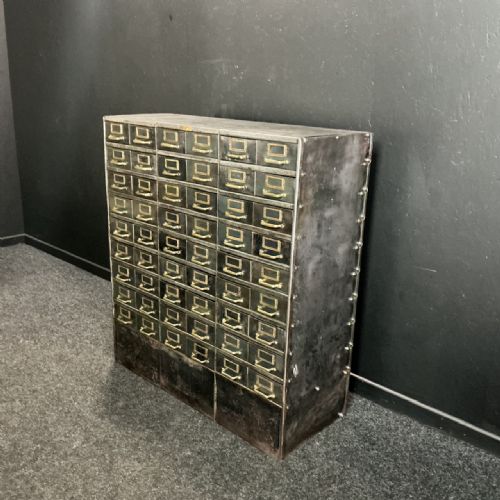
Cabinet makers utilised solid timbers such as oak and walnut alongside wood veneers, sometimes combining them with metal and enamel elements for industrial or office utility pieces. Marquetry inlay appears on select French bedside tables, showing detailed surface decoration.
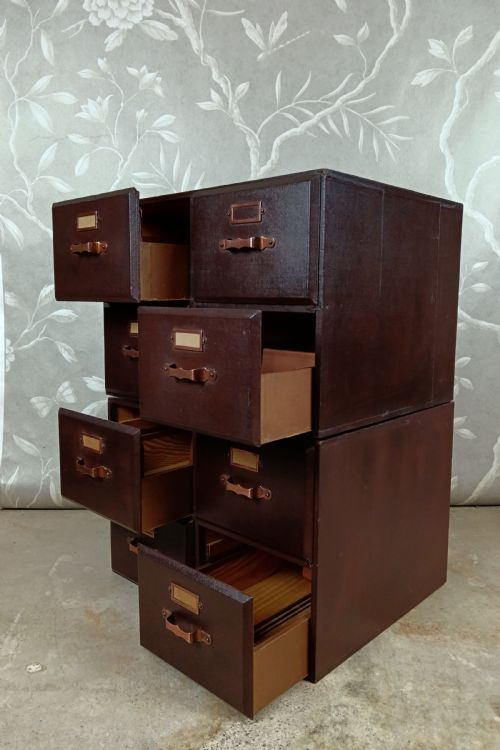
Hardware details include original wooden handles, brass pulls, and glass panels. Office and filing furniture incorporates tambour fronts and specialised card index mechanisms alongside traditional drawer construction.
Retro Drawers Retail Price Guide 2026
Typical asking prices for retro drawers among the pieces listed under this phrase on Sellingantiques today, from the lower quarter to the upper quarter. They describe what is for sale here now, not the wider market.
Even a humble haberdashery case once held rows of Chadwick's sewing cottons ready for darning socks.
What varies in quality
The standard of construction depends on the integrity of the timber and the precision of the joinery used in the drawer carcasses. Pieces bearing makers' labels or attributed to known firms generally command greater attention from collectors.
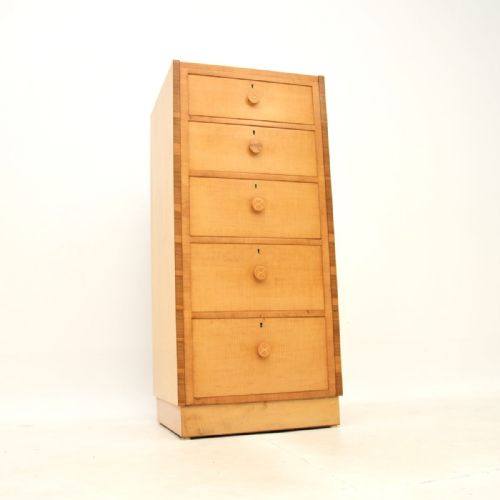
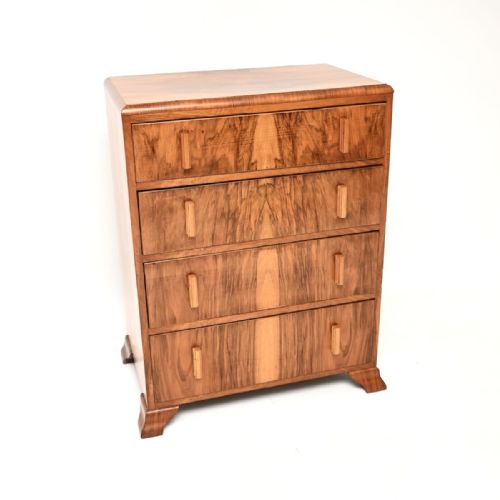
Material selection and decorative treatment also differentiate standard utility items from higher-grade examples. Figured walnut veneers, sycamore finishes, and distinct hardware configurations elevate the visual impact of Art Deco and period chests.
Hille·Bowman Brothers
The Retro Drawers Glossary
- Art Deco
- A design style from the interwar period characterised by sleek geometric forms, stylised motifs, and figured wood veneers.
- Tambour
- A flexible door or shutter constructed from narrow strips of wood attached to canvas, commonly used on office filing cabinets to conceal contents.
- Plan chest
- A large, shallow multi-drawer cabinet originally designed for storing architectural blueprints and large maps.
- Marquetry
- The art of applying pieces of veneer to a structure to form decorative patterns and pictures.
- Haberdashery display case
- A shop counter or cabinet featuring glass and multiple small drawers designed for storing and exhibiting sewing notions and small goods.
Retro Drawers: Frequently Asked Questions
What periods do retro drawers come from?
The pieces span from the nineteenth century and the Edwardian era through to the 1920s and 1930s. Art Deco and industrial designs dominate the interwar selections.
Buyers will find that older examples often feature heavy oak construction while 1930s pieces frequently showcase figured walnut and sycamore veneers.
Are filing cabinets considered retro drawers?
Yes, office and library filing units form a significant category alongside domestic chests of drawers and bedside tables. Items like card index sets and tambour front cabinets offer practical compartmentalised storage.
These pieces bring functional workplace utility into domestic interiors while retaining period character.
How do I identify Art Deco drawers?
Art Deco pieces from the 1920s and 1930s typically feature symmetrical geometric lines and rich wood veneers like walnut and sycamore. Makers such as Hille and the Bowman Brothers produced notable examples in this style.
Clean surfaces and specialised hardware often accompany these characteristic aesthetic traits.
What materials were used in these drawers?
Oak and walnut appear most frequently, supplemented by wood veneer, brass, metal, glass, and satinwood. Industrial pieces occasionally incorporate enamel surfaces alongside wooden structures.
Combinations of solid timbers and decorative veneers define the visual variety across the available forms.