
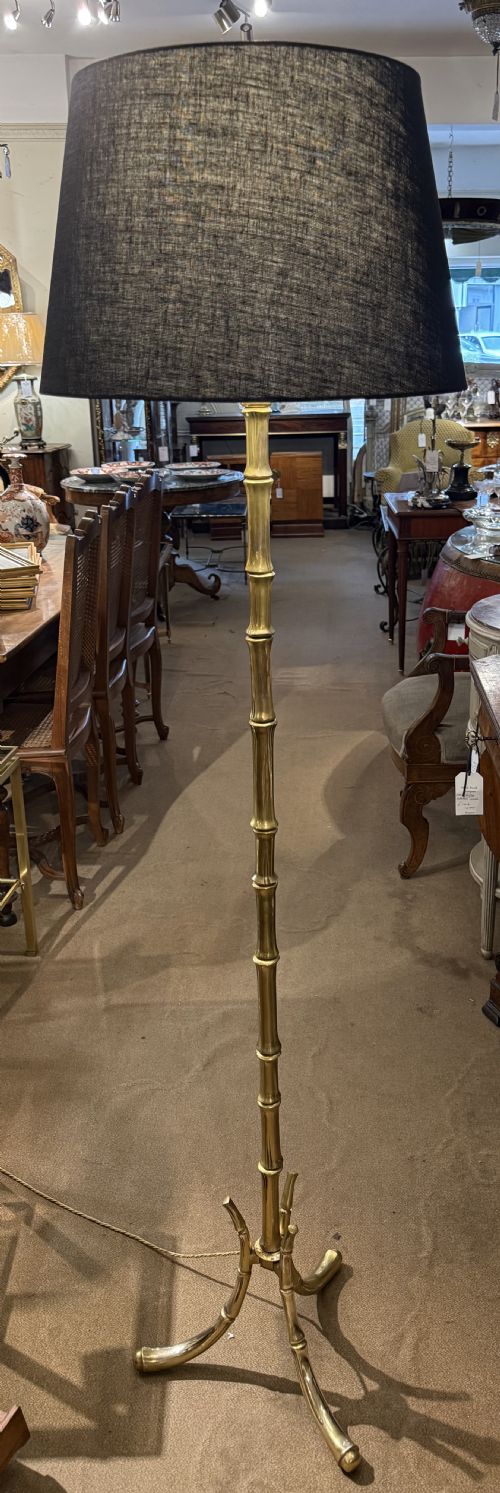
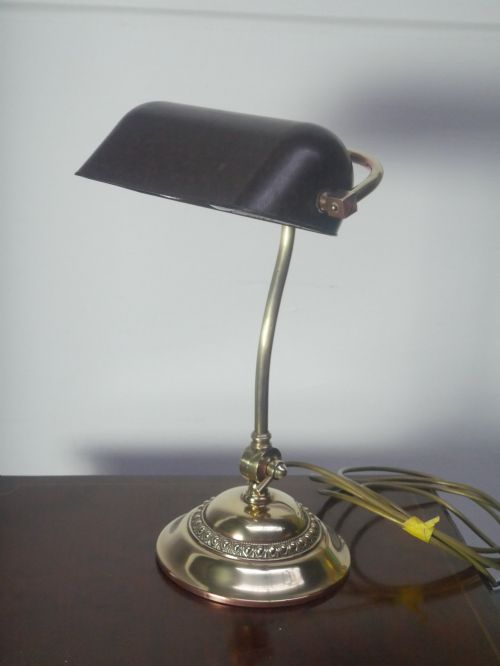

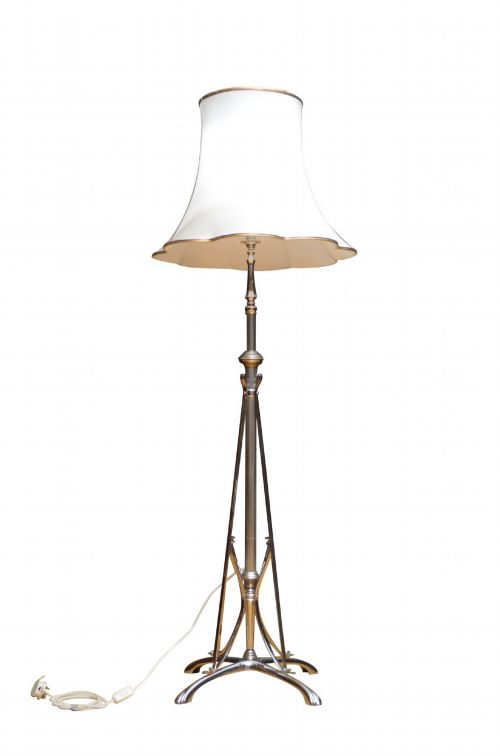
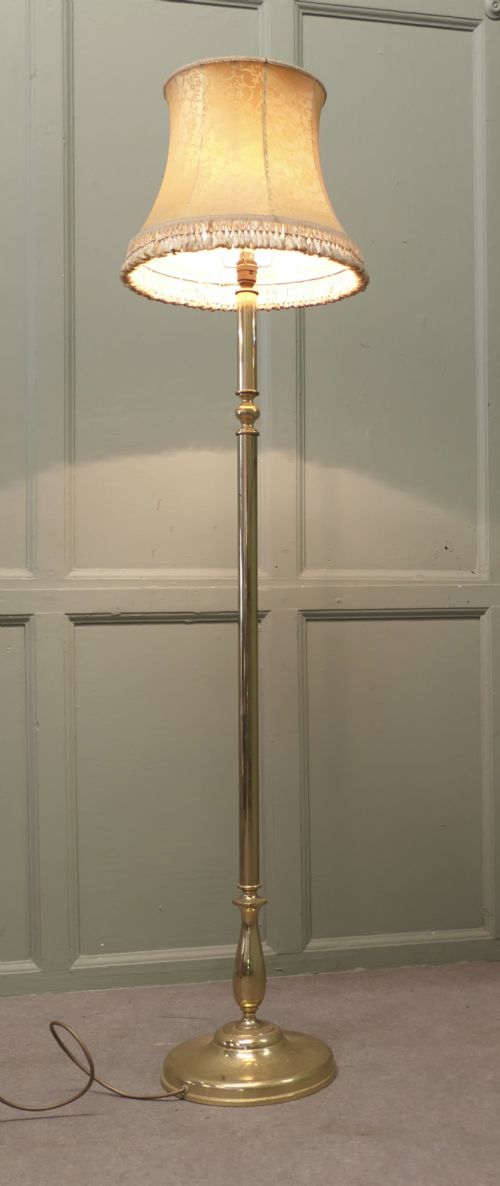


Retro Brass Reading Lamp
A retro brass reading lamp brings focused task lighting and mid-century warmth to a room.

Retro Brass Reading Lamp
A retro brass reading lamp is a practical lighting fixture designed for desks, tables, and floors, utilising metallic finishes and adjustable arms. When searching for a retro brass reading lamp, buyers encounter pieces spanning the nineteenth century through the 1930s, alongside Edwardian examples.
The most common formats on this page include flexible reading lamps, Bankers desk lamps, and standard floor lamps with adjustable mechanisms. Many examples pair brass frameworks with frosted, opaline, or shell-shaped glass shades.
How they were made
These lamps rely primarily on brass construction, often combined with bronze, copper, or chrome elements to form rigid standards and articulated arms. Metalwork is frequently paired with weighted bases of marble or onyx to support adjustable or extended heights safely.
Shades and diffusers utilise blown glass, including opaline and frosted varieties, alongside fabric elements and shaped metal shells. Individual pieces integrate mechanical joints, swivel mounts, and flexible tubing to direct light precisely.
Listings feature items from the nineteenth century, Edwardian era, 1900, 1920, and 1930, spanning table, floor, and desk lamp formats.
What varies in quality
The distinction between standard production and finer examples lies in the weight of the cast brass, the solidity of the marble or onyx bases, and the finish of the metal surfaces. Superior pieces employ robust articulation joints and heavy gauge materials that maintain position over years of adjustment.
Detailing in the glass shades, such as hand-formed shell shapes or layered opaline layers, separates ordinary utilitarian lighting from more decorative interpretations. The integration of period switches, matching shade holders, and balanced proportions determines the overall coherence of the design.
Maison Bagues
The Retro Brass Reading Lamp Glossary
- Brass
- An alloy of copper and zinc used extensively for lamp bodies and fittings. It takes a polished, brushed, or patinated finish depending on the period.
- Opaline glass
- A milky, translucent white glass utilised for lamp shades to diffuse light evenly. It softens the glare from the bulb.
- Art Deco
- A design style spanning the 1920s and 1930s characterised by geometric shapes, streamlined forms, and stylised motifs. It heavily influences the silhouettes found in this category.
- Pricket
- A spike on a candlestick or lamp base designed to hold a candle or support a specific fitting. It appears on older ecclesiastical or revival forms.
- Bankers desk lamp
- A traditional task light featuring a heavy brass base and a distinct green or clear glass shade. It is designed for focused illumination over paperwork.
Retro Brass Reading Lamp: Frequently Asked Questions
How do I identify an Art Deco reading lamp?
Art Deco reading lamps display geometric lines, stepped bases, and streamlined metal components typical of the 1920s and 1930s. They often incorporate shell-shaped shades or dual lamp configurations.
Look for symmetrical forms and polished brass finishes paired with frosted or opaline glass elements that diffuse light evenly.
Are these lamps suitable for modern desks?
These vintage and antique lamps integrate easily into contemporary workspaces by providing directional task lighting and tactile metallic finishes. Their adjustable stems and flexible joints accommodate various desk layouts.
Many pieces require standard modern bulbs, though rewiring may be necessary for contemporary safety standards depending on the individual item's history.
What materials are common in Edwardian reading lamps?
Edwardian reading lamps frequently utilise brass, copper, and bronze, often mounted on heavy stone bases like marble or onyx for stability. Their designs lean toward traditional English and neoclassical aesthetics.
Shades from this period typically consist of opaline glass or fabric, paired with articulating frames designed for reading and desk work.