
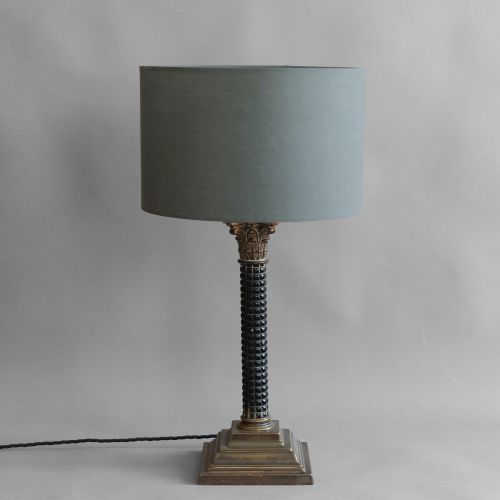
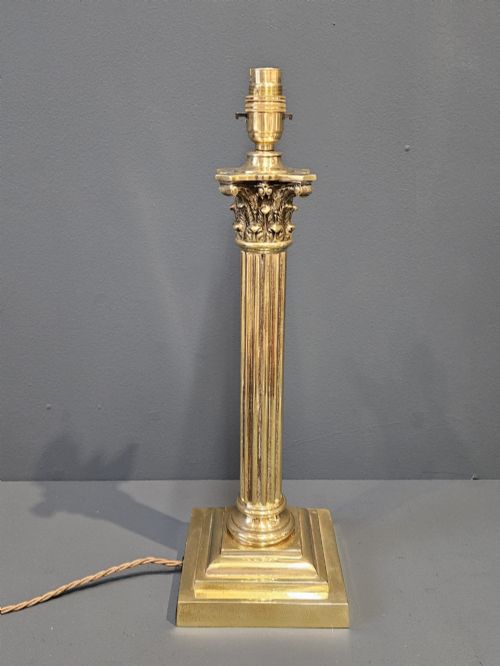
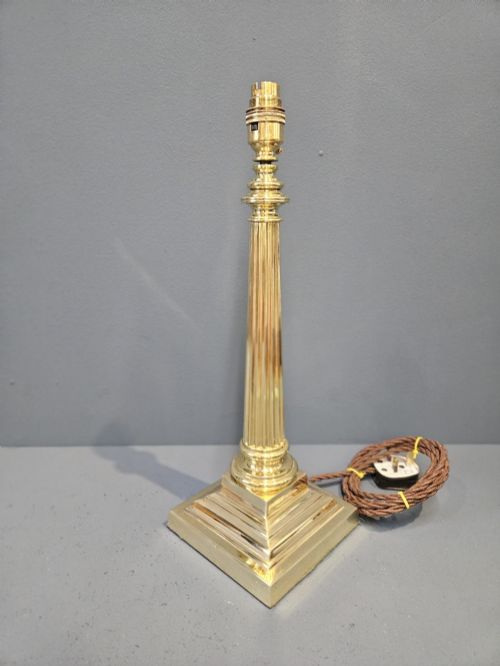
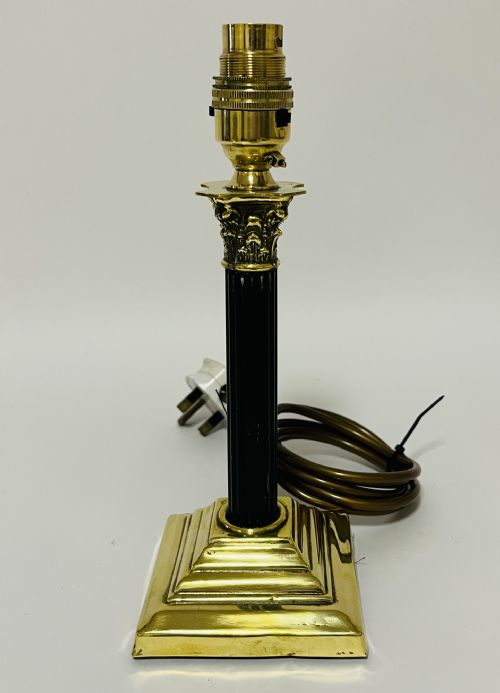
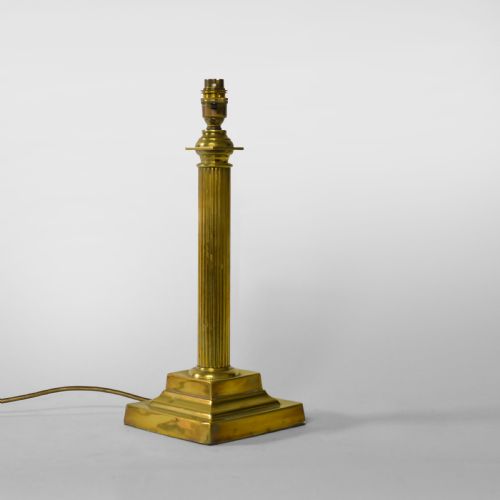


Stepped Brass Table Lamp
These stepped brass table lamps bring solid architectural presence and warm metallic light to a room.

Stepped Brass Table Lamp
A stepped brass table lamp combines substantial metalwork with classical columns or modernist lines to anchor a desk or side table.
Most examples found here follow Victorian classical revival or later Art Deco and Bauhaus traditions, favouring columns and geometric tiers.
Many started life as oil lamps before conversion to electricity, retaining reservoirs in cut glass or ormolu-mounted onyx alongside the primary brass structure.
How they were made
Maker's workshops cast and turned heavy brass components, creating fluted columns, reeded shafts, and stepped bases that provide stability for tall fittings.
Detailed capitals, such as Corinthian or ionic orders, were cast separately and applied to the main columns with precision engineering.
Combinations of materials bring textural contrast, pairing polished brass with natural onyx, cut glass reservoirs, and braided fabric flex for wiring.
The listings span the Victorian era, the nineteenth century, and the nineteen-twenties, combining brass, onyx, and cut glass.
What varies in quality
The weight of the cast brass and the crispness of detail in the column capitals set finer examples apart from simpler production pieces.
Proportion dictates the visual balance, where taller columns require a suitably substantial stepped base to avoid feeling top-heavy.
The integration of secondary materials like cut glass or mounted onyx reveals the care taken in assembly and the original ambition of the maker.
The Stepped Brass Table Lamp Glossary
- Corinthian column
- A classical architectural order featuring an ornate capital decorated with acanthus leaves, frequently adapted for Victorian lamp standards. It provides a formal silhouette.
- Reeded column
- A shaft carved or cast with parallel convex mouldings running vertically, adding texture and a slender appearance to the lamp stem. This detail catches the light across multiple facets.
- Ormolu
- Gilded bronze or brass applied as decorative mounts, often seen framing stone sections like onyx bases. The finish gives a bright golden contrast to darker metal.
- Braided fabric flex
- A modern or traditional textile-covered electrical cord used to wire older lamps safely while maintaining period character. It replaces older perished insulation.
Stepped Brass Table Lamp: Frequently Asked Questions
Are these lamps converted from oil lamps?
Many examples from the nineteenth century began life as burning oil lamps before receiving electrical conversions later in their working lives. This history often leaves them with heavier bases and retained glass or metal reservoirs.
Collectors appreciate this lineage because the original proportions and heavy brass engineering were designed to support oil fonts safely. The conversion process integrates modern wiring while preserving the primary structure.
How do I date a brass column lamp?
Dating relies on stylistic details, such as the strictness of classical revival orders in Victorian pieces compared to the clean geometric tiers of Art Deco and Bauhaus designs. Materials like onyx or cut glass also point toward specific decades around nineteen hundred.
Examine the construction methods and the weight of the castings, as nineteenth-century pieces often display deeper hand-finishing marks than mid-century alternatives. Wiring and switches are usually later replacements added for safety.
How do I style a tall brass lamp?
Tall column lamps demand sturdy pieces of furniture like sideboards or large desks where their height can balance without crowding the space. Pairing them with a simple fabric shade lets the polished metal and classical proportions remain the focal point.
They work particularly well in traditional studies or transitional rooms where polished brass adds warmth and vertical emphasis. Ensure the placement accounts for the reach of the cord and the switch position.
What maintenance do old brass lamps need?
Polishing brass depends entirely on personal preference regarding patina, as some buyers enjoy a dark aged surface while others prefer a bright metallic shine. Gentle dusting and checking that the bulb fitting remains secure are the primary routine tasks.
Electrical safety should be assessed by a competent person, particularly when dealing with vintage or converted standards that feature braided flex. The heavy base provides stability, but the internal wiring requires modern compliance.