
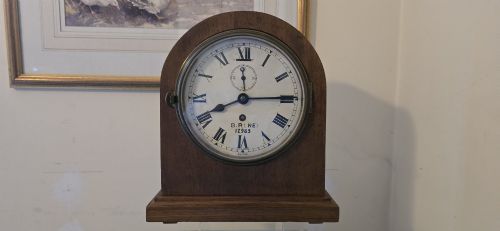
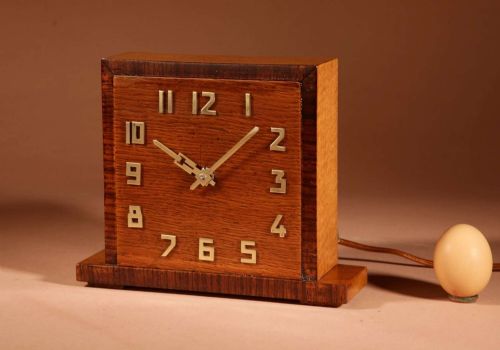
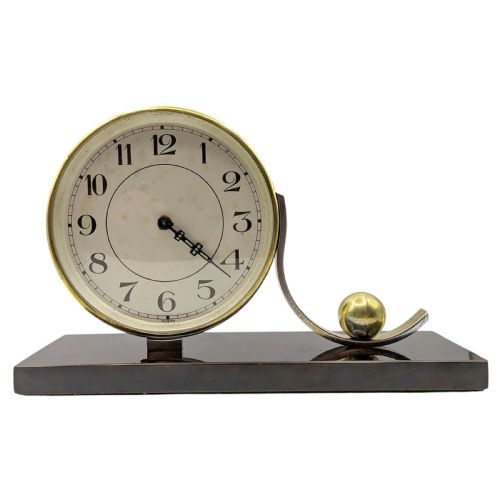


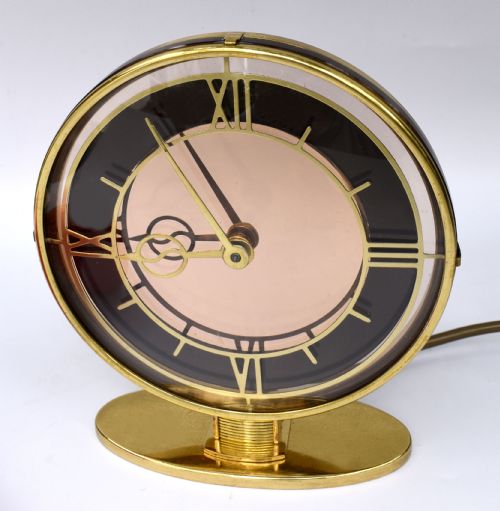


Retro Brass Mantel Clock
A retro brass mantel clock brings mid-century character and dependable timekeeping to any room, combining striking metallic frames with classic dial layouts.
Retro Brass Mantel Clock
A retro brass mantel clock combines mid-century design with durable metal framing to sit neatly on a shelf, desk, or fireplace surround. These timepieces range from heavy architectural mantel pieces to compact desk clocks designed for everyday utility.
The versions most commonly met here span the 1920s to the 1960s, drawing heavily on Art Deco and mid-century modern aesthetics. Common variations incorporate glass panels, wooden bases, and distinct geometric dials that reflect the period's taste.
Makers focused on both mechanical wind movements and early electrical mechanisms, ensuring that form followed function. Whether housed in straightforward brass or paired with peach mirror glass and bakelite, these clocks served as both practical tools and decorative focal points.
How they were made
Makers utilised solid brass and gilt brass for the primary frames and bezels, often mounting them on contrasting bases of oak, rosewood, or bakelite. These materials provided structural heft and a warm metallic sheen that aged distinctively over decades of use.
Glass elements, including peach mirror glass and clear bevelled panes, protected delicate paper or metal dials while adding reflective depth. Mechanical components relied on precision engineering, with jewelled movements and manual or early electrical wind systems driving the hands.
Some clocks include world time dials designed to track multiple international zones simultaneously, perfect for the globally minded timekeeper.
What varies in quality
The distinction between standard production and superior examples lies in the weight of the brass housing and the complexity of the internal movement, such as multi-jewel calibres. Heavier cast frames and finely finished metalwork indicate higher initial manufacturing standards.
Attention to detail in the dial design, numerals, and bezel engineering separates ordinary timepieces from notable pieces. Original glass panels and well-preserved secondary materials like rosewood or bakelite further distinguish finer examples.
ELLIOTT of LONDON·Jaeger LeCoultre·Kienzle·Imhof·Smiths
The Retro Brass Mantel Clock Glossary
- Art Deco
- A design style characterised by sleek geometric shapes, stylised motifs, and streamlined forms popular from the 1920s through the 1930s. It heavily influences the visual appeal of many mid-century timepieces.
- Bakelite
- An early synthetic plastic valued for its durability and rich dark lustre in clock bases and bezels. It represents a significant technological shift in manufacturing during the period.
- Gilt brass
- Brass coated with a thin layer of gold or gold-coloured wash to enhance brightness and prevent tarnishing. This finish provides a distinct golden warmth distinct from raw brass.
- Mechanical movement
- A clock mechanism driven by springs and gears rather than electricity. These systems require regular manual winding to maintain accurate time.
Retro Brass Mantel Clock: Frequently Asked Questions
How do I wind a mechanical mantel clock?
Insert the appropriate key into the winding arbor on the dial or back plate and turn it gently clockwise until you feel firm resistance. Do not force the spring past its limit, as this can damage the internal gearing.
Most mechanical models in this category require winding every thirty hours or up to eight days, depending on the movement type. Regular winding ensures consistent tension and more accurate timekeeping.
Where should I place a brass mantel clock?
Choose a stable, level surface such as a wooden mantelpiece, sideboard, or sturdy desk away from direct sunlight and excessive moisture. A steady foundation prevents vibrations that can disrupt the delicate balance wheel.
Ensure there is enough clearance around the clock for safe winding and viewing of the dial. Keeping the piece away from heat sources also protects internal lubricants and wooden or bakelite bases.
How do I tell an Art Deco clock from a 1950s piece?
Art Deco clocks from the 1920s and 1930s typically feature stepped geometric cases, stylised numeric fonts, and contrasting materials like mirror glass and chrome or brass. They often emphasise symmetry and architectural mass.
By contrast, 1950s pieces lean towards organic curves, minimalist bezels, and atomic motifs, reflecting post-war industrial design trends. Examining the dial typography and case geometry usually clarifies the era.
Are these clocks suitable for daily use?
Many of these timepieces remain capable of keeping reliable daily time, provided their mechanical or early electrical movements have been properly serviced. They function well as active timekeepers in domestic spaces.
Treating them with care during winding and placement ensures they continue to operate smoothly. Periodic maintenance by a clockmaker helps preserve the internal components for long-term use.