

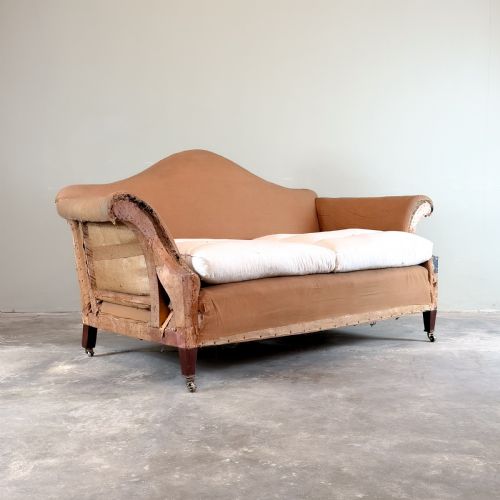


Restored Sofa
A restored antique sofa brings character and period seating into a room, offering deep leather comfort rebuilt for modern use.
Restored Sofa
A restored antique sofa represents a blend of historical framework and revived upholstery, bringing centuries of seating design back into daily use. Buyers exploring this category encounter a diverse selection of periods, ranging from Regency and Victorian creations to Edwardian and Art Deco iterations.
The most common form met on this page is the classic leather Chesterfield sofa, often finished in hand-dyed brown or whisky tones with tufted buttoning. Alongside these traditional designs, the selection includes drop-arm settees, chaise longues, and matching armchair suites originating from English country houses and town properties alike.
How They Were Made
Makers built these frames using robust timbers such as mahogany, walnut, and general hardwood, often carving details directly into the wood for decorative impact. Interior construction relied on traditional supportive elements, utilising horsehair fill, jute webbing, and heavy brass accents.
Upholstery consisted of durable leather or velvet stretched over dense stuffing, secured by hand-tufting and buttoning techniques that maintained structural integrity. Frames ranged from simple serpentine fronts to carved herms statues and lion motifs on George II or Regency pieces.
Restored Sofa Retail Price Guide 2026
Typical asking prices for restored sofa among the pieces listed under this phrase on Sellingantiques today, from the lower quarter to the upper quarter. They describe what is for sale here now, not the wider market.
Listings feature periods spanning from Regency and Victorian eras through to 1930s English designs.
What Varies in Quality
Quality rests on the fidelity of the restoration work and the integrity of the underlying timber frame. Pieces that retain their original carved details, such as Lion motifs or Herms statues, sit at a higher level than simpler frames.
The finish of the leather creates another distinction, where hand-dyed whisky and brown hides applied during restoration show depth and variation. Maker attribution also elevates certain examples, particularly documented works from firms like Howard & Sons.
Howard & Sons
The Restored Sofa Glossary
- Chesterfield
- A traditional sofa style characterised by deep button tufting and rolled arms of equal height to the back. This form remains a staple of Victorian and Edwardian seating.
- Drop-arm
- A sofa mechanism allowing one or both armrests to lower into a horizontal position. This design provides flexibility for lounging.
- Chaise Longue
- An elongated upholstered chair designed for reclining, combining a sofa seat with a single backrest. Examples often feature horsehair fill and carved wooden frames.
- George II Style
- A revival furniture aesthetic referencing the 18th-century reign, known for substantial proportions and carved wooden details. Pieces often incorporate rich brown leather upholstery.
- Horsehair Fill
- A traditional stuffing material utilised inside antique upholstery for resilient support. It provides firm cushioning before finishing with leather or velvet.
Restored Sofa: Frequently Asked Questions
What is a Chesterfield sofa?
A Chesterfield is a classic upholstered seating design featuring deep button tufting and arms that match the height of the backrest. These pieces appear frequently in Victorian and Edwardian iterations.
Originally built with horsehair fill and sturdy hardwood frames, they provide a distinct silhouette that bridges formal reception rooms and casual studies.
How do I care for antique leather?
Antique leather requires regular conditioning to maintain its suppleness and prevent the hand-dyed finish from drying out over time. Keeping the hide away from direct heat sources preserves the material.
Gentle cleaning with appropriate balms protects the historical surface without altering the rich whisky or brown tones.
What is a drop-arm sofa?
A drop-arm sofa includes a mechanical hinge on one or both armrests, allowing the arm to lower flat. This feature transforms the seating into a daybed configuration.
Victorian makers utilised this mechanism in chaise longues and larger settees to offer adjustable comfort.
How do I identify a Victorian sofa?
Victorian sofas often feature dark hardwoods like mahogany or walnut, deep button tufting, and generous proportions designed for comfort. Upholstery typically consists of hand-dyed leather or velvet.
Details such as serpentine fronts and carved wooden trim help distinguish pieces from this period.