




Republic Period Carved Jade
These Republic period carved jade pieces bring tactile depth and traditional motifs into a room, offering genuine historical substance for your collection.
Republic Period Carved Jade
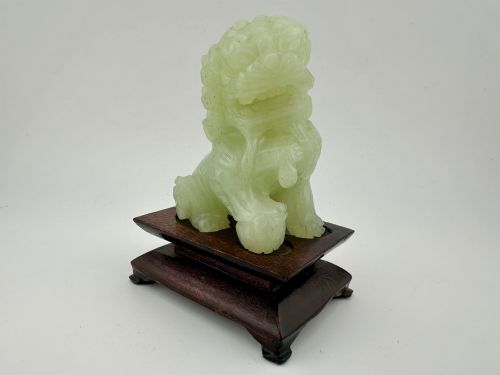
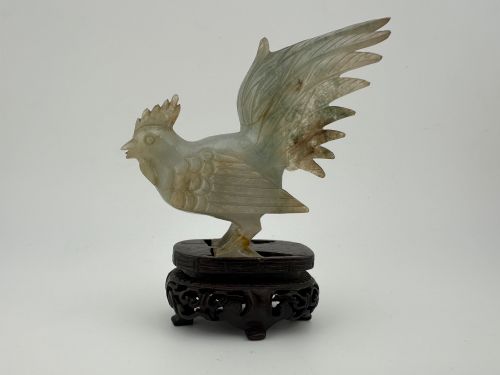
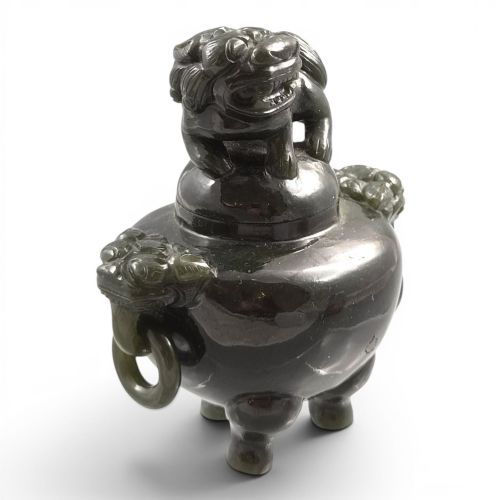
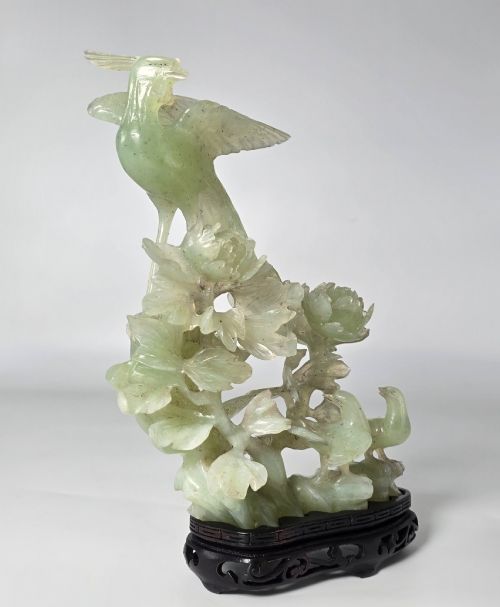
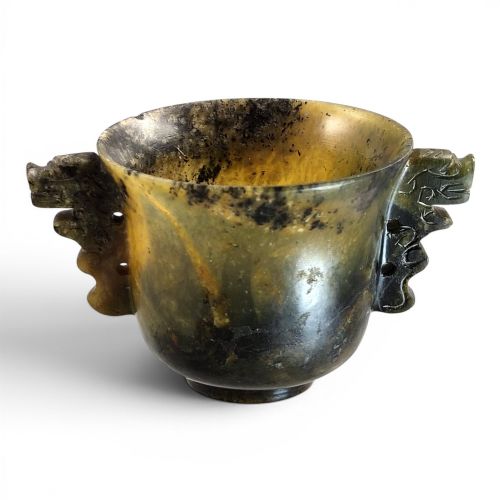
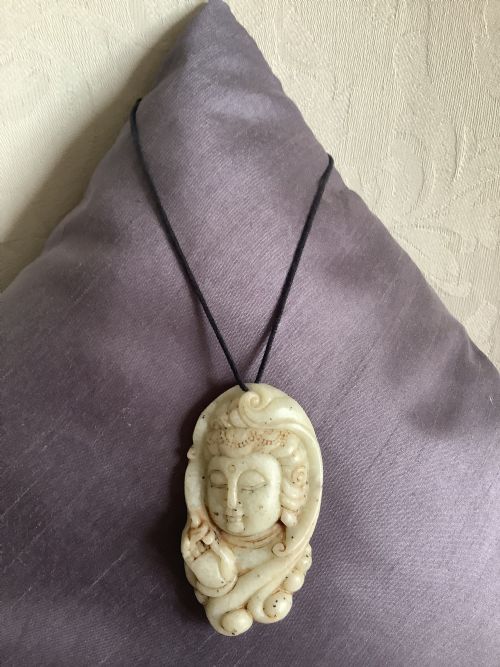
Republic period carved jade objects encompass intricate pendants, sculptural figures, decorative vessels, and tripod censers shaped during the early decades of the twentieth century and the late Qing transition. You will most frequently encounter pale green jade and jadeite items mounted on fitted hardwood stands, alongside dark green nephrite pieces.
The forms draw heavily upon traditional iconography, featuring guardian lions, cockerels, deities, mythical pixiu, and taotie handles. These works bridge traditional imperial craftsmanship and the evolving aesthetic shifts of the twentieth century.
The selection ranges from small personal pendants to larger sculptural groups of birds and floral motifs. Each piece reflects the enduring skill of Chinese carvers working across the late nineteenth and early twentieth centuries.
Materials and Carving Techniques
Carvers shaped these works from hardstones including nephrite and jadeite, utilising the natural tonal variations within the stone to define the subject. Pale green jade and dark green jade provide the primary visual mediums for both sculptural figures and vessels.
Many of the larger sculptures and vessels are paired with custom hardwood stands, demonstrating a collaborative approach between jade carvers and woodworkers. The detailing relies on patient abrasive grinding and polishing rather than quick mechanical removal.
Republic Period Carved Jade Retail Price Guide 2026
Typical asking prices for republic period carved jade among the pieces listed under this phrase on Sellingantiques today, from the lower quarter to the upper quarter. They describe what is for sale here now, not the wider market.
Listings feature periods spanning from the late 19th century through the Edwardian era and the 1920s and 1930s.
Judging Quality in Carved Jade
Quality rests upon the sensitivity of the carving relative to the natural characteristics of the stone. Superior examples use inclusions and colour zoning to enhance the subject, whereas lesser pieces ignore the stone's natural grain.
The Republic Period Carved Jade Glossary
- Nephrite
- A dense, tough amphibole jade variety prized for its smooth texture and fibrous structure. It forms the material foundation for many traditional cups and pendants.
- Jadeite
- A pyroxene mineral noted for its bright coloration and vitreous lustre. It appears in several pendants and sculptural figures within this selection.
- Taotie
- A stylised zoomorphic mask motif derived from ancient ritual bronzes. It frequently decorates the handles of archaic-style cups and censers.
- Pixiu
- A mythical winged celestial creature of auspicious significance in Chinese tradition. Carvings of this beast are common amongst personal pendants.
- Censer
- A traditional vessel designed for burning incense, often supported by tripod legs. These pieces frequently incorporate foo dog finials on their lids.
Republic Period Carved Jade: Frequently Asked Questions
What is Republic period jade?
Republic period jade refers to carvings produced in China between the fall of the Qing dynasty in 1912 and the mid-twentieth century. These items continue imperial aesthetic traditions while incorporating accessible forms such as pendants and small desktop sculptures.
The period bridges traditional craftsmanship and modern collecting tastes, maintaining high standards of hardstone manipulation.
How do I care for carved jade?
Jade is a durable mineral that requires minimal maintenance beyond occasional dusting with a soft cloth. Avoid harsh chemical cleaners or abrupt temperature changes that might stress mounted hardwood stands.
Handling the stone with clean hands allows natural oils to enhance the polished surface over time.
What are hardwood stands used for?
Hardwood stands provide a stable base for display and protect the rounded bottoms of vessels and sculptural groups. They are individually carved to match the exact contours of each jade piece.
Finding a piece retained with its original fitted stand enhances its completeness and visual presentation.
How do I distinguish archaic styles?
Archaistic pieces emulate the forms, motifs, and patination of ancient ritual bronzes and jades from earlier dynasties. They often feature taotie masks and vessel shapes borrowed from antiquity.
Carvers during the late Qing and Republic eras revived these ancient designs to appeal to scholarly collectors.