





Repousse Wine Cooler
A repousse wine cooler brings heavy metal texture and deep, hammered relief to the table, offering a functional vessel that doubles as a sculptural centrepiece.
Repousse Wine Cooler
A repousse wine cooler sits within a family of decorative metal vessels that includes jardiniere planters, punch bowls, and coal buckets produced across the eighteenth, nineteenth, and twentieth centuries. These items serve to chill bottles or display plants, shaped by European makers working in brass, copper, silver, and silver plate.
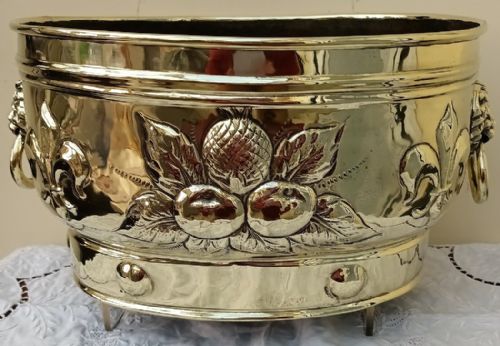
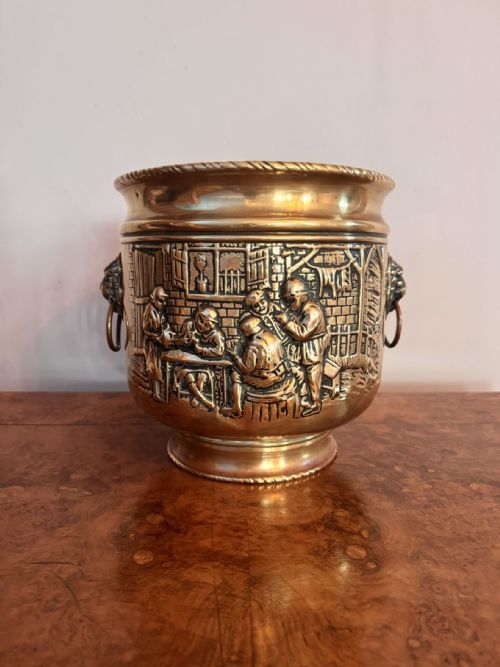
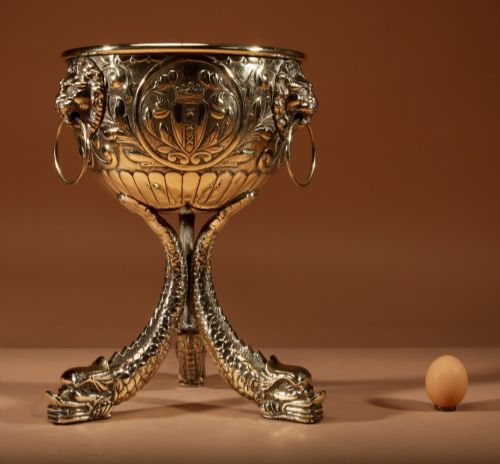
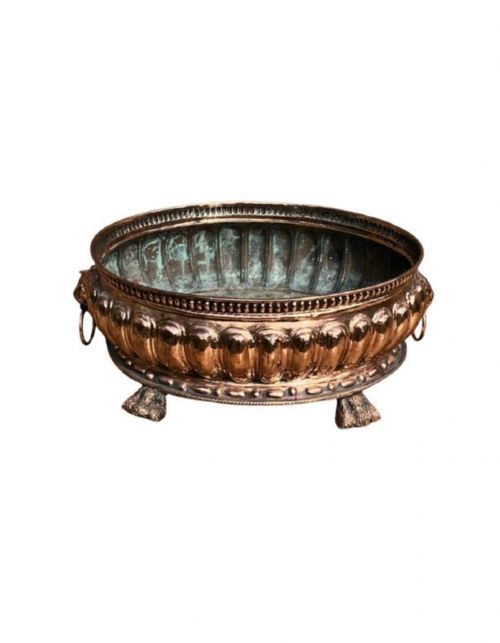
The versions most commonly met on this page span the nineteenth century and the Edwardian period, often reflecting revival styles such as Victorian Dutch, French Rococo, or Italian Neo-Classical. They feature twin handles, animal head mounts, and heavily embossed surfaces intended to catch the light in a dining room or drawing room.
How they were made
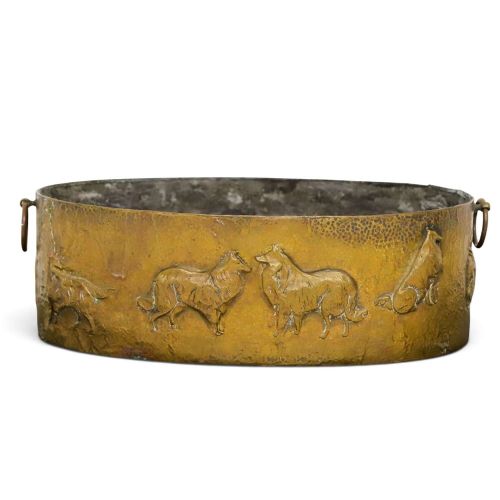
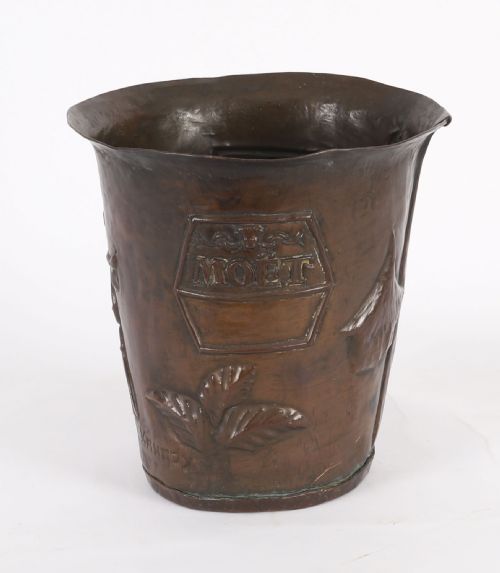
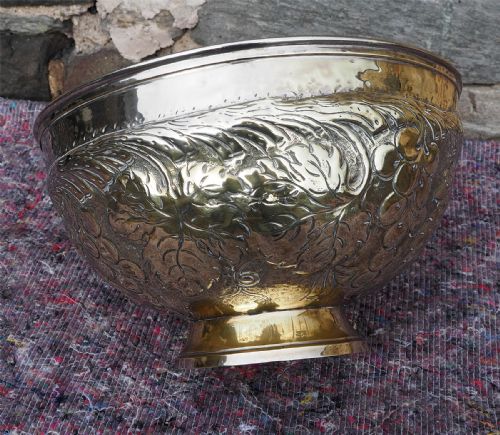
The primary technique defining these pieces is repoussé work, where metal is hammered from the reverse side to form raised patterns and motifs before being chased and detailed from the front. Copper and brass sheets provide the malleable base for this hammering, allowing artisans to achieve deep relief work on wine coolers, planters, and vases.
Silver plating and cast brass elements frequently complement the beaten bodies of these vessels. Handles are often cast separately and securely riveted or soldered to the main body, while interior liners or structural seams show the hand-tooling typical of period metalwork.
Repousse Wine Cooler Retail Price Guide 2026
Typical asking prices for repousse wine cooler among the pieces listed under this phrase on Sellingantiques today, from the lower quarter to the upper quarter. They describe what is for sale here now, not the wider market.
Listings feature brass, copper, and silver-plated vessels spanning the eighteenth to the twentieth centuries, encompassing styles from Dutch Revival to Art Nouveau.
What varies in quality
Quality in a repoussé wine cooler rests primarily on the depth and crispness of the hammered relief, where sharper contours and undercut details demonstrate superior hand skill. Thicker gauge metal maintains its structural integrity better under pressure and resists denting during use.
The refinement of cast additions, such as animal head mounts and heavy handles, distinguishes finer workshop production from standard commercial output. Harmony between the beaten surface pattern and the overall proportions of the vessel separates superior examples from simpler utilitarian buckets.
The Repousse Wine Cooler Glossary
- Repoussé
- A metalworking technique where a design is hammered into relief from the reverse side of a sheet of metal. This method creates tactile, three-dimensional decorative panels on vessels and planters.
- Dinanderie
- A traditional term for European brass and copper hollowware and decorative objects. It originates from the Belgian town of Dinant, which was famous for medieval and later metalworking.
- Jardiniere
- An ornamental pot or stand designed to hold growing plants or flowers. In metalwork, these often share identical forms and manufacturing techniques with wine coolers.
- Chasing
- The complementary metalworking process to repoussé, executed from the front side to refine details, sink the background, and sharpen the contours of the hammered design.
Repousse Wine Cooler: Frequently Asked Questions
Can I use these for actual ice and wine?
Most antique metal coolers can hold ice and bottles during use, provided you check the interior for watertight integrity. Many period vessels were designed as planters or coal buckets rather than liquid containers, so liners are often necessary.
Inspect the base and seams for any historical repairs or hairline gaps before exposing the metal to prolonged moisture and melting ice.
How do I date a repousse brass vessel?
Dating relies on combining the stylistic clues of the period revival, such as Victorian Rococo or Edwardian neoclassical motifs, with the construction methods visible on the interior and base. Tool marks, seam types, and handle attachments offer clear indicators of nineteenth or early twentieth-century manufacturing.
Compare the weight of the metal and the sharpness of the chasing work against known examples from the same stylistic era to narrow down the decade of production.
Where should I display a large copper cooler?
Position large copper and brass vessels on low sideboards, dining tables, or hearths where their reflective surfaces catch natural light. Their substantial scale makes them ideal focal points in rooms with traditional or eclectic interior schemes.
Keep them away from direct, damp heat sources that might accelerate oxidation or alter the stability of any historic surface treatments.