
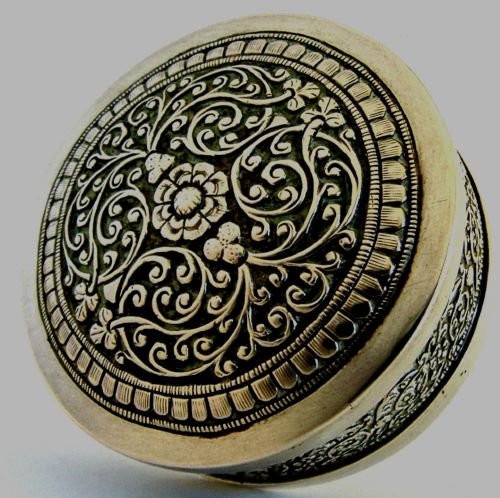

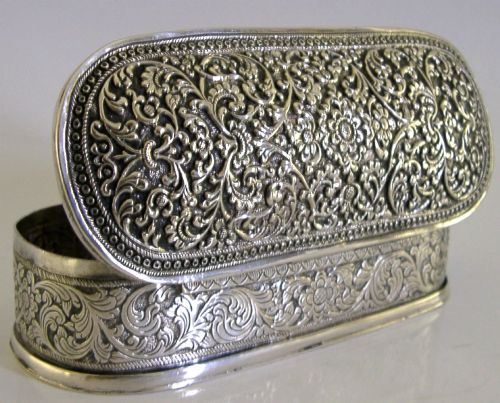
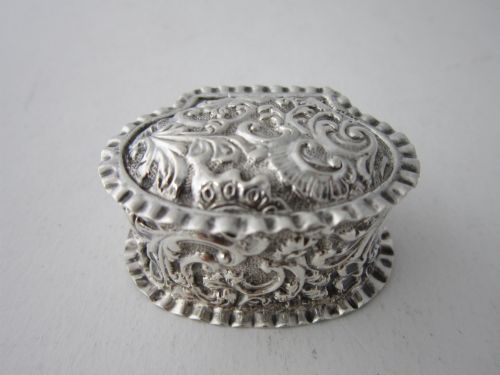
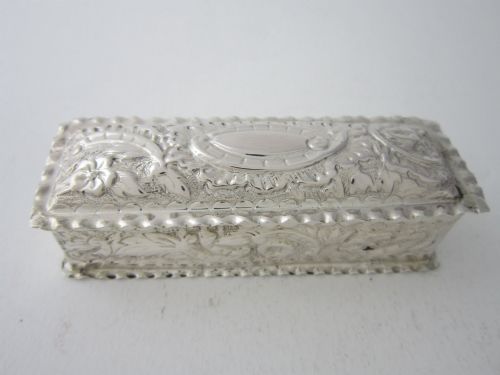
Repousse Silver Vanity
These repousse silver vanity pieces bring tactile relief work and polished sterling into daily grooming routines.
Repousse Silver Vanity
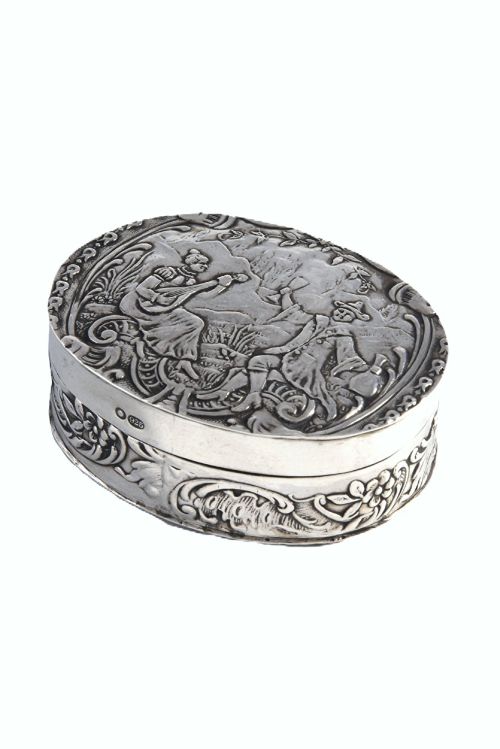
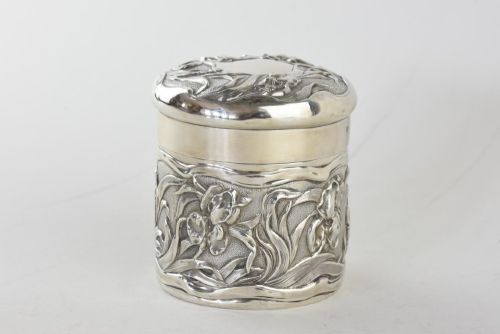
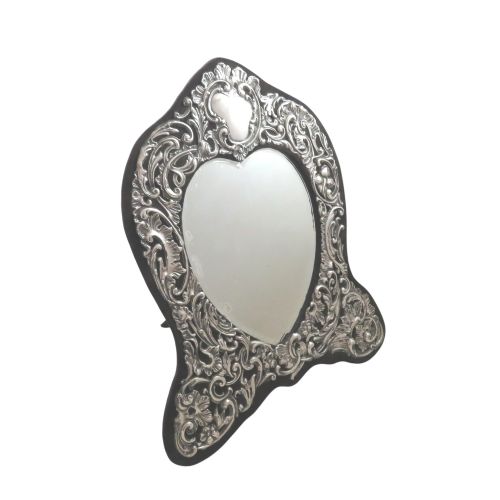
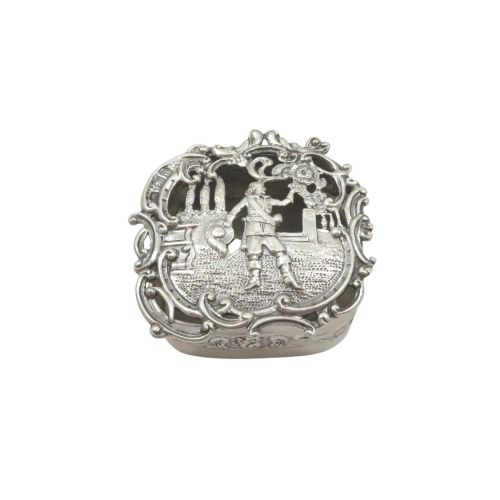
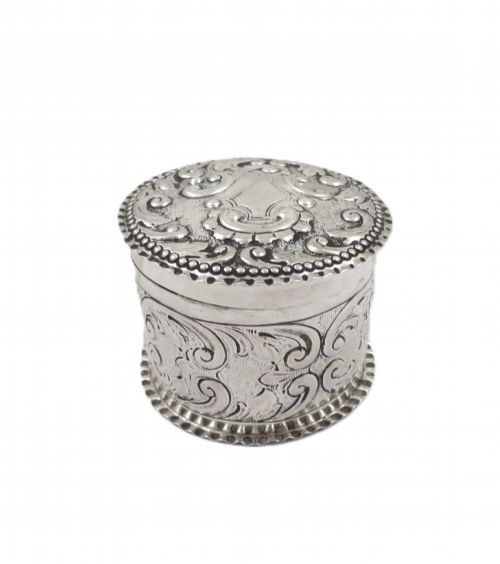
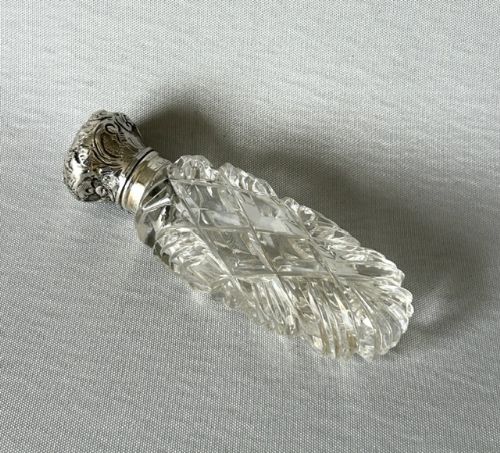
When you search for repousse silver vanity items, you encounter dressing table accessories shaped from solid silver, sterling, and mounted glass. These objects encompass trinket boxes, pill boxes, scent bottles, hand mirrors, trays, and dressing table mirrors.
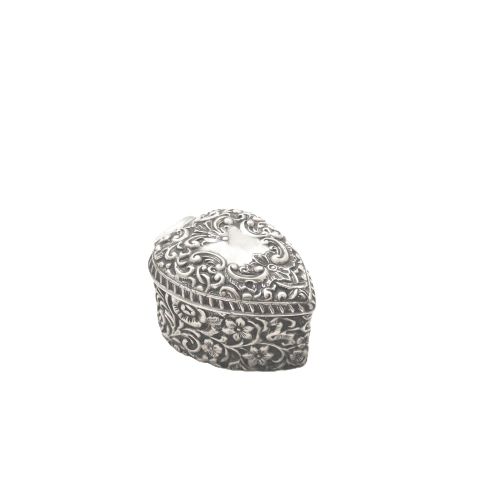
The selections span the Victorian, Edwardian, and George V periods, alongside mid-century Danish and Peruvian items, plus Anglo-Indian, Chinese Export, and continental workshops. Heart-shaped trinket boxes and embossed hand mirrors dominate the forms.
Makers fashioned these vanity items to hold jewellery, cosmetics, and pins while adorning the dressing table with floral or figural relief. Pieces range from small pill boxes to large fourteen-inch dressing table mirrors and heavy boxes.
How they were made
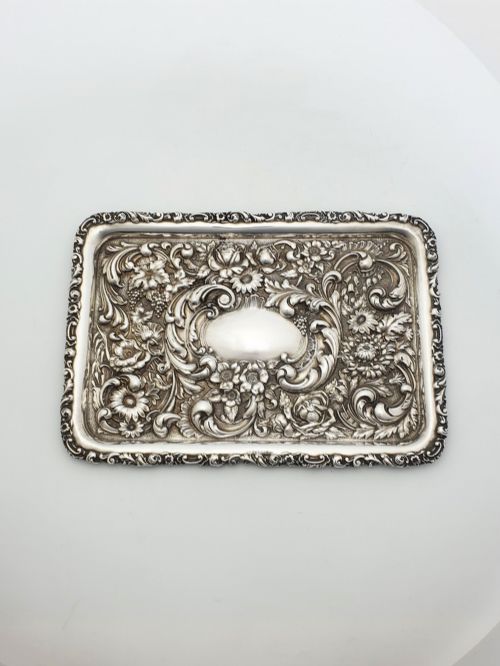
Silversmiths worked sterling and solid silver from the reverse side, hammering and punching the metal into raised motifs such as cherubs, Reynolds Angels, floral scrolls, and rococo designs. This repousse technique creates three-dimensional surface decoration.
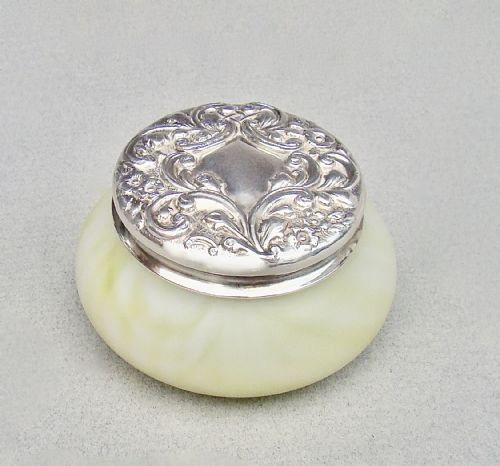
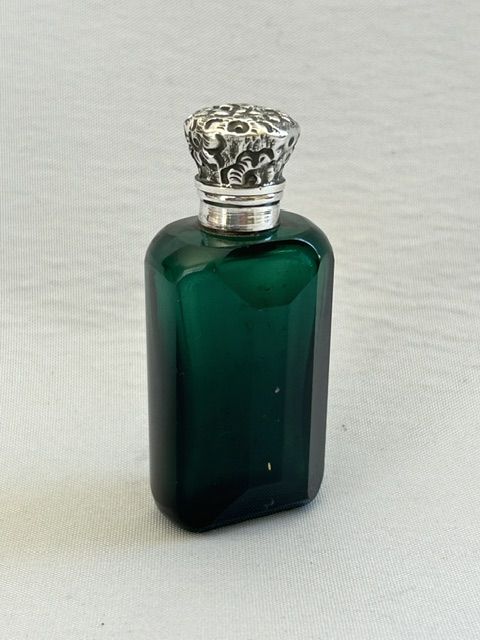
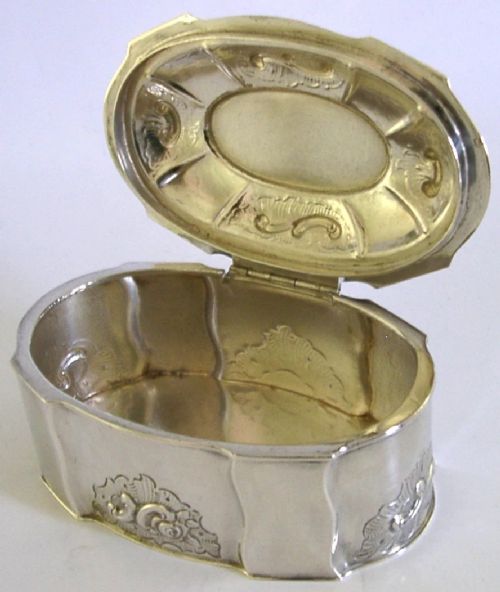
Makers combined silver mounts with cut glass, satin glass, Bristol green glass, mirror glass, and wooden cores to form scent bottles, lidded vanity pots, and heavy dressing table mirrors. Interiors frequently received a gilt lining to protect the metal.
Reynolds Angels peer out from Edwardian hand mirrors, reminding owners that seventeenth-century cherubs made surprisingly diligent dressing table companions.
What varies in quality
The weight of the solid silver and the integration of secondary materials like cut glass or velvet liners determine the structural substance. Substantial gram weights and intact mirror glass or gilt interiors elevate the piece.
Goldsmiths and Silversmiths Company·A. Bromet & Co·Robert Pringle & Sons·Charles Boyton·S Blanckensee & Son·A & J Zimmerman Ltd·William Comyns·James Hennell
The Repousse Silver Vanity Glossary
- Repousse
- A metalworking technique where the silversmith hammers and pushes the design from the reverse side to form a raised relief on the front. This method creates tactile floral and figural motifs on boxes and mirrors.
- Sterling Silver
- An alloy containing 92.5 percent silver by mass, with the remainder usually copper. Most British vanity items and boxes on this page are fashioned from this standard.
- Gilt Lining
- A thin layer of gold applied to the interior surface of a silver box or pill container. This coating prevents the silver from tarnishing when exposed to cosmetics or contents.
- Satin Glass
- A type of glass treated with hydrofluoric acid to produce a characteristic velvety, frosted finish. Edwardian makers paired this glass with silver lids for vanity pots.
- Trinket Box
- A small container designed for holding rings, pins, and small pieces of jewellery on a dressing table. They frequently feature hinged lids and velvet or silk interior bases.
Repousse Silver Vanity: Frequently Asked Questions
What are repousse silver vanity items used for?
These pieces served practical roles on nineteenth and twentieth-century dressing tables for holding rings, pins, cosmetics, and perfumes. Hand mirrors and table mirrors assisted with daily grooming.
Today, collectors use these lidded boxes and trays to store modern jewellery while displaying period craftsmanship on dressing tables.
How do I identify Victorian pieces?
Victorian vanity items often display date letters and assay office marks corresponding to the reign, alongside styles ranging from plain silver to heavy floral relief. Birmingham and London hallmarks frequently provide exact production years.
Design motifs from this era tend to feature dense floral scrolls, cherubs, and pierced silver work alongside cut glass bottles.
What is the difference between sterling and solid silver?
Sterling silver denotes the specific British standard of 92.5 percent purity. Solid silver refers generally to objects made entirely of silver rather than plated metal.
Most items listed carry hallmarks confirming their sterling standard alongside maker marks.
How do I care for silver vanity items?
Maintain the polished surfaces using a soft cloth and appropriate silver polish to remove natural tarnishing. Avoid abrasive cleaners that flatten fine repousse details.
Keep glass inserts and mirror plates clean with standard glass cleaner, ensuring liquid does not seep behind silver mounts.