


Silver Dressing Set
When you search for a silver dressing set, you step into a ritual of morning grooming shaped by past centuries.
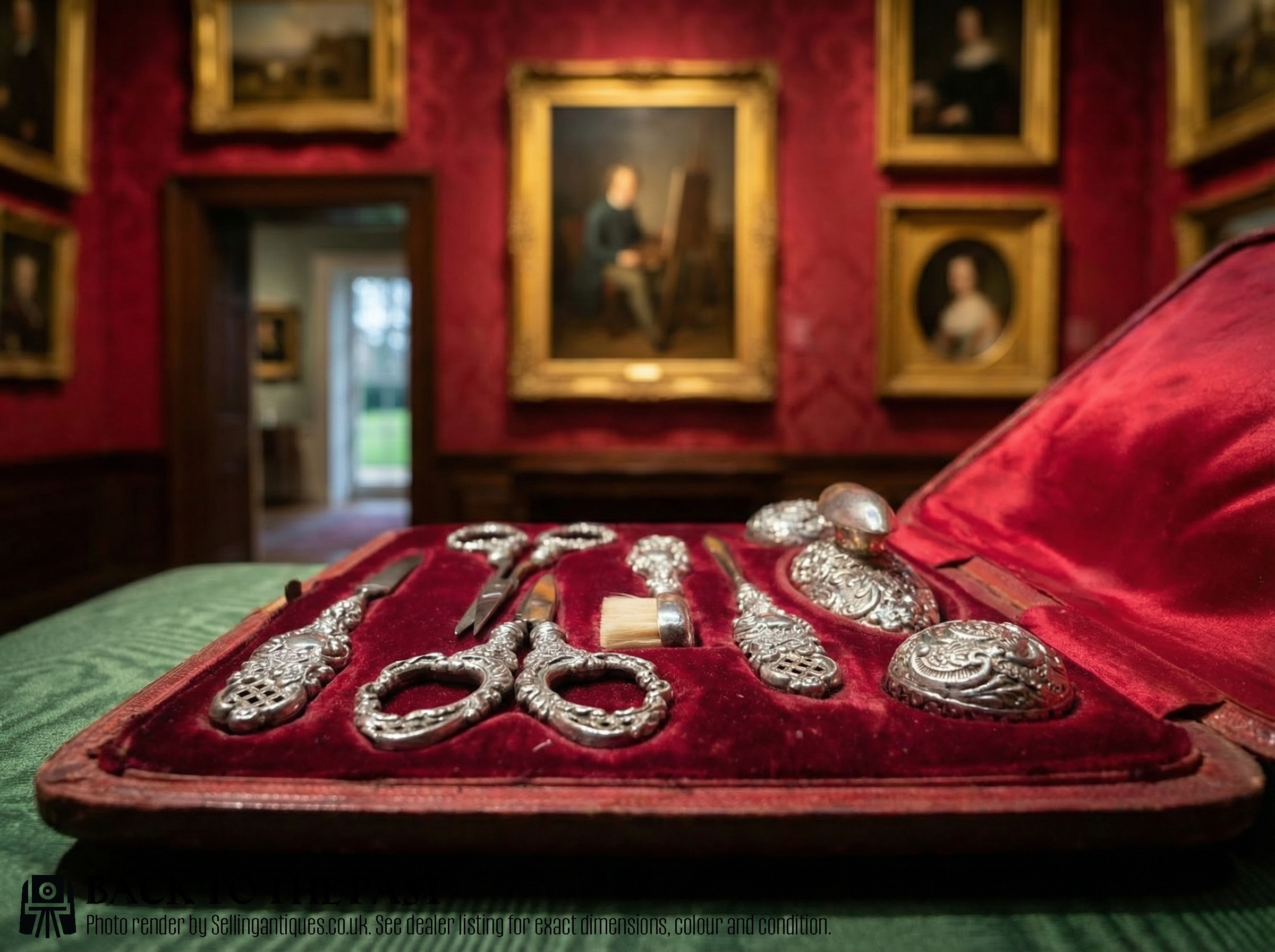
Silver Dressing Set
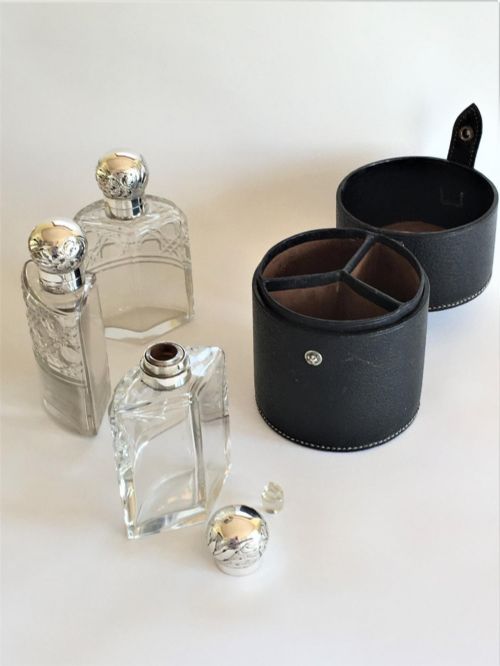
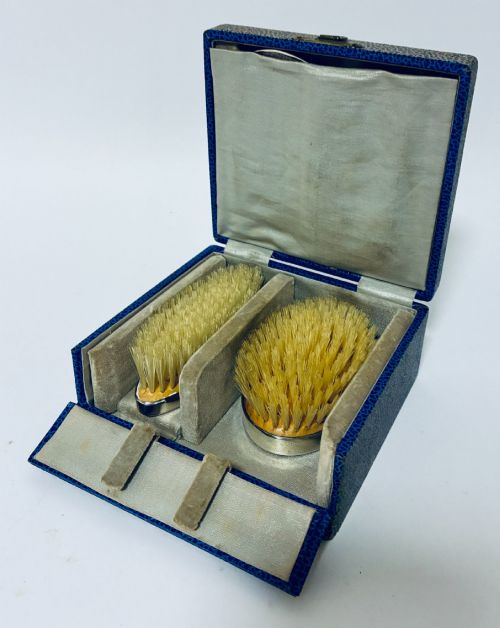
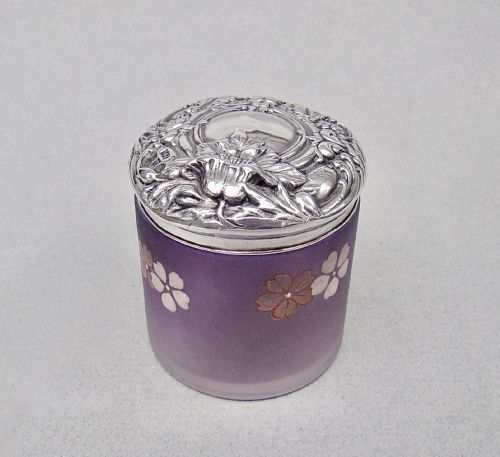
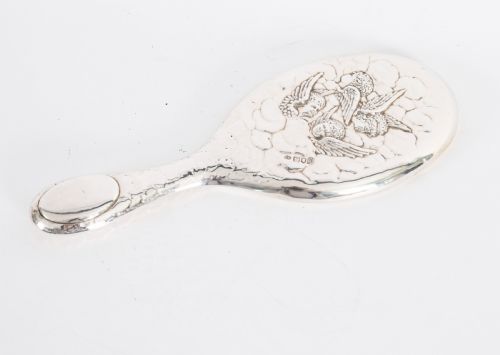
A silver dressing set comprises matched or complementary items designed for the dressing table or travel, encompassing brushes, mirrors, jars, and scent bottles. These collections range from modest pairs of glass jars to extensive multi-piece ensembles housed in fitted cases.
The versions most commonly met on this page date from the Victorian and Edwardian periods through to the Art Deco era, reflecting the changing domestic habits of the middle and upper classes.
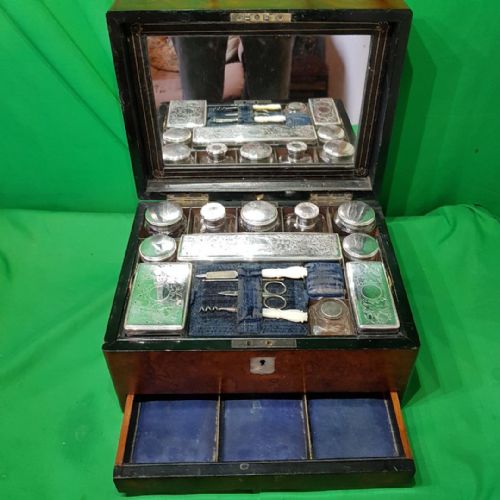
Materials extend beyond metal to incorporate cut glass, enamel, tortoiseshell, and leather, often contained within timber boxes lined with velvet or silk.
Materials and methods of construction
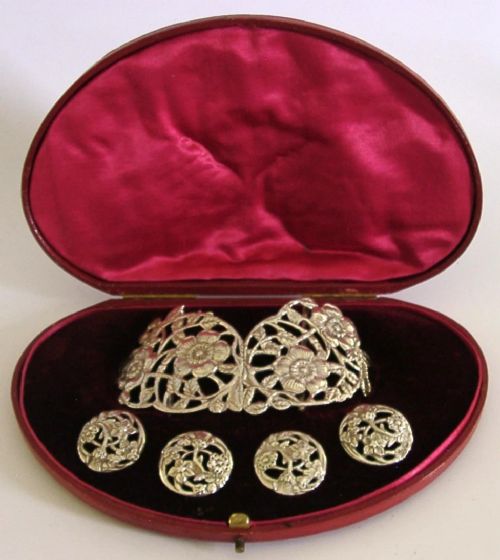
Silversmiths formed the backs of brushes, mirror frames, and jar lids from sterling silver, frequently employing stamping, embossing, or engine-turning to create surface pattern.
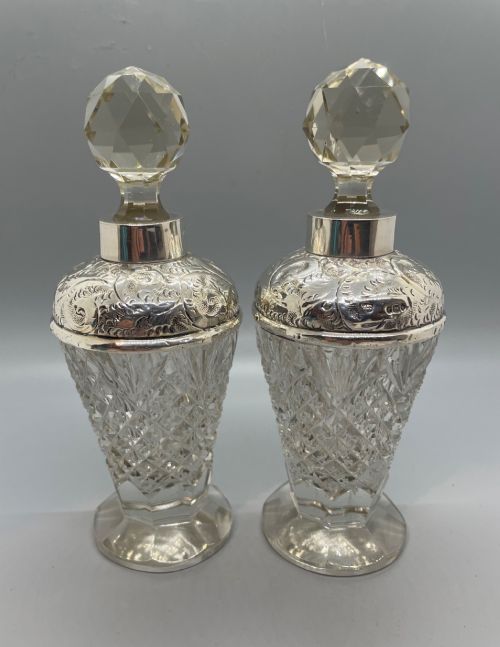
Glass elements utilised cut or moulded techniques, topped with hallmarked silver collars and screw or push-fit lids.
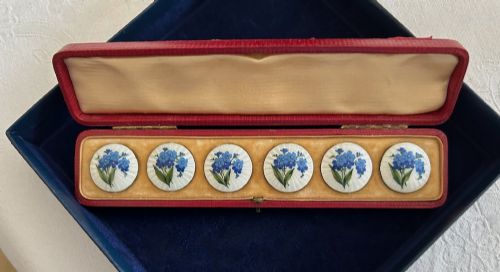
Enamel work, particularly guilloché, involved applying translucent coloured enamels over machine-turned metal grounds to achieve a vibrant, patterned finish.
Listings span from the nineteenth century through the mid-twentieth century, combining sterling silver, cut glass, and guilloché enamel.
Distinctions in quality and execution
Quality rests upon the weight and thickness of the silver used for mounts and backs, alongside the crispness of any embossed ornament or engine-turned detail.
Fullness and originality of the set dictate its standing, with surviving fitted boxes and complete contents marking out superior examples.
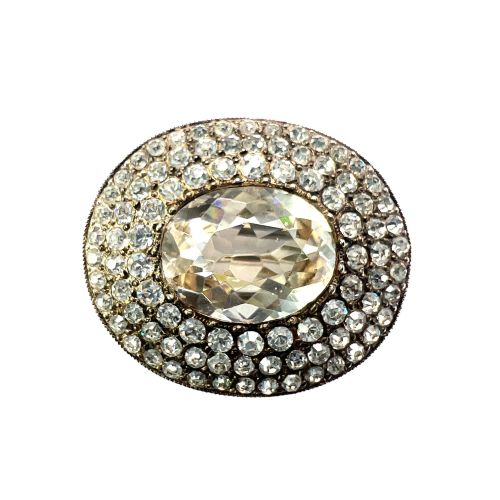
The integration of materials like tortoiseshell, rock crystal, or fine guilloché enamel indicates higher workshop standards and greater initial expense.
Charles Boyton·James Deakin And Sons·Walker And Hall·Garrard·Mappin And Webb
The Silver Dressing Set Glossary
- Guilloché
- A decorative technique where a precise, intricate pattern is mechanically engraved into a metal substrate before translucent enamel is applied. This method was widely used on dressing table items during the early twentieth century.
- Sterling silver
- An alloy comprising ninety-two point five percent silver and seven point five percent other metals, typically copper. Most British pieces carry hallmarks confirming this standard.
- Coromandel
- A dense, dark exotic timber with contrasting streaks, frequently utilised for nineteenth-century luxury dressing cases and boxes. It provides a robust and decorative exterior for fitted interiors.
- Silver gilt
- Sterling silver that has been coated with a thin layer of gold, also known as vermeil. This treatment protects the silver from tarnish and adds a rich interior or exterior colour.
Silver Dressing Set: Frequently Asked Questions
What items belong in a dressing set?
A standard set typically includes a hand mirror, hair brush, and clothes brush, while larger examples add cut-glass jars, button hooks, and shoe horns.
Travelling versions often pack these necessities into fitted leather or wood cases lined with velvet to secure each piece during transit.
How do I read silver hallmarks?
British hallmarks comprise a series of small stamped symbols identifying the maker, the assay office, and the year of manufacture. An anchor denotes Birmingham, while a leopard head signifies London.
Additional marks indicate the standard of silver and, during certain eras, royal duty marks that help narrow down the date.
Why do some sets feature enamel?
Enamel added vibrant colour to dressing tables, particularly during the Edwardian period and the Art Deco movement. Artisans fused glass powder onto textured metal under high heat.
Pinks, blues, and whites were especially popular for creating matching brushes, trays, and jars.
How should I care for antique silver?
Gentle cleaning with a soft cloth and proprietary silver polish removes tarnish without wearing away thin plate or delicate embossing. Avoid abrasive cleaners entirely.
Keep pieces away from direct sunlight and damp environments to protect glass mounts, enamel surfaces, and original velvet linings.