



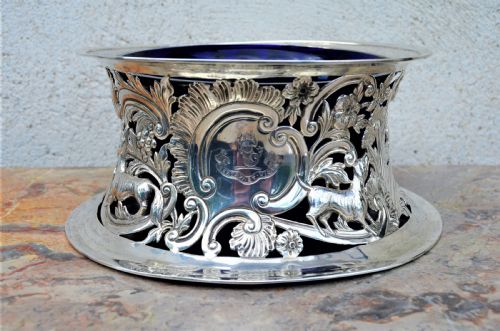


Repousse Silver Glass
Repousse silver glass items combine heavy hand-worked metal mounts with glass bodies, offering tactile contrast and period charm.
Repousse Silver Glass
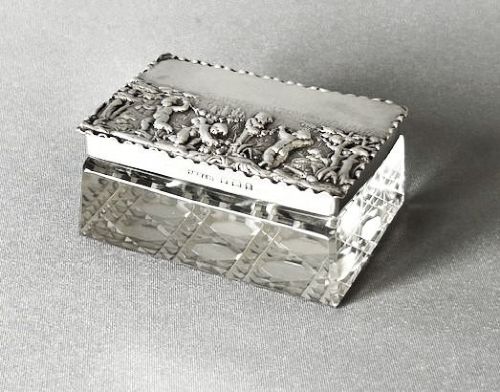
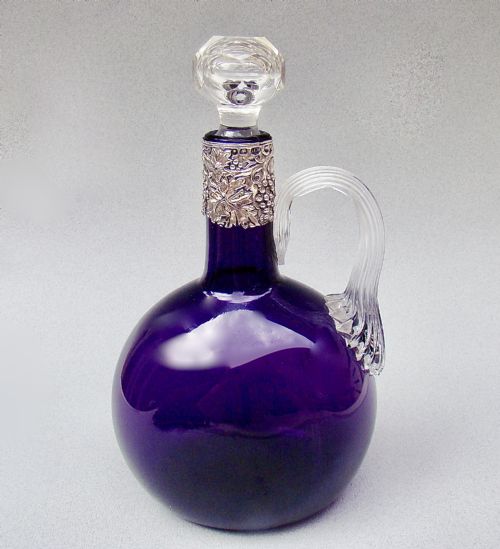
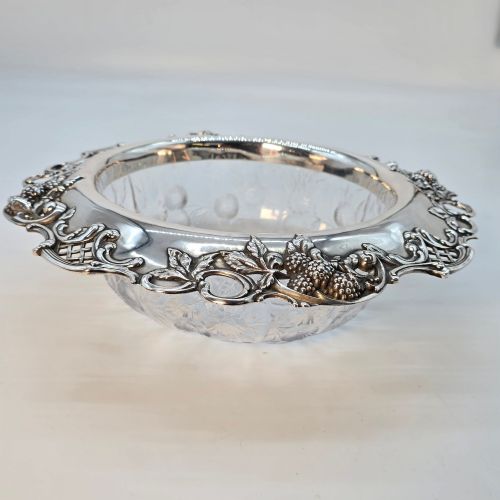
When you search for repousse silver glass, you find vessels, containers, and tabletop accessories that bring together decorative metalwork and glass bodies. The pieces span the Victorian and Edwardian eras, reaching into the early twentieth century through works originating in England, Germany, and America. Dresser jars, scent bottles, trinket boxes, and decanters dominate the selection.
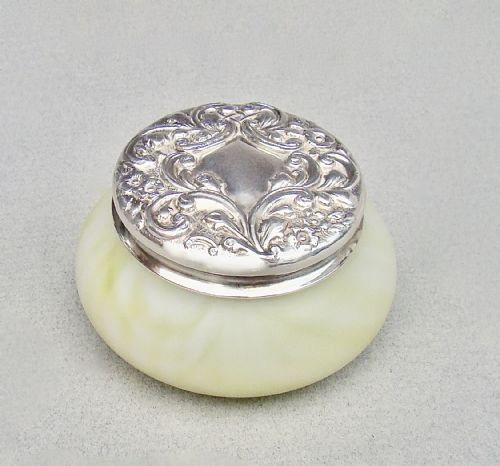
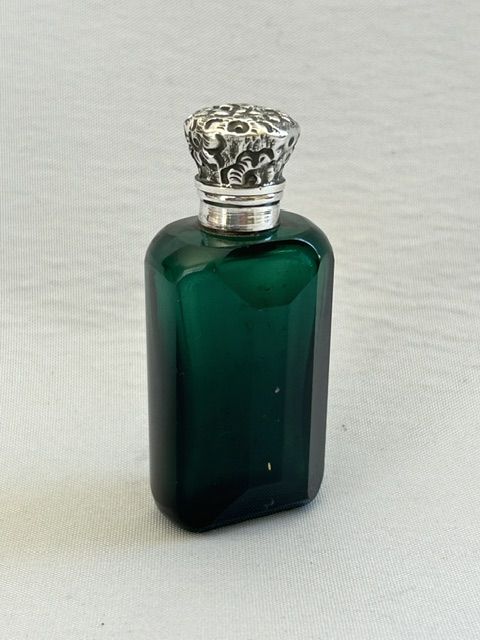
Most examples pair a sterling silver or 800 silver mount featuring raised ornamental hammering with clear, cut, or coloured glass. You meet green overlay glass, amethyst glass, and cobalt blue vessels fitted with ornate hinged lids and collars. These items served dressing tables, writing desks, and dining rooms during the nineteenth and early twentieth centuries.
Materials and construction
The metal components rely on sterling silver or 800 silver, shaped and decorated using repousse techniques where artisans hammer the reverse of the metal to raise a design in relief on the front. This silver work is then mounted onto blown, moulded, or cut glass bodies, sometimes secured with plaster or internal collars.
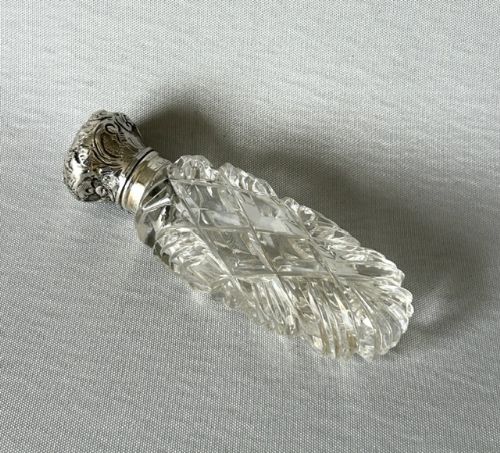
Glass elements range from plain clear crystal to cased and coloured glass such as Bristol green, cobalt, and amethyst. Cut glass surfaces feature deep wheel-cut facets and patterns that catch the light beneath or beside the reflective silver mounts.
Repousse Silver Glass Retail Price Guide 2026
Typical asking prices for repousse silver glass among the pieces listed under this phrase on Sellingantiques today, from the lower quarter to the upper quarter. They describe what is for sale here now, not the wider market.
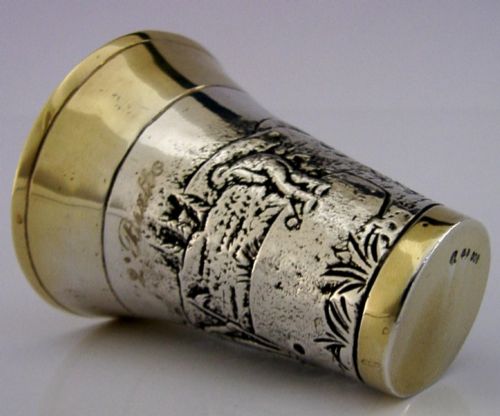
A golfer swings frozen in silver relief on a German barware beaker from nineteen hundred.
Distinctions in quality
Quality rests in the depth and crispness of the silver relief work and the weight of the glass vessel. Finer repousse mounts display sharply defined motifs without thinning of the metal from over-punching, while lesser pieces show flattened or shallow hammering.
The integration between silver mounts and glass bodies reveals the maker's hand. Superior examples fit snugly without movement or excess adhesive, using heavy cut crystal or rich coloured glass rather than thin, light-weight moulded vessels.
Henry Matthews·William Comyns·A. Bromet & Co·Tiffany & Co.
The Repousse Silver Glass Glossary
- Repousse
- A metalworking technique where the artisan hammers and pushes the metal from the reverse side to form a raised design on the front. This method creates tactile, three-dimensional patterns on lids, collars, and mirror frames.
- Sterling silver
- An alloy consisting of ninety-two point five percent silver by mass, with the remainder usually copper. This standard appears widely across British hallmarks on dressing table items and decanters.
- Cut glass
- Glass decorated by grinding and polishing facets into the surface using wheels. It adds weight, brilliance, and texture to scent bottles, bowls, and jars.
- Overlay glass
- Glass made with two or more distinct layers of different colours, where the outer layer is partially cut away to expose the contrasting colour beneath. This technique produces rich visual depth on scent bottles and vanity items.
- Hallmark
- An official stamp applied to precious metals indicating the standard of purity, the assay office, and the year of manufacture. These marks help date and attribute English silver-mounted pieces.
Repousse Silver Glass: Frequently Asked Questions
What periods do these pieces come from?
The items originate predominantly from the Victorian and Edwardian eras, spanning the late nineteenth century up to roughly nineteen ten. You will also encounter German historicism and Dutch revival styles from around nineteen hundred.
Hallmarks on the silver mounts and stylistic markers like Art Nouveau curves help narrow down the exact decade of manufacture for individual items.
How were scent bottles used?
Victorian and Edwardian ladies carried these small glass containers in reticules or displayed them on dressing tables to hold liquid perfumes or smelling salts. The tight-fitting silver lids prevented evaporation.
Many featured cut glass or coloured glass bodies like Bristol green and amethyst, making them both functional personal accessories and decorative vanity items.
Can I use these decanters for wine?
Silver-mounted decanters and claret jugs are structurally capable of holding liquids, provided the glass and internal stoppers remain sound. Inspect the interior for any cloudiness or residue before use.
Hand wash the glass gently with warm water, avoiding harsh detergents or soaking the silver collar where it joins the vessel.