




Repousse Metal Jardiniere
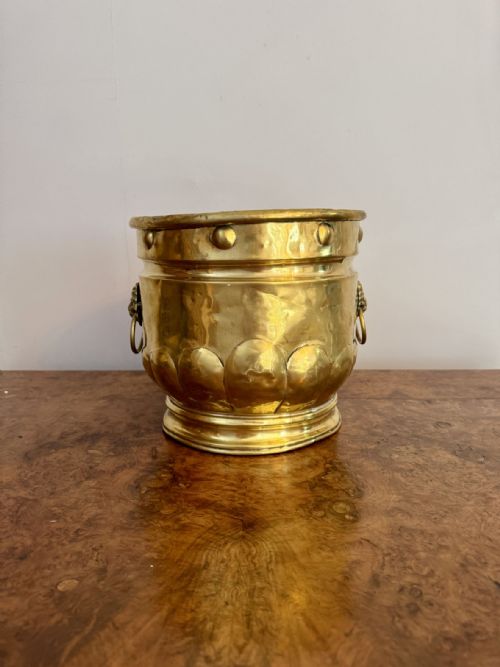
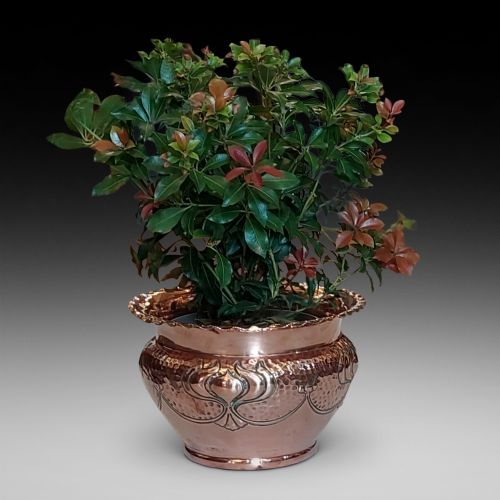
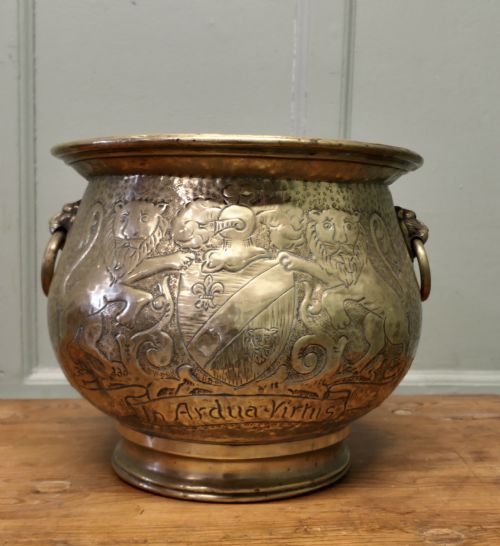
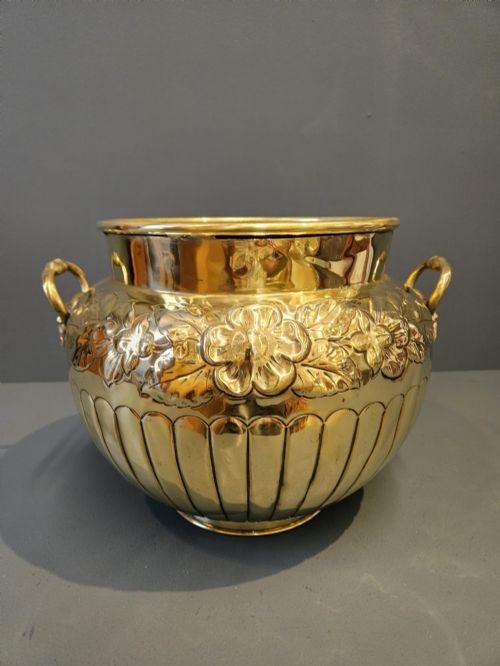
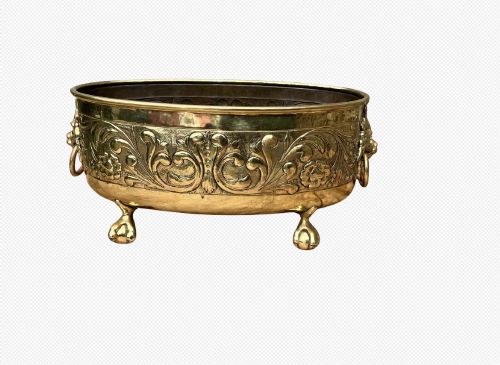
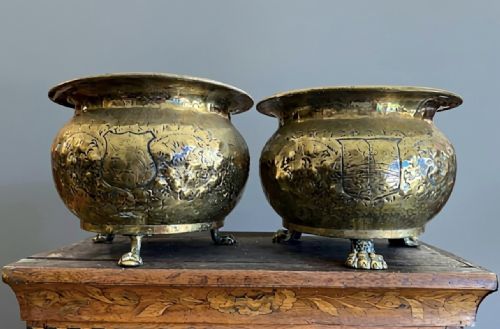
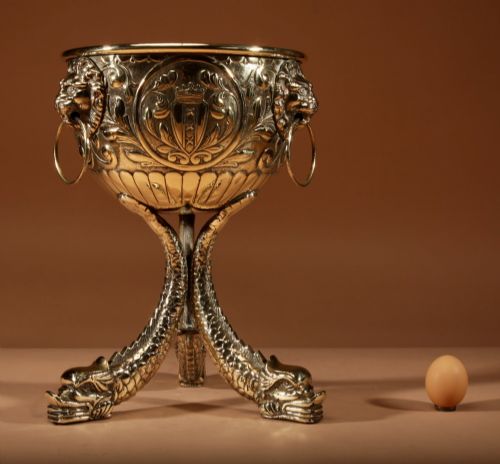
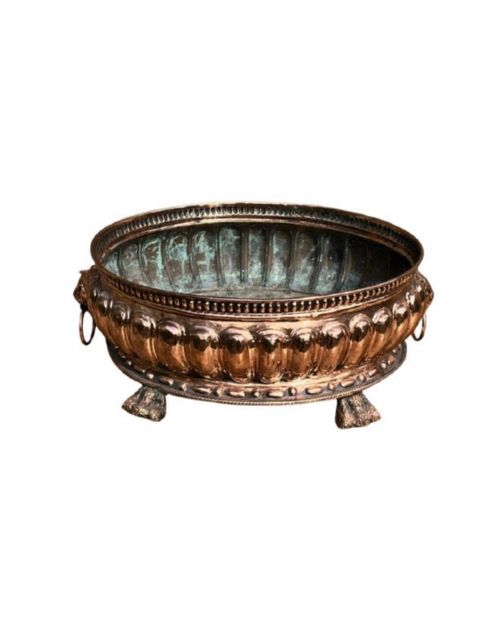
These repousse metal jardiniere pieces are heavy plant vessels and log bins shaped by hand, bringing botanical display and hearthside utility together in brass and copper.
Repousse Metal Jardiniere
A repousse metal jardiniere is a decorative plant vessel designed to hold potted greenery or serve as a substantial log bin within the home. When you search for this phrase, you encounter vessels shaped from brass and copper across several distinct eras.
The pieces on this page span the eighteenth, nineteenth, and early twentieth centuries, encompassing Victorian, Edwardian, and Arts and Crafts periods. Forms range from compact table bowls to large floor-standing troughs and footed planters on original stands.
You meet continental European examples frequently, particularly Dutch vessels with lion mask handles and French or Italian designs. British Victorian and Arts and Crafts workshop pieces also appear regularly alongside occasional Chinese zinc-lined troughs.
Materials and construction
Metals form the core of these objects, with heavy gauge brass and solid copper dominating the selection alongside wrought iron stands, zinc linings, and occasional silver plate. Makers hammered, embossed, and cast these metals to build durable planters capable of holding damp soil and heavy timber.
Repousse technique involves hammering metal from the reverse side to raise ornamental designs on the front, creating tactile relief work. Cast elements such as handles, feet, and animal masks are frequently soldered or riveted to the main body.
Art Nouveau and Arts and Crafts styles appear alongside Dutch traditional and Gothic Revival forms.
Judging quality and character
Quality rests upon the weight of the metal and the crispness of the hammered relief work rather than surface gleam. Heavy gauge brass and thick copper maintain structural integrity far better than thin sheet metal.
Superior examples feature hand-beaten detailing with distinct depth in the repousse motifs, alongside integrated original stands, liners, and robust cast handles. Minor dents and patination reflect honest age, whereas clumsy repairs or splits diminish the integrity of the vessel.
J Sankey and Sons
The Repousse Metal Jardiniere Glossary
- Repoussé
- A metalworking technique where the artisan hammers the design from the reverse side to form a raised pattern in relief. This method gives the surface a tactile, three-dimensional quality.
- Dinanderie
- A traditional term for medieval and later brass or bronze wares produced in the Meuse valley. The label often applies to heavy antique brass vessels and containers.
- Jardiniere
- A large ornamental pot or receptacle intended for holding flowers or growing plants. These vessels sit on tables, floors, or dedicated plant stands.
- Wine Cistern
- A large basin or cooler designed to hold bottles and ice during dining. Many eighteenth-century copper and brass examples double as generous planters.
- Planter
- A container used for housing live plants and foliage. In antique forms, these often feature protective metal linings to contain water.
Repousse Metal Jardiniere: Frequently Asked Questions
What is a repousse metal jardiniere used for?
These vessels serve primarily as decorative holders for potted plants, ferns, and floral arrangements inside the home. Many examples also function as fireside log buckets or coal bins.
The sturdy construction and waterproof zinc linings found in several pieces allow them to manage damp soil and heavy timber without damaging surrounding floors.
How do I date an antique brass jardiniere?
Dating relies on observing manufacturing techniques, decorative styles, and material thickness across different historical periods. Eighteenth-century Dutch pieces often display robust hand-hammering and distinct foot mounts, while Victorian and Edwardian examples show industrial influences combined with traditional craft revivals.
Style indicators such as Art Nouveau whiplash lines or Arts and Crafts plain honesty provide clear chronological markers.
Can I plant directly into an antique jardiniere?
Planting directly into antique metal can accelerate corrosion and damage the integrity of the vessel over time. Using a nursery pot inside the jardiniere protects the metal and simplifies watering.
Many antique pieces include original zinc liners designed specifically to catch drainage water and protect the outer brass or copper body.
What is the difference between a jardiniere and a plant stand?
A jardiniere is the bowl or vessel that holds the plant, whereas a plant stand is the supporting table or pedestal beneath it. Some listings include matching original stands while others offer the vessel alone.
Combined pieces where the planter rests on a dedicated frame are particularly sought after by collectors.
How should I clean antique brass and copper?
Preserving the dark patination accumulated over centuries is standard practice for antique metalwork. Heavy chemical polishing strips away historical character and reduces the visual depth of the repousse work.
Gentle dusting with a soft cloth and occasional application of appropriate museum wax keeps the metal stable without altering its aged surface.