

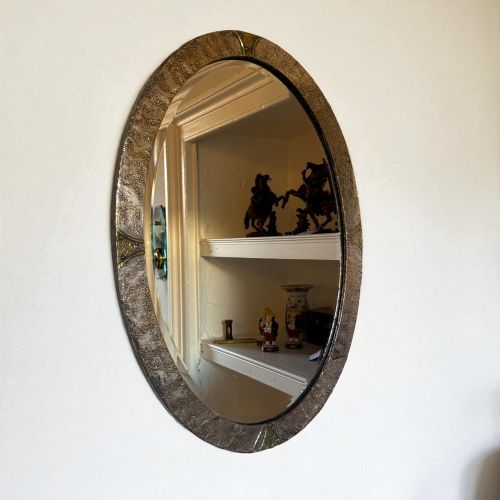
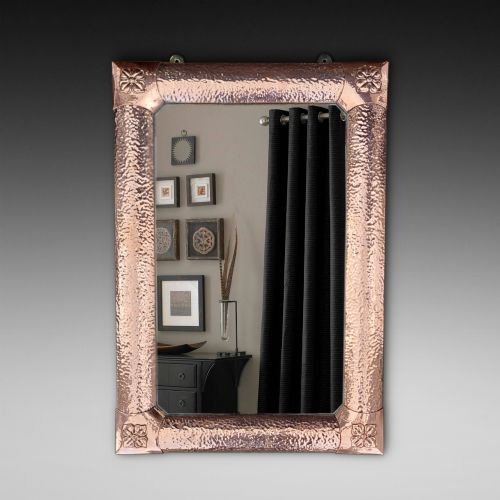
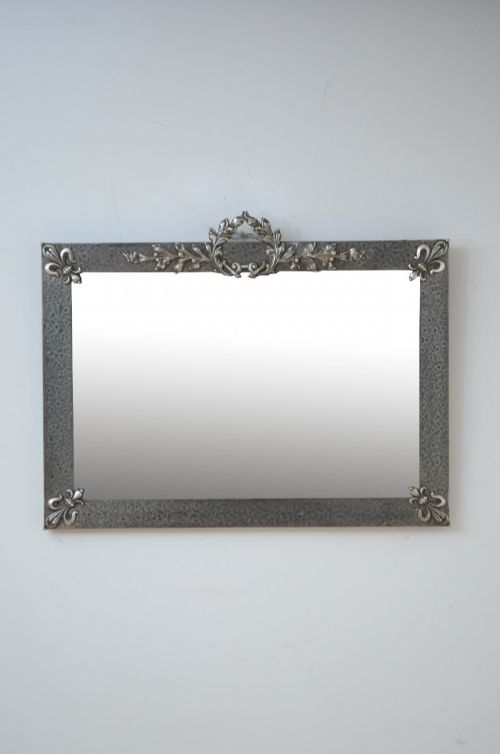


Repousse Metal Framed Mirror
These repousse metal framed mirror examples bring tangible texture and historic craft straight to your wall, combining beaten surfaces with clear glass.
Repousse Metal Framed Mirror
A repousse metal framed mirror offers a decorative wall hanging centred on hand-worked metalwork and reflective glass. When you search for a repousse metal framed mirror, you encounter pieces primarily spanning the Victorian and Edwardian eras alongside the Arts and Crafts movement.
The most common examples on this page are rectangular or oval wall mirrors framed in beaten copper and embossed brass. These encompass regional interpretations including Dutch Baroque revival styles and Peruvian colonial revival silver borders.
Makers focused on domestic utility combined with aesthetic movement ideals, resulting in wall mirrors suited to hallways, parlours and living spaces. Each item displays the distinct hammer marks or relief work characteristic of its period of manufacture.
How they were made
Makers shaped these frames by hammering, beating and embossing sheets of brass, copper and pewter from the reverse side to create raised relief designs. This traditional repousse technique required patience and skill with specialised punches and hammers.
The finished metal frame was then mounted around mirror glass, frequently featuring bevelled edges, and backed with wood to provide structural rigidity. Artisans during the Arts and Crafts period championed this visible hand-craftsmanship over machine stamping.
Repousse Metal Framed Mirror Retail Price Guide 2026
Typical asking prices for repousse metal framed mirror among the pieces listed under this phrase on Sellingantiques today, from the lower quarter to the upper quarter. They describe what is for sale here now, not the wider market.
Listings feature pieces spanning the Victorian and Edwardian eras alongside the 1930s, constructed from copper, brass, pewter and wood.
What varies in quality
Quality rests in the crispness and depth of the metal relief work and the weight of the brass or copper employed in the frame. Superior examples display confident, varied hammer marks rather than uniform machine pressing.
The condition of the original mirror glass and the integrity of the wooden backing structure also determine the calibre of the piece. Frames with well-preserved patination and secure corner joints represent the finer end of the surviving range.
The Repousse Metal Framed Mirror Glossary
- Repousse
- A metalworking technique where the artisan hammers metal from the reverse side to form a raised design in relief on the front. This method defines the primary visual character of the frames on this page.
- Arts and Crafts
- A design movement spanning the late nineteenth and early twentieth centuries that valued handmade goods and traditional craftsmanship over industrial mass production. It forms the stylistic backbone of many pieces listed here.
- Bevelled Glass
- Mirror glass with edges cut and polished at an angle to create a framed border effect within the glass itself. This treatment adds depth and catches the light distinctively.
- Cushion Framed
- A frame profile featuring a rounded, convex shape that projects forward from the wall. This style appears frequently in Victorian brass examples.
- Patina
- The surface sheen and oxidation acquired by metals like copper and brass through age and exposure. Collectors prize an undisturbed patina for the warmth it brings to the metal.
Repousse Metal Framed Mirror: Frequently Asked Questions
How do I clean a metal mirror frame?
Dust the repousse surface gently with a soft, dry brush to avoid disturbing the historic patina. Refrain from using harsh chemical metal polishes that strip away the aged character accumulated over decades.
For the mirror glass itself, apply a small amount of standard glass cleaner to a cloth rather than spraying directly onto the frame. This prevents moisture from seeping into the wooden backing behind the metal.
Are these mirrors heavy to hang?
Most pieces carry substantial weight due to the combination of solid wood backing, thick metal frames and mirror glass. Ensure you locate a secure wall stud or utilise appropriate heavy-duty wall anchors.
Check the existing hanging wire or brackets on the reverse before installation to confirm they remain stable. Older frames may require updated fixings to support the weight safely over time.
How do I distinguish Arts and Crafts mirrors?
Arts and Crafts frames showcase visible hand-beaten textures in copper, brass or pewter rather than smooth, factory-stamped surfaces. The designs often incorporate floral motifs, geometric patterns or simple strapwork reflecting the ethos of the movement.
Construction details also help with identification, as these pieces typically date from the late Victorian period through the Edwardian era up to the 1930s. Look for honest construction methods where the craft of the maker remains evident in the finished metalwork.
Can I hang these in a bathroom?
High humidity and moisture in bathrooms can damage the wooden backings and accelerate corrosion on antique metal frames and mirror silvering. It is generally safer to place them in dry living areas, hallways or bedrooms.
If placed in a damp environment, the historic copper or brass may develop active oxidation that harms the original surface. Keeping them away from direct steam preserves both the metal and the glass.